![[AUTO] LVM-3 (GSLV Mk III) - image](/media?u=https%3A%2F%2Fthespacedevs-prod.nyc3.digitaloceanspaces.com%2Fmedia%2Fimages%2Fgslv2520mk2520iii_image_20190604000938.jpg&w=1600)
Indian Space Research OrganizationLaunch Vehicle Mark-3 (GSLV Mk III)Satish Dhawan Space Centre Second Launch Pad, Satish Dhawan Space Centre, India
GSAT-19
Launched
June 5, 2017
Summary
GSAT-19 launched on an Indian Space Research Organization Launch Vehicle Mark-3 (GSLV Mk III) from Satish Dhawan Space Centre Second Launch Pad, Satish Dhawan Space Centre, India on June 5, 2017. It was Indian Space Research Organization's 56th launch, 3rd this year and humanity's 5,648th orbital launch attempt. It was the 2nd Launch Vehicle Mark-3 (GSLV Mk III) flight and the 1st this year. The payload was bound for Geostationary Transfer Orbit (GTO). GSAT-19E, one of 2 catalogued objects, reached a 170 × 34,599 km orbit inclined 21.5°. 2 objects from this launch are catalogued, one of them a payload.
- Watch
- The Launch of GSLV Mk III-D1 / GSAT-19 missionDoordarshan National
- Booster
- No booster details on record.
- Mission
- Communications · Geostationary Transfer Orbit (GTO)
- Milestone
- 2nd Launch Vehicle Mark-3 (GSLV Mk III) flight · 1st this yearIndian Space Research Organization's 56th launch3rd this yearhumanity's 5,648th orbital launch attempt33rd orbital launch attempt this year
Webcast
Flight preview
Orbit: as tracked
GSAT-19E · NORAD 42747 · 2017-031 · Space-Track · tracking 1 of 2 objects
Show the numbers for orbit elements
- Object
- TBA - TO BE ASSIGNED
- Object ID
- 2017-031A
- Epoch
- 2017-06-05 07:13:11 UTC
- Mean motion
- 2.37114356 rev/day
- Eccentricity
- 0.7246472
- Inclination
- 21.5372°
- Ascending node
- 12.6946°
- Arg. of perigee
- 178.2855°
- Mean anomaly
- 182.2234°
- Element set
- 999
- Rev at epoch
- 0
- B*
- 0
Perigee, apogee and period are Kepler figures from the catalogued mean elements, not a propagated state. Published orbit: GTO. Ascent drawn from padside's representative profile.
Catalogued objects
2 catalogued: 1 payload, 1 rocket stage; 1 still in orbit
- GSAT-19E · NORAD 42747 · in orbit
GSLV-3 D1 Stage 2 · re-entered February 8, 2018
Data from J. McDowell, planet4589.org
About this launch
GSAT-19 is an Indian geostationary communications satellite. With a mass of 3200 kg and expected operational lifetime of 15 years, this satellite will test several epxerimental technologies like electrical propulsion, deployable thermal radiatiors, indigenious Li-Ion batteries.
Pad
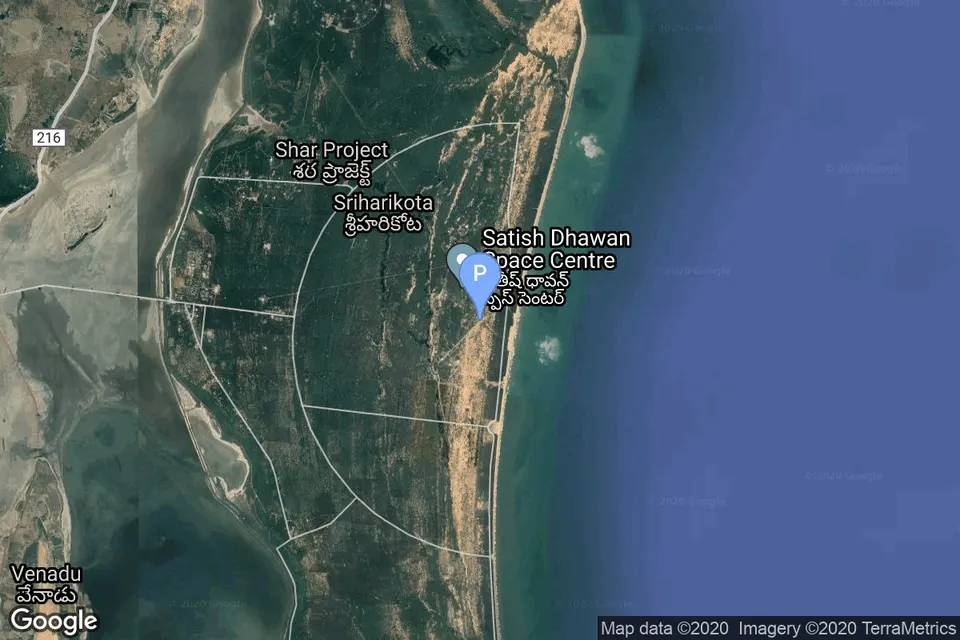
Satish Dhawan Space Centre Second Launch Pad, Satish Dhawan Space Centre, India
14th launch from Satish Dhawan Space Centre Second Launch Pad, 2nd this year · 60th from Satish Dhawan Space Centre, India
33 launches from this pad · 105 from Satish Dhawan Space Centre, India
31 days after the previous launch from this pad
All launches from Satish Dhawan Space Centre, IndiaOpen in maps
Questions
When did GSAT-19 launch?
GSAT-19 launched on June 5, 2017. The time is known to the hour, not the minute.
Where can I watch GSAT-19?
Coverage: The Launch of GSLV Mk III-D1 / GSAT-19 mission. Watch the replay
What rocket launched GSAT-19?
Launch Vehicle Mark-3 (GSLV Mk III), flown by Indian Space Research Organization. Launch Vehicle Mark-3 (GSLV Mk III) spec sheet
Where did GSAT-19 launch from?
Satish Dhawan Space Centre Second Launch Pad, Satish Dhawan Space Centre, India.
What orbit did GSAT-19 reach?
GSAT-19E, one of 2 catalogued objects, reached a 170 × 34,599 km orbit inclined 21.5°.
How many satellites did GSAT-19 launch?
1 payload from this launch is catalogued, still in orbit (Data from J. McDowell, planet4589.org).