![[AUTO] GSLV Mk II - image](/media?u=https%3A%2F%2Fthespacedevs-prod.nyc3.digitaloceanspaces.com%2Fmedia%2Fimages%2Fgslv2520mk2520ii_image_20190825171642.jpg&w=1600)
Indian Space Research OrganizationGSLV Mk. IISatish Dhawan Space Centre Second Launch Pad, Satish Dhawan Space Centre, India
SouthAsiaSat (GSAT-9)
Launched
May 5, 2017
Summary
SouthAsiaSat (GSAT-9) launched on an Indian Space Research Organization GSLV Mk. II from Satish Dhawan Space Centre Second Launch Pad, Satish Dhawan Space Centre, India on May 5, 2017. It was Indian Space Research Organization's 55th launch, 2nd this year and humanity's 5,640th orbital launch attempt. It was the 5th GSLV Mk. II flight and the 1st this year. The payload was bound for Geostationary Transfer Orbit (GTO). South Asia Satellite, one of 2 catalogued objects, reached a 164 × 35,943 km orbit inclined 20.7°. 2 objects from this launch are catalogued, one of them a payload.
- Watch
- South Asia Satellite, PM's Gift To Neighbours, Lifts OffNDTV India
- South Asian Satellite GSAT-9 launched successfully by ISRO Sriharikota todayBhaskaran Shivaraman
- GSLV F09 05 05 17 @RAGHUSREERaghu's Photography
- Booster
- No booster details on record.
- Mission
- Communications · Geostationary Transfer Orbit (GTO)
- Milestone
- 5th GSLV Mk. II flight · 1st this yearIndian Space Research Organization's 55th launch2nd this yearhumanity's 5,640th orbital launch attempt25th orbital launch attempt this year
Flight preview
Orbit: as tracked
South Asia Satellite · NORAD 42695 · 2017-024 · Space-Track · tracking 1 of 2 objects
Show the numbers for orbit elements
- Object
- TBA - TO BE ASSIGNED
- Object ID
- 2017-0243A
- Epoch
- 2017-05-05 13:54:12 UTC
- Mean motion
- 2.27436455 rev/day
- Eccentricity
- 0.7324472
- Inclination
- 20.6562°
- Ascending node
- 337.0832°
- Arg. of perigee
- 178.2159°
- Mean anomaly
- 75.3737°
- Element set
- 999
- Rev at epoch
- 0
- B*
- 0
Perigee, apogee and period are Kepler figures from the catalogued mean elements, not a propagated state. Published orbit: GTO. Ascent drawn from padside's representative profile.
Catalogued objects
2 catalogued: 1 payload, 1 rocket stage; 1 still in orbit
- South Asia Satellite · NORAD 42695 · in orbit
GSLV CUS-08 · re-entered October 10, 2017
Data from J. McDowell, planet4589.org
About this launch
GSAT-9 is a multi band communication and observation satellite. It carries a GAGAN (regional Indian GPS navigational system) navigation payload to provide GPS services to security forces and air traffic control organizations. Weighing about 2330 kg, satellite has an operational lifetime of 12 years.
Pad
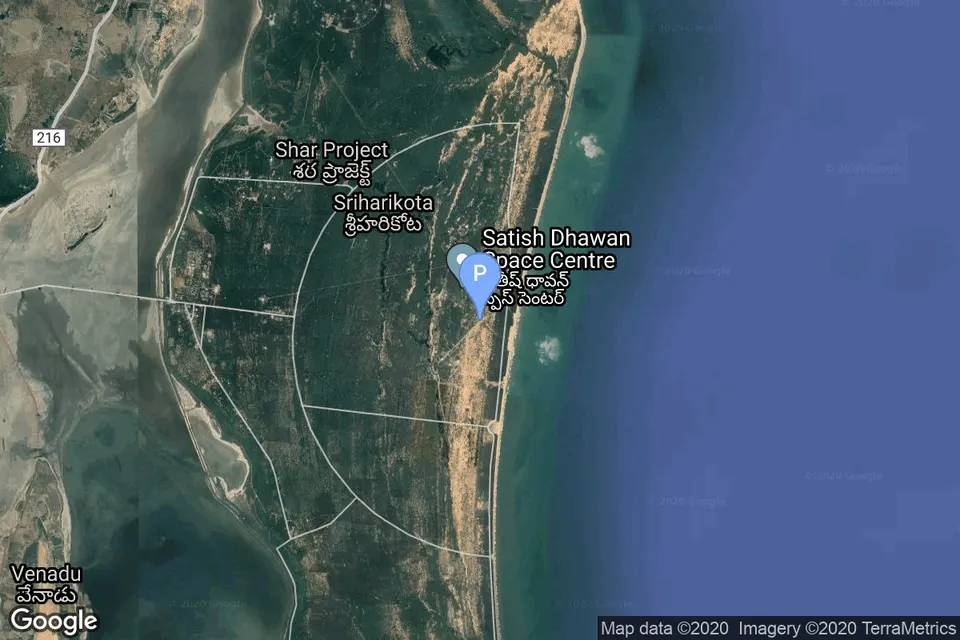
Satish Dhawan Space Centre Second Launch Pad, Satish Dhawan Space Centre, India
13th launch from Satish Dhawan Space Centre Second Launch Pad, 1st this year · 59th from Satish Dhawan Space Centre, India
33 launches from this pad · 105 from Satish Dhawan Space Centre, India
239 days after the previous launch from this pad
All launches from Satish Dhawan Space Centre, IndiaOpen in maps
Questions
When did SouthAsiaSat (GSAT-9) launch?
SouthAsiaSat (GSAT-9) launched on May 5, 2017. The time is known to the hour, not the minute.
Where can I watch SouthAsiaSat (GSAT-9)?
Coverage: South Asia Satellite, PM's Gift To Neighbours, Lifts Off; South Asian Satellite GSAT-9 launched successfully by ISRO Sriharikota today; GSLV F09 05 05 17 @RAGHUSREE. Watch the replay
What rocket launched SouthAsiaSat (GSAT-9)?
GSLV Mk. II, flown by Indian Space Research Organization. GSLV Mk. II spec sheet
Where did SouthAsiaSat (GSAT-9) launch from?
Satish Dhawan Space Centre Second Launch Pad, Satish Dhawan Space Centre, India.
What orbit did SouthAsiaSat (GSAT-9) reach?
South Asia Satellite, one of 2 catalogued objects, reached a 164 × 35,943 km orbit inclined 20.7°.
How many satellites did SouthAsiaSat (GSAT-9) launch?
1 payload from this launch is catalogued, still in orbit (Data from J. McDowell, planet4589.org).