![[AUTO] GSLV Mk II - image](/media?u=https%3A%2F%2Fthespacedevs-prod.nyc3.digitaloceanspaces.com%2Fmedia%2Fimages%2Fgslv2520mk2520ii_image_20190825171642.jpg&w=1600)
Indian Space Research OrganizationGSLV Mk. IISatish Dhawan Space Centre Second Launch Pad, Satish Dhawan Space Centre, India
GISAT-1A (EOS-05)
Launched
September 3, 2026 · 21:25 UTC
Summary
ISRO's GSLV Mk II successfully delivered GISAT-1A (EOS-05) to geostationary orbit. This earth observing satellite replaces the EOS-03 lost in 2021, enabling continuous monitoring of natural hazards over India.
- Watch
- GSLV-F17/EOS-05 MISSIONISRO Official
- Booster
- No booster details on record.
- Mission
- Earth Science · Geostationary Transfer Orbit (GTO)for ISRO
- Milestone
- 13th GSLV Mk. II flight · 1st this yearIndian Space Research Organization's 100th launch2nd this yearhumanity's 7,383rd orbital launch attempt210th orbital launch attempt this year
Webcast
Flight preview
Orbit: as tracked
EOS-5 · NORAD 100607 · 2026-202A · Space-Track
Show the numbers for orbit elements
- Object
- EOS-5
- Object ID
- 2026-202A
- Epoch
- 2026-10-03 13:14:44 UTC
- Mean motion
- 1.00273234 rev/day
- Eccentricity
- 0.00015351
- Inclination
- 3.4887°
- Ascending node
- 251.9828°
- Arg. of perigee
- 297.2588°
- Mean anomaly
- 107.281°
- Element set
- 999
- Rev at epoch
- 37
- B*
- 0
Perigee, apogee and period are Kepler figures from the catalogued mean elements, not a propagated state. Published orbit: GTO. Ascent drawn from padside's representative profile.
About this launch
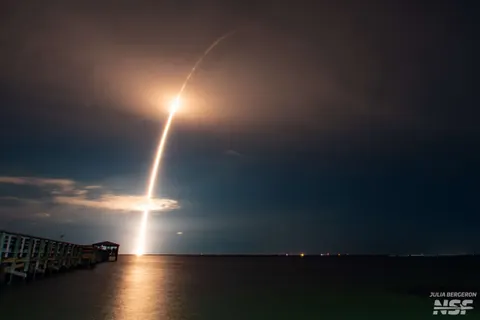
GISAT-1A (EOS-05) launched on an Indian Space Research Organization GSLV Mk. II from Satish Dhawan Space Centre Second Launch Pad, Satish Dhawan Space Centre, India on September 3, 2026 at 21:25 UTC. The launch window ran from 21:00 to 01:00 UTC. It was Indian Space Research Organization's 100th launch, 2nd this year and humanity's 7,383rd orbital launch attempt. It was the 13th GSLV Mk. II flight and the 1st this year. The payload was bound for Geostationary Transfer Orbit (GTO). It reached a 159 × 30,974 km orbit inclined 19.3°.
GISAT-1A (GEO Imaging Satellite) is an Indian earth observing satellite operating from geostationary orbit to facilitate continuous observation of Indian sub-continent, quick monitoring of natural hazards and disaster. EOS-05/GISAT-1A will replace EOS-03/GISAT-1 lost in launch failure in 2021.
News
Pad
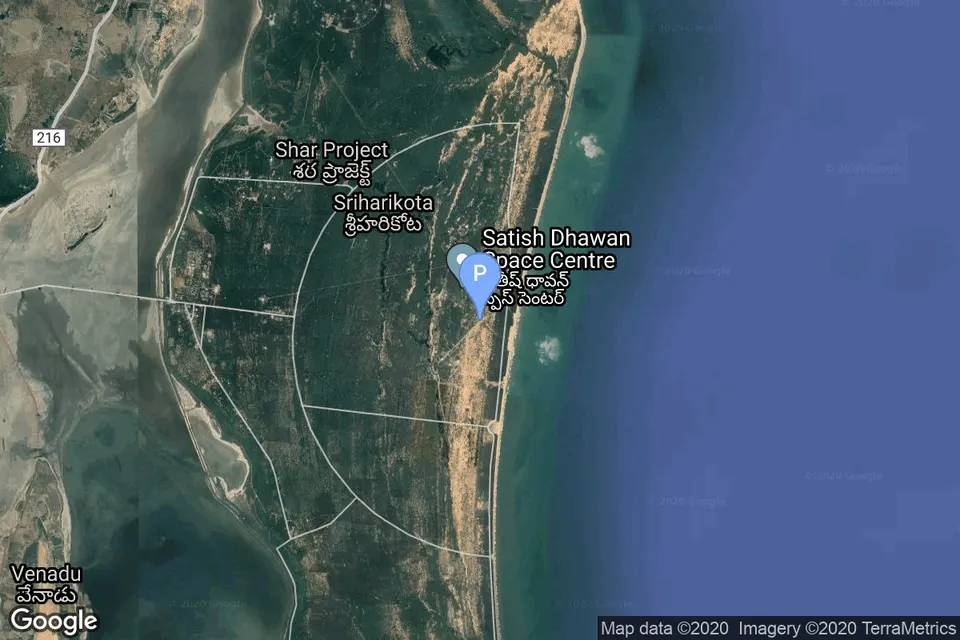
Satish Dhawan Space Centre Second Launch Pad, Satish Dhawan Space Centre, India
33rd launch from Satish Dhawan Space Centre Second Launch Pad, 1st this year · 105th from Satish Dhawan Space Centre, India
Local pad time at liftoff: Sep 4, 2:55 AM GMT+5:30, at night
33 launches from this pad · 105 from Satish Dhawan Space Centre, India
253 days after the previous launch from this pad
All launches from Satish Dhawan Space Centre, IndiaOpen in maps
Updates
Launch success with satellite in communication and solar arrays deployed.
Show 9 earlier updates
Spacecraft separation.
Cosmic_Penguin · 9/3/2026 · source
Liftoff.
Cosmic_Penguin · 9/3/2026 · source
Official Webcast by ISRO Official has started
LL2 · 9/3/2026 · source
Updated T-0.
Cosmic_Penguin · 8/29/2026 · source
NET September 3 per new NOTAMs, TBC.
Cosmic_Penguin · 8/27/2026 · source
NET 1st week of September.
Cosmic_Penguin · 8/13/2026 · source
NET Q3.
Cosmic_Penguin · 7/18/2026 · source
NET July.
Cosmic_Penguin · 6/13/2026 · source
NET June 10.
Cosmic_Penguin · 5/24/2026 · source
Questions
When did GISAT-1A (EOS-05) launch?
GISAT-1A (EOS-05) launched on September 3, 2026 at 21:25 UTC. The launch window ran from 21:00 to 01:00 UTC.
Where can I watch GISAT-1A (EOS-05)?
Coverage: GSLV-F17/EOS-05 MISSION. Watch the replay
What rocket launched GISAT-1A (EOS-05)?
GSLV Mk. II, flown by Indian Space Research Organization. GSLV Mk. II spec sheet
Where did GISAT-1A (EOS-05) launch from?
Satish Dhawan Space Centre Second Launch Pad, Satish Dhawan Space Centre, India. Liftoff was Sep 4, 2:55 AM GMT+5:30 local time at the pad.
What orbit did GISAT-1A (EOS-05) reach?
It reached a 159 × 30,974 km orbit inclined 19.3°.