![[AUTO] Space Shuttle - image](/media?u=https%3A%2F%2Fthespacedevs-prod.nyc3.digitaloceanspaces.com%2Fmedia%2Fimages%2Fspace_shuttle_image_20230422074810.jpeg&w=1600)
United Space AllianceSpace ShuttleLaunch Complex 39B, Kennedy Space Center, FL, USA
STS-93
Launched
July 23, 1999

Summary
STS-93 launched on an United Space Alliance Space Shuttle from Launch Complex 39B, Kennedy Space Center, FL, USA on July 23, 1999. It was United Space Alliance's 13th launch, 1st this year and humanity's 4,331st orbital launch attempt. It was the 95th Space Shuttle flight and the 2nd this year. The payload was bound for low Earth orbit (LEO). Columbia (STS-93), one of 15 catalogued objects, reached a 275 × 297 km orbit inclined 28.5°. 5 crew members flew: Steven Hawley, Michel Tognini, Eileen Collins, Catherine Coleman and Jeffrey Ashby. The spacecraft was Space Shuttle Columbia (OV-102). 15 objects from this launch are catalogued, 2 of them payloads.
- Watch
- STS-93 launch (7-23-99)3210andLiftoff
- Vehicle
- Space Shuttle · United Space AllianceNASA Large Strategic Science Missions, Space Shuttle
- Booster
- No booster details on record.
- Mission
- Astrophysics · Low Earth Orbit (LEO)
- Milestone
- 95th Space Shuttle flight · 2nd this yearUnited Space Alliance's 13th launch1st this yearhumanity's 4,331st orbital launch attempt42nd orbital launch attempt this year
Crew
 Steven HawleyMission Specialist · NASA · age 47 · 5th flight
 Michel TogniniMission Specialist · ESA · age 49 · 2nd flight
 Eileen CollinsCommander · NASA · age 42 · 3rd flight
 Catherine ColemanMission Specialist · NASA · age 38 · 2nd flight
 Jeffrey AshbyPilot · NASA · age 45 · first flight
Spacecraft
Space Shuttle Columbia (OV-102)
Space Shuttle Columbia (Orbiter Vehicle Designation: OV-102) was the first space-rated orbiter in NASA's Space Shuttle fleet. It launched for the first time on mission STS-1 on April 12, 1981, the first flight of the Space Shuttle program. Over 22 years of service, it completed 27 missions before disintegrating during re-entry near the end of its 28th mission, STS-107 on February 1, 2003, resulting in the deaths of all seven crew members.
- Destination: Low Earth Orbit
- Mission length: 4 days 22 hours
Space Shuttle Columbia successfully landed at the Shuttle Landing Facility after this mission.
Flight preview
Orbit: as tracked
Columbia (STS-93) · NORAD 25866 · 1999-040 · Space-Track · tracking 1 of 15 objects
Show the numbers for orbit elements
- Object
- TBA - TO BE ASSIGNED
- Object ID
- 1999-040A
- Epoch
- 1999-07-23 05:14:25 UTC
- Mean motion
- 15.98451503 rev/day
- Eccentricity
- 0.0016819
- Inclination
- 28.4651°
- Ascending node
- 198.5604°
- Arg. of perigee
- 246.3938°
- Mean anomaly
- 358.6122°
- Element set
- 999
- Rev at epoch
- 0
- B*
- 0.000011214
Perigee, apogee and period are Kepler figures from the catalogued mean elements, not a propagated state. Published orbit: LEO. Ascent drawn from padside's representative profile.
Catalogued objects
15 catalogued: 2 payloads, 11 debris, 2 components; 14 still in orbit
- Columbia (STS-93) · NORAD 25866 · landed July 28, 1999
- Chandra X-ray Observatory · NORAD 25867 · in orbit
Data from J. McDowell, planet4589.org
About this launch
STS-93 marked the 95th launch of the Space Shuttle, the 26th launch of Columbia, and the 21st night launch of a Space Shuttle. Eileen Collins became the first female shuttle Commander on this flight. Its primary payload was the Chandra X-ray Observatory.
News
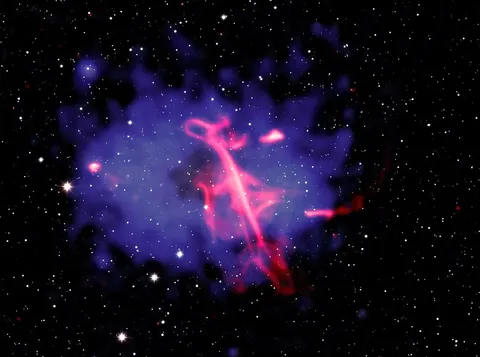 NASA’s Chandra Breaks Down ‘Treble Clef’s’ Galaxy Cluster CollisionAstronomers have used NASA’s Chandra X-ray Observatory to break down the cause of a remarkable formation of radio waves they have nicknamed the “Treble Clef” because its distinct shape strongly resembles the musical symbol. The researchers discovered the Treble Clef is likely caused by an outburst from a supermassive black hole, followed by a collision […]
 NASA’s Chandra Finds Unusual Objects in Pinwheel GalaxyUsing NASA’s Chandra X-ray Observatory, researchers found mysterious objects that give off unusually low-energy X-rays but intense levels of ultraviolet radiation. One of the galaxies they studied, M101, is pictured here in this image released on Sept. 9, 2026. Astronomers suggest these newly spotted objects in other galaxies may help solve not one, but two […]
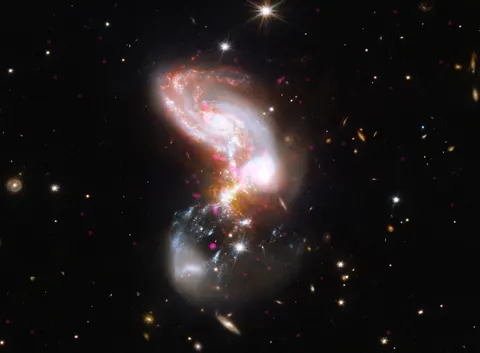 NASA’s Chandra Spots Galactic GemTwo galaxies merge at a furious rate in this Aug. 25, 2026, image of the II Zw 096 system. This and several other images of both visually and scientifically interesting galaxies were released by NASA’s Chandra X-ray Observatory and other telescopes. Chandra X-ray data (magenta) pinpoint powerful black hole activity and hot gas, while optical […]
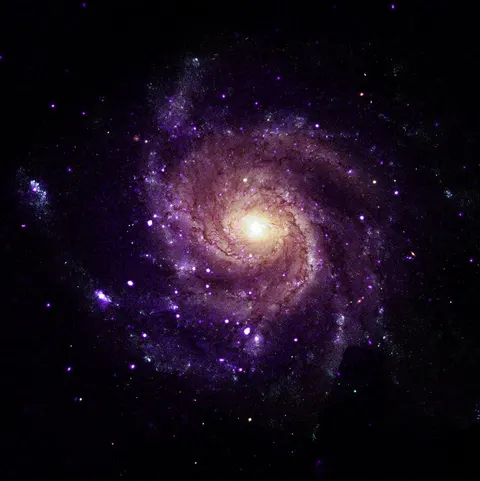 NASA’s Chandra Unveils Mysterious X-Ray ObjectsUsing NASA’s Chandra X-ray Observatory, scientists have discovered a new class of objects behaving unlike any they have seen before. Astronomers suggest these newly spotted objects in other galaxies may help solve not one, but two long-standing questions in astrophysics. These mysterious objects give off unusually low-energy X-rays but intense levels of ultraviolet radiation. This […]
 Galactic Gems Glisten in New Gallery From NASA’s ChandraGalaxies are like cosmic gems, each with characteristics including size and shape that make them distinct. A new gallery released today from NASA’s Chandra X-ray Observatory and other telescopes displays a collection of galactic images that showcase this variety. Astronomers put galaxies into three main categories: spirals like our own Milky Way with arms emanating […]
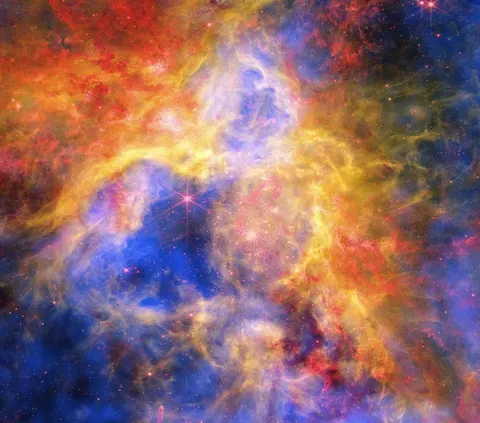 Colorful Collage of Tarantula NebulaData from NASA’s Chandra X-ray Observatory, NASA’s James Webb Space Telescope, and NASA’s Hubble Space Telescope combine to reveal a vibrant view of 30 Doradus, or the Tarantula Nebula, in this Aug. 11, 2026, image. Located in the Large Magellanic Cloud, a small neighbor galaxy to the Milky Way about 160,000 light-years from Earth, the […]
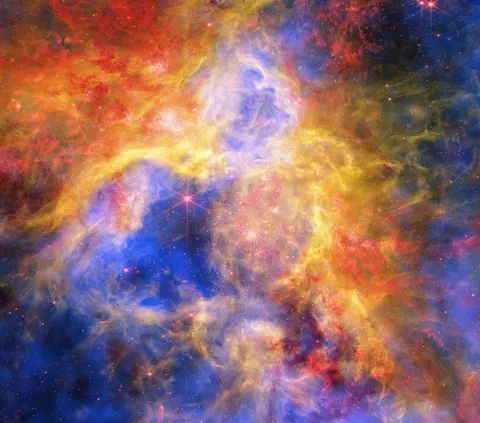 NASA Telescopes Create Colorful ‘Craft’ From Nearby NebulaLike a collage made of layered sheets of colored cellophane, a vibrant new image layers observations of a famous star-forming nebula from NASA space telescopes. The resulting cosmic “craft” reveals new details about the star formation region known as 30 Doradus, or the Tarantula Nebula. Located in the Large Magellanic Cloud, a small neighbor galaxy […]
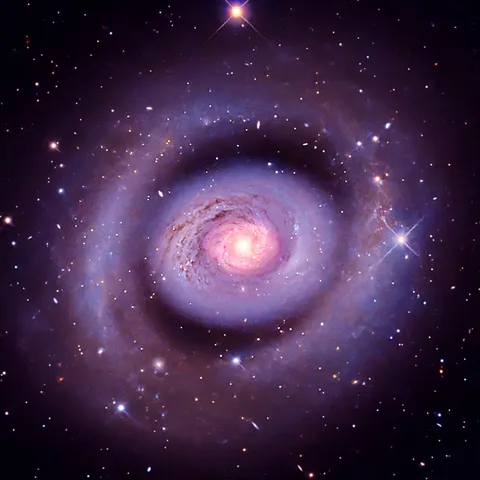 A New Look – and Sound – for Messier 94NASA’s Chandra X-ray Observatory unveiled this new look at the galaxy NGC 4736, also known as Messier 94, on June 30, 2026. Messier 94 is a spiral galaxy with a bright inner ring around it, called a starburst ring, where new stars are forming, perhaps fueled by gas driven in the unique oval-shaped structure seen […]
Pad
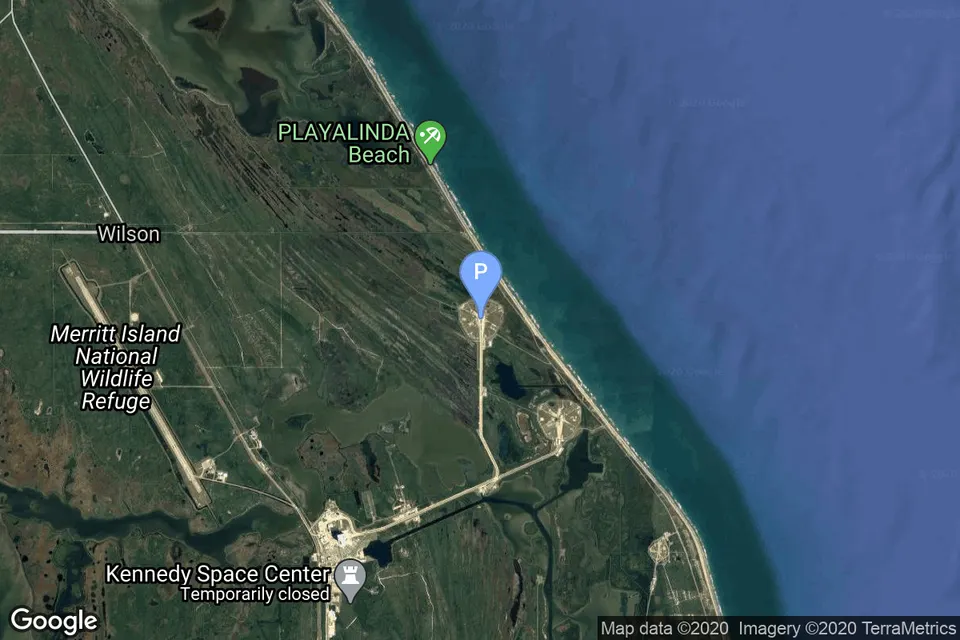
Launch Complex 39B, Kennedy Space Center, FL, USA
45th launch from Launch Complex 39B, 2nd this year · 112th from Kennedy Space Center, FL, USA
59 launches from this pad · 283 from Kennedy Space Center, FL, USA
56 days after the previous launch from this pad
Questions
When did STS-93 launch?
STS-93 launched on July 23, 1999. The time is known to the hour, not the minute.
Where can I watch STS-93?
Coverage: STS-93 launch (7-23-99). Watch the replay
What rocket launched STS-93?
Space Shuttle, flown by United Space Alliance. Space Shuttle spec sheet
Where did STS-93 launch from?
Launch Complex 39B, Kennedy Space Center, FL, USA.
What orbit did STS-93 reach?
Columbia (STS-93), one of 15 catalogued objects, reached a 275 × 297 km orbit inclined 28.5°.
How many satellites did STS-93 launch?
2 payloads from this launch are catalogued, 1 of them still in orbit (Data from J. McDowell, planet4589.org).
Which program is STS-93 part of?
NASA Large Strategic Science Missions and Space Shuttle. About NASA Large Strategic Science Missions