![[AUTO] Space Shuttle - image](/media?u=https%3A%2F%2Fthespacedevs-prod.nyc3.digitaloceanspaces.com%2Fmedia%2Fimages%2Fspace_shuttle_image_20230422074810.jpeg&w=1600)
Rockwell InternationalSpace ShuttleLaunch Complex 39A, Kennedy Space Center, FL, USA
STS-6
Launched
April 4, 1983

Summary
STS-6 launched on a Rockwell International Space Shuttle from Launch Complex 39A, Kennedy Space Center, FL, USA on April 4, 1983. It was Rockwell International's 5th launch, 1st this year and humanity's 2,673rd orbital launch attempt. It was the 6th Space Shuttle flight and the 1st this year. The payload was bound for low Earth orbit (LEO). Challenger (STS-6), one of 4 catalogued objects, reached a 291 × 298 km orbit inclined 28.5°. 4 crew members flew: Paul J. Weitz, Story Musgrave, Karol J. Bobko and Donald H. Peterson. The spacecraft was Space Shuttle Challenger (OV-099). 4 objects from this launch are catalogued, 2 of them payloads.
- Watch
- STS-6 Launch Multi-Viewlunarmodule5
- STS-6 Countdown & Launch - 2 (Challenger)lunarmodule5
- Vehicle
- Space Shuttle · Rockwell InternationalSpace Shuttle
- Booster
- No booster details on record.
- Mission
- Communications · Low Earth Orbit (LEO)
- Milestone
- 6th Space Shuttle flight · 1st this yearRockwell International's 5th launch1st this yearhumanity's 2,673rd orbital launch attempt27th orbital launch attempt this year
Crew
 Paul J. WeitzCommander · NASA · age 50 · 2nd flight
 Story MusgraveMission Specialist · NASA · age 47 · first flight
 Karol J. BobkoPilot · NASA · age 45 · first flight
 Donald H. PetersonMission Specialist · NASA · age 49 · first flight
Spacecraft
Space Shuttle Challenger (OV-099)
Space Shuttle Challenger (Orbiter Vehicle Designation: OV-099) was the second orbiter of NASA's space shuttle program to be put into service, after Columbia. Challenger was built by Rockwell International's Space Transportation Systems Division, in Downey, California. Its maiden flight, STS-6, began on April 4, 1983. The orbiter was launched and landed nine times before breaking apart 73 seconds into its tenth mission, STS-51-L, on January 28, 1986, resulting in the death of all seven crew members, including a civilian school teacher. It was the first of two shuttles to be destroyed in flight, the other being Columbia, in 2003. The accident led to a two-and-a-half-year grounding of the shuttle fleet; flights resumed in 1988, with STS-26 flown by Discovery. Challenger was replaced by Endeavour, which was built from structural spares ordered by NASA in the construction contracts for Discovery and Atlantis.
- Destination: Low Earth Orbit
- Mission length: 5 days
Space Shuttle Challenger successfully landed at Edwards Air Force Base after this mission.
Flight preview
Orbit: as tracked
Challenger (STS-6) · NORAD 13968 · 1983-026 · Space-Track · tracking 1 of 4 objects
Show the numbers for orbit elements
- Object
- TBA - TO BE ASSIGNED
- Object ID
- 1983-026A
- Epoch
- 1983-04-04 19:42:45 UTC
- Mean motion
- 15.95180321 rev/day
- Eccentricity
- 0.0005321
- Inclination
- 28.4696°
- Ascending node
- 303.3243°
- Arg. of perigee
- 274.0577°
- Mean anomaly
- 85.7745°
- Element set
- 999
- Rev at epoch
- 1
- B*
- 0.000001105
Perigee, apogee and period are Kepler figures from the catalogued mean elements, not a propagated state. Published orbit: LEO. Ascent drawn from padside's representative profile.
Catalogued objects
4 catalogued: 2 payloads, 2 components; 3 still in orbit
- Challenger (STS-6) · NORAD 13968 · landed April 9, 1983
- TDRS 1 · NORAD 13969 · in orbit
Data from J. McDowell, planet4589.org
About this launch
STS-6 was the maiden flight of the Space Shuttle Challenger. It deployed the first Tracking and Data Relay Satellite into orbit for NASA, forming an integral part of NASAs in-space 10. It was also the first Space Shuttle mission involving a spacewalk. It was the first mission in which the Extravehicular Mobility Unit (EMU) was used.
Pad
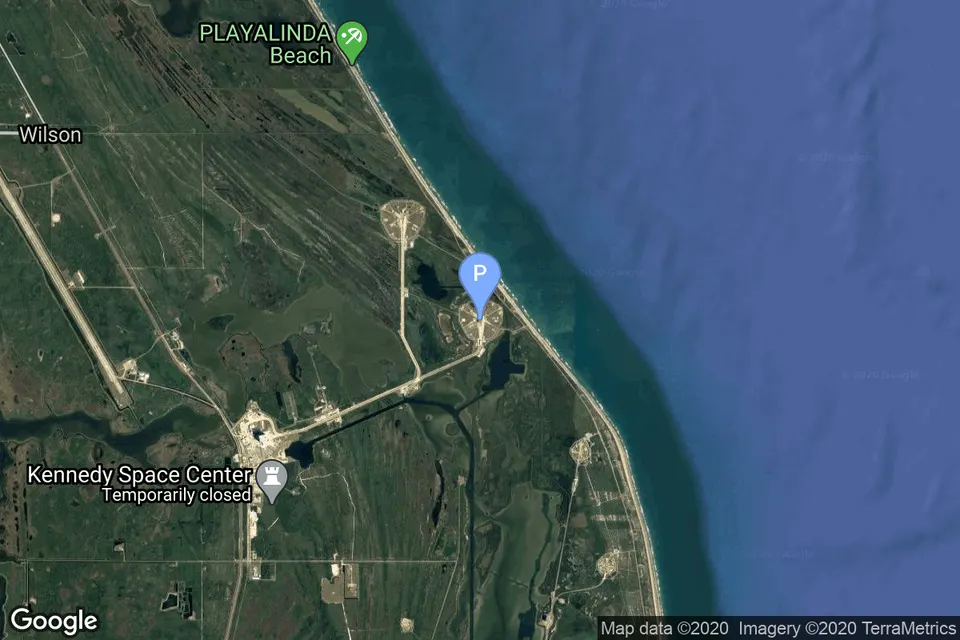
Launch Complex 39A, Kennedy Space Center, FL, USA
18th launch from Launch Complex 39A, 1st this year · 23rd from Kennedy Space Center, FL, USA
224 launches from this pad · 283 from Kennedy Space Center, FL, USA
144 days after the previous launch from this pad
Questions
When did STS-6 launch?
STS-6 launched on April 4, 1983. The time is known to the hour, not the minute.
Where can I watch STS-6?
Coverage: STS-6 Launch Multi-View; STS-6 Countdown & Launch - 2 (Challenger). Watch the replay
What rocket launched STS-6?
Space Shuttle, flown by Rockwell International. Space Shuttle spec sheet
Where did STS-6 launch from?
Launch Complex 39A, Kennedy Space Center, FL, USA.
What orbit did STS-6 reach?
Challenger (STS-6), one of 4 catalogued objects, reached a 291 × 298 km orbit inclined 28.5°.
How many satellites did STS-6 launch?
2 payloads from this launch are catalogued, 1 of them still in orbit (Data from J. McDowell, planet4589.org).
Which program is STS-6 part of?
Space Shuttle. About Space Shuttle