![[AUTO] Space Shuttle - image](/media?u=https%3A%2F%2Fthespacedevs-prod.nyc3.digitaloceanspaces.com%2Fmedia%2Fimages%2Fspace_shuttle_image_20230422074810.jpeg&w=1600)
Lockheed Space Operations CompanySpace ShuttleLaunch Complex 39B, Kennedy Space Center, FL, USA
STS-51-L
Launched
January 28, 1986

Summary
STS-51-L launched on a Lockheed Space Operations Company Space Shuttle from Launch Complex 39B, Kennedy Space Center, FL, USA on January 28, 1986. The mission failed: During the ascent phase, 73 seconds after liftoff, the vehicle experienced a catastrophic structural failure resulting in the loss of crew and vehicle. The Rogers Commission later determined the cause of the accident to have been the failure of the primary and secondary (backup) O-ring seals on Challenger's right Solid Rocket Booster. It was Lockheed Space Operations Company's 16th launch, 2nd this year and humanity's 3,039th orbital launch attempt. It was the 25th Space Shuttle flight and the 2nd this year. The payload was bound for low Earth orbit (LEO). 7 crew members flew: Dick Scobee, Ronald McNair, Ellison Onizuka, Judith Resnik, Michael J. Smith, Gregory Jarvis and Christa McAuliffe. The spacecraft was Space Shuttle Challenger (OV-099).
- Result
- During the ascent phase, 73 seconds after liftoff, the vehicle experienced a catastrophic structural failure resulting in the loss of crew and vehicle. The Rogers Commission later determined the cause of the accident to have been the failure of the primary and secondary (backup) O-ring seals on Challenger's right Solid Rocket Booster.
- Watch
- Vehicle
- Space Shuttle · Lockheed Space Operations CompanySpace Shuttle
- Booster
- No booster details on record.
- Mission
- Human Exploration · Low Earth Orbit (LEO)
- Milestone
- 25th Space Shuttle flight · 2nd this yearLockheed Space Operations Company's 16th launch2nd this yearhumanity's 3,039th orbital launch attempt10th orbital launch attempt this year
Crew
 Dick ScobeeCommander · NASA · age 46 · 2nd flight
 Ronald McNairMission Specialist · NASA · age 35 · 2nd flight
 Ellison OnizukaMission Specialist · NASA · age 39 · 2nd flight
 Judith ResnikMission Specialist · NASA · age 36 · 2nd flight
 Michael J. SmithPilot · NASA · age 40 · first flight
 Gregory JarvisPayload Specialist · HAC · age 41 · first flight
 Christa McAuliffePayload Specialist · NASA · age 37 · first flight
Spacecraft
Space Shuttle Challenger (OV-099)
Space Shuttle Challenger (Orbiter Vehicle Designation: OV-099) was the second orbiter of NASA's space shuttle program to be put into service, after Columbia. Challenger was built by Rockwell International's Space Transportation Systems Division, in Downey, California. Its maiden flight, STS-6, began on April 4, 1983. The orbiter was launched and landed nine times before breaking apart 73 seconds into its tenth mission, STS-51-L, on January 28, 1986, resulting in the death of all seven crew members, including a civilian school teacher. It was the first of two shuttles to be destroyed in flight, the other being Columbia, in 2003. The accident led to a two-and-a-half-year grounding of the shuttle fleet; flights resumed in 1988, with STS-26 flown by Discovery. Challenger was replaced by Endeavour, which was built from structural spares ordered by NASA in the construction contracts for Discovery and Atlantis.
- Destination: Low Earth Orbit
- Mission length: under an hour
Space Shuttle Challenger was destroyed during this launch.
Flight preview
About this launch
The tenth mission for Challenger, STS-51-L was scheduled to deploy the second in a series of Tracking and Data Relay Satellites, carry out the first flight of the Shuttle-Pointed Tool for Astronomy (SPARTAN-203) / Halley's Comet Experiment Deployable in order to observe Halley's Comet, and carry out several lessons from space as part of the Teacher in Space Project and Shuttle Student Involvement Program (SSIP).
Pad
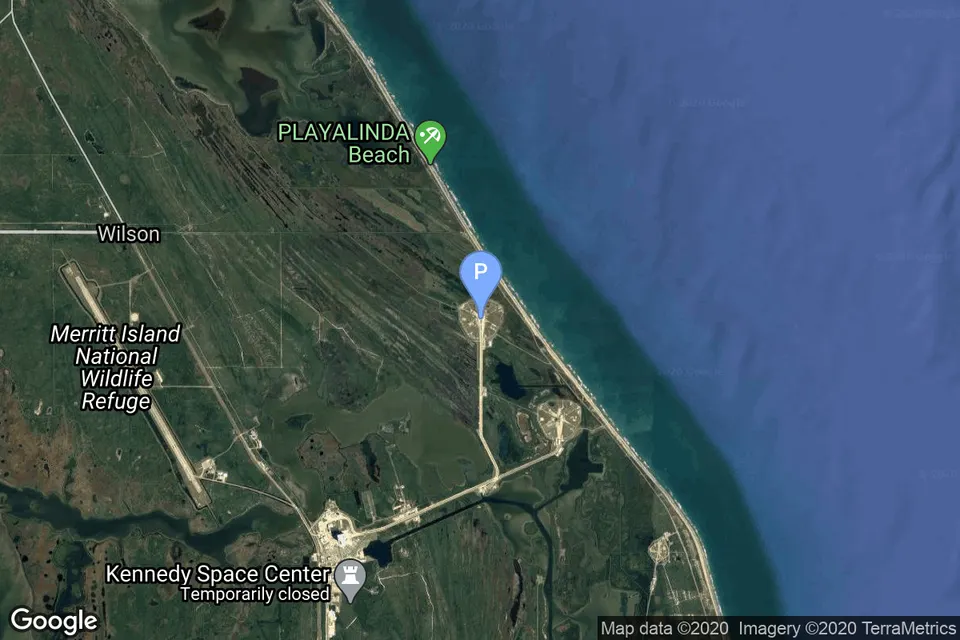
Launch Complex 39B, Kennedy Space Center, FL, USA
6th launch from Launch Complex 39B, 1st this year · 42nd from Kennedy Space Center, FL, USA
59 launches from this pad · 283 from Kennedy Space Center, FL, USA
about 11 years after the previous launch from this pad
Questions
When did STS-51-L launch?
STS-51-L launched on January 28, 1986. The time is known to the hour, not the minute.
Why did STS-51-L fail?
During the ascent phase, 73 seconds after liftoff, the vehicle experienced a catastrophic structural failure resulting in the loss of crew and vehicle. The Rogers Commission later determined the cause of the accident to have been the failure of the primary and secondary (backup) O-ring seals on Challenger's right Solid Rocket Booster.
Where can I watch STS-51-L?
Coverage: The Challenger Disaster: STS-51-L Countdown and Launch. Watch the replay
What rocket launched STS-51-L?
Space Shuttle, flown by Lockheed Space Operations Company. Space Shuttle spec sheet
Where did STS-51-L launch from?
Launch Complex 39B, Kennedy Space Center, FL, USA.
What orbit was STS-51-L going to?
Low Earth Orbit (LEO), a human exploration mission.
Which program is STS-51-L part of?
Space Shuttle. About Space Shuttle