![[AUTO] Space Shuttle - image](/media?u=https%3A%2F%2Fthespacedevs-prod.nyc3.digitaloceanspaces.com%2Fmedia%2Fimages%2Fspace_shuttle_image_20230422074810.jpeg&w=1600)
Lockheed Space Operations CompanySpace ShuttleLaunch Complex 39A, Kennedy Space Center, FL, USA
STS-51-G
Launched
June 17, 1985

Summary
STS-51-G launched on a Lockheed Space Operations Company Space Shuttle from Launch Complex 39A, Kennedy Space Center, FL, USA on June 17, 1985. It was Lockheed Space Operations Company's 9th launch, 4th this year and humanity's 2,953rd orbital launch attempt. It was the 18th Space Shuttle flight and the 4th this year. The payload was bound for low Earth orbit (LEO). Discovery (STS 51-G), one of 8 catalogued objects, reached a 362 × 372 km orbit inclined 28.5°. 7 crew members flew: Patrick Baudry, Sultan bin Salman Al Saud, Daniel Brandenstein, John Oliver Creighton, Steven R. Nagel, John M. Fabian and Shannon Lucid. The spacecraft was Space Shuttle Discovery (OV-103). 8 objects from this launch are catalogued, 5 of them payloads.
- Watch
- Vehicle
- Space Shuttle · Lockheed Space Operations CompanySpace Shuttle
- Booster
- No booster details on record.
- Mission
- Communications · Low Earth Orbit (LEO)
- Milestone
- 18th Space Shuttle flight · 4th this yearLockheed Space Operations Company's 9th launch4th this yearhumanity's 2,953rd orbital launch attempt49th orbital launch attempt this year
Crew
 Patrick BaudryPayload Specialist · CNES · age 39 · first flight
 Sultan bin Salman Al SaudPayload Specialist · KACST-SRI · age 28 · first flight
 Daniel BrandensteinCommander · NASA · age 42 · 2nd flight
 John Oliver CreightonPilot · NASA · age 42 · first flight
 Steven R. NagelMission Specialist · NASA · age 38 · first flight
 John M. FabianMission Specialist · NASA · age 46 · 2nd flight
 Shannon LucidMission Specialist · NASA · age 42 · first flight
Spacecraft
Space Shuttle Discovery (OV-103)
Space Shuttle Discovery (Orbiter Vehicle Designation: OV-103) is one of the orbiters from NASA's Space Shuttle program and the third of five fully operational orbiters to be built. Its first mission, STS-41-D, flew from August 30 to September 5, 1984. Over 27 years of service it launched and landed 39 times, gathering more spaceflights than any other spacecraft to date. Discovery became the third operational orbiter to enter service, preceded by Columbia and Challenger. It embarked on its last mission, STS-133, on February 24, 2011 and touched down for the final time at Kennedy Space Center on March 9, having spent a cumulative total of almost a full year in space. Discovery performed both research and International Space Station (ISS) assembly missions. It also carried the Hubble Space Telescope into orbit. Discovery was the first operational shuttle to be retired, followed by Endeavour and then Atlantis.
- Destination: Low Earth Orbit
- Mission length: 7 days 1 hour
Space Shuttle Discovery successfully landed at Edwards Air Force Base after this mission.
Flight preview
Orbit: as tracked
Discovery (STS 51-G) · NORAD 15823 · 1985-048 · Space-Track · tracking 1 of 8 objects
Show the numbers for orbit elements
- Object
- STS 51G
- Object ID
- 1985-048A
- Epoch
- 1985-06-17 11:15:02 UTC
- Mean motion
- 15.69749999 rev/day
- Eccentricity
- 0.000762
- Inclination
- 28.459°
- Ascending node
- 271.0522°
- Arg. of perigee
- 244.3853°
- Mean anomaly
- 115.5966°
- Element set
- 999
- Rev at epoch
- 0
- B*
- 0.00025299
Perigee, apogee and period are Kepler figures from the catalogued mean elements, not a propagated state. Published orbit: LEO. Ascent drawn from padside's representative profile.
Catalogued objects
8 catalogued: 5 payloads, 3 components; 6 still in orbit
- Discovery (STS 51-G) · NORAD 15823 · landed June 24, 1985
- Morelos 1 · NORAD 15824 · in orbit
- Arabsat 1B · NORAD 15825 · in orbit
- Telstar 303 · NORAD 15826 · in orbit
- Spartan 1 · NORAD 15831
Data from J. McDowell, planet4589.org
About this launch
STS-51-G was the eighteenth flight of the shuttle program and fifth for Space Shuttle Discovery. Sultan Salman Al Saud of Saudi Arabia was on board as a payload specialist; he became the first Arab, the first Muslim and first member of a royal family to fly into space. It was the first shuttle flight to fly without an astronaut from the pre-Shuttle era. Its mission was to deploy 3 10 satellites.
Pad
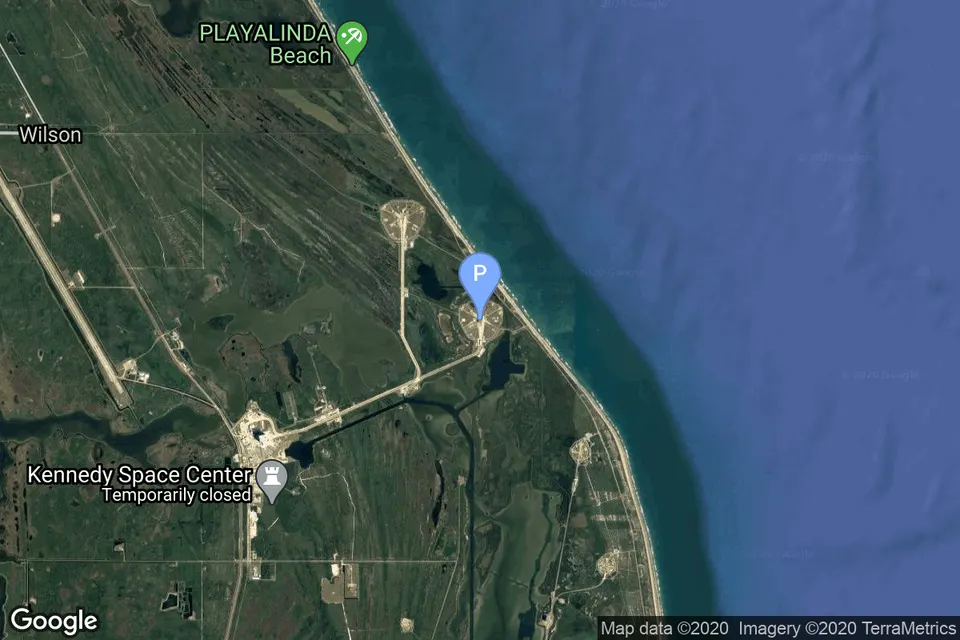
Launch Complex 39A, Kennedy Space Center, FL, USA
30th launch from Launch Complex 39A, 4th this year · 35th from Kennedy Space Center, FL, USA
224 launches from this pad · 283 from Kennedy Space Center, FL, USA
48 days after the previous launch from this pad
Questions
When did STS-51-G launch?
STS-51-G launched on June 17, 1985. The time is known to the hour, not the minute.
Where can I watch STS-51-G?
Coverage: NBC News Coverage of The STS-51-G Launch. Watch the replay
What rocket launched STS-51-G?
Space Shuttle, flown by Lockheed Space Operations Company. Space Shuttle spec sheet
Where did STS-51-G launch from?
Launch Complex 39A, Kennedy Space Center, FL, USA.
What orbit did STS-51-G reach?
Discovery (STS 51-G), one of 8 catalogued objects, reached a 362 × 372 km orbit inclined 28.5°.
How many satellites did STS-51-G launch?
5 payloads from this launch are catalogued, 3 of them still in orbit (Data from J. McDowell, planet4589.org).
Which program is STS-51-G part of?
Space Shuttle. About Space Shuttle