![[AUTO] Falcon 9 - image](/media?u=https%3A%2F%2Fthespacedevs-prod.nyc3.digitaloceanspaces.com%2Fmedia%2Fimages%2Ffalcon252092520v1.0_image_20190222030703.jpeg&w=1600)
SpaceXFalcon 9 v1.0Space Launch Complex 40, Cape Canaveral SFS, FL, USA
SpX CRS-2
Launched
March 1, 2013

Summary
SpX CRS-2 launched on a SpaceX Falcon 9 v1.0 from Space Launch Complex 40, Cape Canaveral SFS, FL, USA on March 1, 2013. It was SpaceX's 10th launch, 1st this year and humanity's 5,279th orbital launch attempt. It was the 5th Falcon 9 v1.0 flight and the 1st this year. Booster B0007 flew for the 1st time and was expended. The payload was bound for low Earth orbit (LEO). Dragon CRS-2, one of 4 catalogued objects, reached a 213 × 327 km orbit inclined 51.7°. The spacecraft was Dragon C104 (C104). 4 objects from this launch are catalogued, one of them a payload.
- Watch
- Booster
- B0007 · flight 1 · expendable38/42 landed here
- Mission
- Resupply · Low Earth Orbit (LEO)for NASA
- Milestone
- 5th Falcon 9 v1.0 flight · 1st this yearSpaceX's 10th launch1st this yearhumanity's 5,279th orbital launch attempt11th orbital launch attempt this year
Spacecraft
Dragon C104 (C104)
First launch of Dragon using trunk section to carry cargo. Launch was successful, but anomalies occurred with the spacecraft's thrusters shortly after liftoff. Thruster function was later restored and orbit corrections were made, but the spacecraft's rendezvous with the ISS was delayed from its planned date of 2 March until 3 March, when it was successfully berthed with the Harmony module. Dragon splashed down safely in the Pacific Ocean on 26 March.
- Destination: International Space Station
- Mission length: 25 days
- Docked March 3, 2013 at Harmony nadir
The Dragon spacecraft successfully splashed down in the Pacific Ocean carrying scientific research and station hardware.
Webcast
Flight preview
Orbit: as tracked
Dragon CRS-2 · NORAD 39115 · 2013-010 · Space-Track · tracking 1 of 4 objects
Show the numbers for orbit elements
- Object
- TBA - TO BE ASSIGNED
- Object ID
- 2013-010A
- Epoch
- 2013-03-01 16:55:51 UTC
- Mean motion
- 16.04265465 rev/day
- Eccentricity
- 0.0086029
- Inclination
- 51.6676°
- Ascending node
- 282.2864°
- Arg. of perigee
- 46.2514°
- Mean anomaly
- 34.1377°
- Element set
- 999
- Rev at epoch
- 0
- B*
- 0
Perigee, apogee and period are Kepler figures from the catalogued mean elements, not a propagated state. Published orbit: LEO. Ascent drawn from padside's representative profile.
Catalogued objects
4 catalogued: 1 payload, 1 rocket stage, 2 components
- Dragon CRS-2 · NORAD 39115
Falcon 9-005 Stage 2 · re-entered March 11, 2013
Data from J. McDowell, planet4589.org
About this launch
This was the fourth flight for SpaceX's uncrewed Dragon cargo spacecraft, the fifth and final flight for the company's two-stage Falcon 9 v1.0 launch vehicle, and the second SpaceX operational mission contracted to NASA under a Commercial Resupply Services contract. The launch occurred on March 1, 2013. A minor technical issue on the Dragon spacecraft involving the RCS thruster pods occurred upon reaching orbit, but it was recoverable. The vehicle was released, splashed down, and recovered by SpaceX.
Pad
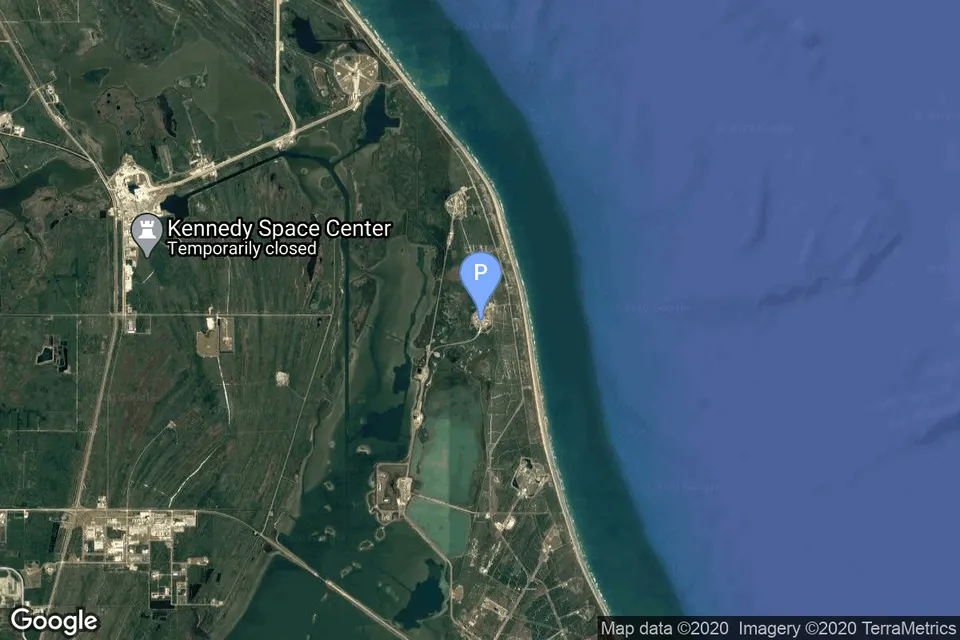
Space Launch Complex 40, Cape Canaveral SFS, FL, USA
60th launch from Space Launch Complex 40, 1st this year · 695th from Cape Canaveral SFS, FL, USA
403 launches from this pad · 1,131 from Cape Canaveral SFS, FL, USA
144 days after the previous launch from this pad
Questions
When did SpX CRS-2 launch?
SpX CRS-2 launched on March 1, 2013. The time is known to the hour, not the minute.
Where can I watch SpX CRS-2?
Coverage: SpaceX CRS-2 Full Webcast. Watch the replay
What rocket launched SpX CRS-2?
Falcon 9 v1.0, flown by SpaceX. Falcon 9 v1.0 spec sheet
Where did SpX CRS-2 launch from?
Space Launch Complex 40, Cape Canaveral SFS, FL, USA.
Did the booster land?
Booster B0007 flew for the 1st time and was expended.
What orbit did SpX CRS-2 reach?
Dragon CRS-2, one of 4 catalogued objects, reached a 213 × 327 km orbit inclined 51.7°.
Which program is SpX CRS-2 part of?
Commercial Resupply Services and International Space Station. About Commercial Resupply Services