![[AUTO] Falcon 9 - image](/media?u=https%3A%2F%2Fthespacedevs-prod.nyc3.digitaloceanspaces.com%2Fmedia%2Fimages%2Ffalcon252092520full2520thrust_image_20190222031117.jpeg&w=1600)
SpaceXFalcon 9 Full ThrustSpace Launch Complex 40, Cape Canaveral SFS, FL, USA
SES-9
Launched
March 4, 2016

Summary
SES-9 launched on a SpaceX Falcon 9 Full Thrust from Space Launch Complex 40, Cape Canaveral SFS, FL, USA on March 4, 2016. It was SpaceX's 27th launch, 2nd this year and humanity's 5,542nd orbital launch attempt. It was the 2nd Falcon 9 Full Thrust flight and the 1st this year. Booster B1020 flew for the 1st time and its landing at Of Course I Still Love You failed. The payload was bound for Geostationary Transfer Orbit (GTO). SES-9, one of 2 catalogued objects, reached a 341 × 40,655 km orbit inclined 28.0°. 2 objects from this launch are catalogued, one of them a payload.
- Watch
- SES-9 Technical WebcastSpaceX
- SES-9 Full WebcastSpaceX
- Vehicle
- Falcon 9 Full Thrust · SpaceX
- Booster
- B1020 · flight 1 · Autonomous Spaceport Drone Ship at Of Course I Still Love You · landing failed209/217 landed here
- Mission
- Communications · Geostationary Transfer Orbit (GTO)
- Milestone
- 2nd Falcon 9 Full Thrust flight · 1st this yearSpaceX's 27th launch2nd this yearhumanity's 5,542nd orbital launch attempt13th orbital launch attempt this year
Webcast
Flight preview
Orbit: as tracked
SES-9 · NORAD 41380 · 2016-013 · Space-Track · tracking 1 of 2 objects
Show the numbers for orbit elements
- Object
- TBA - TO BE ASSIGNED
- Object ID
- 2016-013A
- Epoch
- 2016-03-04 18:15:53 UTC
- Mean motion
- 1.97113701 rev/day
- Eccentricity
- 0.7501818
- Inclination
- 27.9629°
- Ascending node
- 347.8159°
- Arg. of perigee
- 178.4401°
- Mean anomaly
- 189.3581°
- Element set
- 999
- Rev at epoch
- 0
- B*
- 0
Perigee, apogee and period are Kepler figures from the catalogued mean elements, not a propagated state. Published orbit: GTO. Ascent drawn from padside's representative profile.
Catalogued objects
2 catalogued: 1 payload, 1 rocket stage; 2 still in orbit
- SES-9 · NORAD 41380 · in orbit
Falcon 9-022 Stage 2 · in orbit
Data from J. McDowell, planet4589.org
About this launch
Containing 81 Ku-Band transponders, SES-9 will be positioned at 108.2 degrees East to provide communication coverage for 22 million homes. The satellite will enhance SES’s existing coverage in Asia, Australia and also improve maritime communications in the Indian Ocean. The 5300kg craft will use a xenon ion propulsion system for orbital manoeuvres to decrease the amount of propellant needed.
Pad
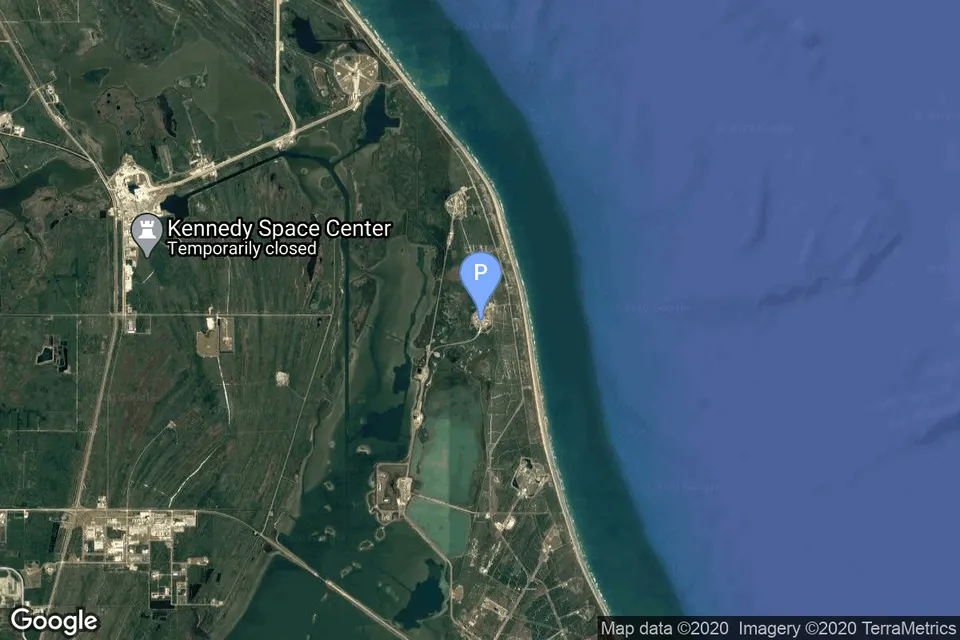
Space Launch Complex 40, Cape Canaveral SFS, FL, USA
75th launch from Space Launch Complex 40, 1st this year · 738th from Cape Canaveral SFS, FL, USA
403 launches from this pad · 1,131 from Cape Canaveral SFS, FL, USA
73 days after the previous launch from this pad
Questions
When did SES-9 launch?
SES-9 launched on March 4, 2016. The time is known to the hour, not the minute.
Where can I watch SES-9?
Coverage: SES-9 Technical Webcast; SES-9 Full Webcast. Watch the replay
What rocket launched SES-9?
Falcon 9 Full Thrust, flown by SpaceX. Falcon 9 Full Thrust spec sheet
Where did SES-9 launch from?
Space Launch Complex 40, Cape Canaveral SFS, FL, USA.
Did the booster land?
Booster B1020 flew for the 1st time and its landing at Of Course I Still Love You failed.
What orbit did SES-9 reach?
SES-9, one of 2 catalogued objects, reached a 341 × 40,655 km orbit inclined 28.0°.
How many satellites did SES-9 launch?
1 payload from this launch is catalogued, still in orbit (Data from J. McDowell, planet4589.org).