![[AUTO] Falcon 9 - image](/media?u=https%3A%2F%2Fthespacedevs-prod.nyc3.digitaloceanspaces.com%2Fmedia%2Fimages%2Ffalcon252092520full2520thrust_image_20190222031117.jpeg&w=1600)
SpaceXFalcon 9 Full ThrustLaunch Complex 39A, Kennedy Space Center, FL, USA
SES-10
Launched
March 30, 2017

Summary
SES-10 launched on a SpaceX Falcon 9 Full Thrust from Launch Complex 39A, Kennedy Space Center, FL, USA on March 30, 2017. It was SpaceX's 38th launch, 4th this year and humanity's 5,633rd orbital launch attempt. It was the 13th Falcon 9 Full Thrust flight and the 4th this year. Booster B1021 flew for the 2nd time and landed at Of Course I Still Love You. The payload was bound for Geostationary Transfer Orbit (GTO). SES-10, one of 2 catalogued objects, reached a 254 × 35,680 km orbit inclined 26.2°. 2 objects from this launch are catalogued, one of them a payload.
- Watch
- Vehicle
- Falcon 9 Full Thrust · SpaceX
- Booster
- Mission
- Communications · Geostationary Transfer Orbit (GTO)
- Milestone
- 13th Falcon 9 Full Thrust flight · 4th this yearSpaceX's 38th launch4th this yearhumanity's 5,633rd orbital launch attempt18th orbital launch attempt this year
Webcast
Flight preview
Orbit: as tracked
SES-10 · NORAD 42432 · 2017-017 · Space-Track · tracking 1 of 2 objects
Show the numbers for orbit elements
- Object
- SES-10
- Object ID
- 2017-017A
- Epoch
- 2017-03-31 18:57:30 UTC
- Mean motion
- 2.28651368 rev/day
- Eccentricity
- 0.7277995
- Inclination
- 26.1778°
- Ascending node
- 355.8821°
- Arg. of perigee
- 178.6441°
- Mean anomaly
- 17.4358°
- Element set
- 999
- Rev at epoch
- 1
- B*
- 0
Perigee, apogee and period are Kepler figures from the catalogued mean elements, not a propagated state. Published orbit: GTO.
Catalogued objects
2 catalogued: 1 payload, 1 rocket stage; 2 still in orbit
- SES-10 · NORAD 42432 · in orbit
Falcon 9-033 Stage 2 · in orbit
Data from J. McDowell, planet4589.org
About this launch
SES-10 is a 5300 kg geostationary communications satellite, which will replace AMC 2 and AMC 3 satellites. It will provide coverage over Mexico, Central and South Americas, and the Caribbean. The SES-10 mission will mark a historic milestone on the road to full and rapid reusability as the world’s first reflight of an orbital class rocket. Falcon 9’s first stage for the SES-10 mission previously supported the successful CRS-8 mission in April 2016.
Pad
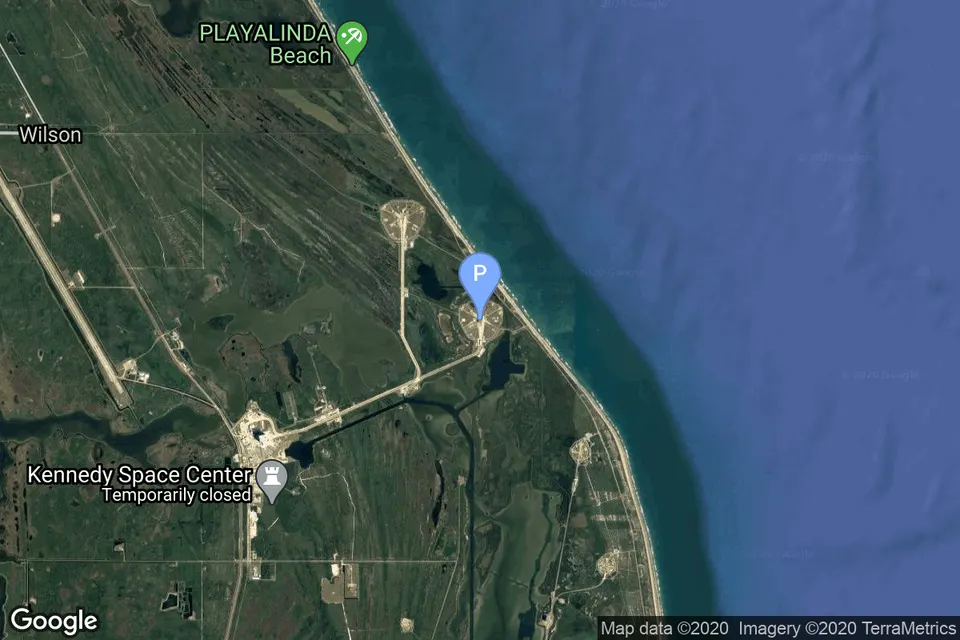
Launch Complex 39A, Kennedy Space Center, FL, USA
99th launch from Launch Complex 39A, 3rd this year · 156th from Kennedy Space Center, FL, USA
224 launches from this pad · 283 from Kennedy Space Center, FL, USA
14 days after the previous launch from this pad
Questions
When did SES-10 launch?
SES-10 launched on March 30, 2017. The time is known to the hour, not the minute.
Where can I watch SES-10?
Coverage: World’s First Reflight of an Orbital Class Rocket | SES-10 Technical Webcast; World’s First Reflight of an Orbital Class Rocket | SES-10 Hosted Webcast. Watch the replay
What rocket launched SES-10?
Falcon 9 Full Thrust, flown by SpaceX. Falcon 9 Full Thrust spec sheet
Where did SES-10 launch from?
Launch Complex 39A, Kennedy Space Center, FL, USA.
Did the booster land?
Booster B1021 flew for the 2nd time and landed at Of Course I Still Love You.
What orbit did SES-10 reach?
SES-10, one of 2 catalogued objects, reached a 254 × 35,680 km orbit inclined 26.2°.
How many satellites did SES-10 launch?
1 payload from this launch is catalogued, still in orbit (Data from J. McDowell, planet4589.org).