
Russian Federal Space Agency (ROSCOSMOS)Soyuz 2.1a31/6, Baikonur Cosmodrome, Republic of Kazakhstan
Progress MS-33 (94P)
Launched
March 22, 2026 · 11:59 UTC
Image: Roscosmos
Summary
Progress MS-33 (94P) launched on a Russian Federal Space Agency (ROSCOSMOS) Soyuz 2.1a from 31/6, Baikonur Cosmodrome, Republic of Kazakhstan on March 22, 2026 at 11:59 UTC. It was Russian Federal Space Agency (ROSCOSMOS)'s 339th launch, 1st this year and humanity's 7,235th orbital launch attempt. It was the 56th Soyuz 2.1a flight and the 1st this year. The payload was bound for low Earth orbit (LEO). Progress MS-33, one of 2 catalogued objects, reached a 271 × 286 km orbit inclined 51.6°. The spacecraft was Progress MS-33 (MS-33 (No.463)). 2 objects from this launch are catalogued, one of them a payload.
- Watch
- Booster
- No booster details on record.
- Mission
- Resupply · Low Earth Orbit (LEO)for RFSA
- Milestone
- 56th Soyuz 2.1a flight · 1st this yearRussian Federal Space Agency (ROSCOSMOS)'s 339th launch1st this yearhumanity's 7,235th orbital launch attempt62nd orbital launch attempt this year
Spacecraft
Progress MS-33 (MS-33 (No.463))
Progress MS-33 is a Progress spacecraft used by Roscosmos to resupply the International Space Station (ISS).
- Destination: ISS
- Docked March 24, 2026 at Poisk zenith
Webcast
Flight preview
Orbit: as tracked
Progress MS-33 · NORAD 68319 · 2026-058 · Space-Track · tracking 1 of 2 objects
Show the numbers for orbit elements
- Object
- TBA - TO BE ASSIGNED
- Object ID
- 2026-058A
- Epoch
- 2026-03-22 19:14:04 UTC
- Mean motion
- 16.0105608 rev/day
- Eccentricity
- 0.0011697
- Inclination
- 51.6361°
- Ascending node
- 8.2209°
- Arg. of perigee
- 151.7216°
- Mean anomaly
- 208.4431°
- Element set
- 999
- Rev at epoch
- 2
- B*
- 0.00028078
Perigee, apogee and period are Kepler figures from the catalogued mean elements, not a propagated state. Published orbit: LEO. Ascent drawn from padside's representative profile.
Catalogued objects
2 catalogued: 1 payload, 1 rocket stage
- Progress MS-33 · NORAD 68319 · docked March 24, 2026
Soyuz-2-1a No. 076 Blok-I · re-entered March 24, 2026
Data from J. McDowell, planet4589.org
About this launch
Progress resupply mission to the International Space Station.
Pad
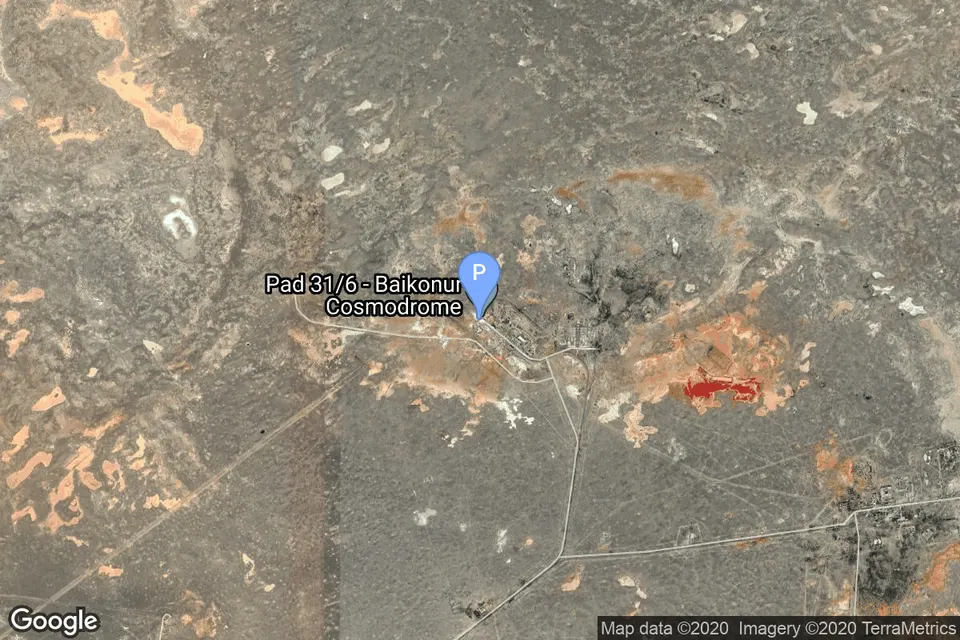
31/6, Baikonur Cosmodrome, Republic of Kazakhstan
427th launch from 31/6, 1st this year · 1,561st from Baikonur Cosmodrome, Republic of Kazakhstan
Local pad time at liftoff: Mar 22, 4:59 PM GMT+5, in daylight
430 launches from this pad · 1,565 from Baikonur Cosmodrome, Republic of Kazakhstan
115 days after the previous launch from this pad
All launches from Baikonur Cosmodrome, Republic of KazakhstanOpen in maps
Updates
Launch success with spacecraft in operation.
Show 9 earlier updates
Progress deployed.
hitura-nobad · 3/22/2026 · source
Liftoff!
hitura-nobad · 3/22/2026 · source
Official Webcast by NASA has started
LL2 · 3/22/2026 · source
Tweaked T-0.
Cosmic_Penguin · 3/18/2026 · source
Tweaked T-0.
Cosmic_Penguin · 3/12/2026 · source
NET March 22.
Cosmic_Penguin · 12/20/2025 · source
Rescheduled for NET March 11.
Cosmic_Penguin · 12/16/2025 · source
Delayed into 2026 due to serious damage to the launch pad sustained during the launch of Soyuz MS-28 and long period required for repairs.
Cosmic_Penguin · 12/5/2025 · source
NET December 21.
Cosmic_Penguin · 11/9/2025 · source
Questions
When did Progress MS-33 (94P) launch?
Progress MS-33 (94P) launched on March 22, 2026 at 11:59 UTC.
Where can I watch Progress MS-33 (94P)?
Coverage: Progress 94 Cargo Ship Launch; Progress 94 Cargo Ship Launch; Трансляция запуска корабля «Прогресс МС-33». Watch the replay
What rocket launched Progress MS-33 (94P)?
Soyuz 2.1a, flown by Russian Federal Space Agency (ROSCOSMOS). Soyuz 2.1a spec sheet
Where did Progress MS-33 (94P) launch from?
31/6, Baikonur Cosmodrome, Republic of Kazakhstan. Liftoff was Mar 22, 4:59 PM GMT+5 local time at the pad.
What orbit did Progress MS-33 (94P) reach?
Progress MS-33, one of 2 catalogued objects, reached a 271 × 286 km orbit inclined 51.6°.
Which program is Progress MS-33 (94P) part of?
International Space Station. About International Space Station