![[AUTO] Falcon 9 Block 5 | PACE (Plankton, Aerosol, Cloud, ocean Ecosystem) - image](/media?u=https%3A%2F%2Fthespacedevs-prod.nyc3.digitaloceanspaces.com%2Fmedia%2Fimages%2Ffalcon2520925_image_20240208174209.jpg&w=1600)
SpaceXFalcon 9 Block 5Space Launch Complex 40, Cape Canaveral SFS, FL, USA
PACE (Plankton, Aerosol, Cloud, ocean Ecosystem)
Launched
February 8, 2024 · 06:33 UTC

Summary
PACE (Plankton, Aerosol, Cloud, ocean Ecosystem) launched on a SpaceX Falcon 9 Block 5 from Space Launch Complex 40, Cape Canaveral SFS, FL, USA on February 8, 2024 at 06:33 UTC. It was SpaceX's 322nd launch, 11th this year and humanity's 6,614th orbital launch attempt. It was the 240th Falcon 9 Block 5 flight and the 11th this year. Booster B1081 flew for the 4th time and landed at Landing Zone 1. The payload was bound for Sun-Synchronous Orbit (SSO). It reached a 680 × 684 km orbit inclined 98.1°. One object from this launch is catalogued.
- Watch
- Booster
- B1081 · flight 4 · Return to Launch Site at Landing Zone 1 · landed53/54 landed here · 51 days after its previous flight, Starlink Group 6-34 · 9 km downrange
- Mission
- Earth Science · Sun-Synchronous Orbit (SSO)for NASA
- Milestone
- 240th Falcon 9 Block 5 flight · 11th this yearSpaceX's 322nd launch11th this yearhumanity's 6,614th orbital launch attempt25th orbital launch attempt this year
Webcast
Flight preview
Simulate in Flight ClubOrbit: as tracked
PACE · NORAD 58928 · 2024-025 · Space-Track
Show the numbers for orbit elements
- Object
- TBA - TO BE ASSIGNED
- Object ID
- 2024-026A
- Epoch
- 2024-02-08 08:21:46 UTC
- Mean motion
- 14.65723022 rev/day
- Eccentricity
- 0.0002594
- Inclination
- 98.0729°
- Ascending node
- 332.9923°
- Arg. of perigee
- 272.8623°
- Mean anomaly
- 246.6615°
- Element set
- 999
- Rev at epoch
- 0
- B*
- 0
Perigee, apogee and period are Kepler figures from the catalogued mean elements, not a propagated state. Published orbit: SSO. Ascent drawn from padside's representative profile. Booster return drawn from padside's representative arc.
Flight timeline
- T−38MGO for Prop Load
- T−35MProp Load
- T−35MStage 1 LOX Load
- T−16MStage 2 LOX Load
- T−7MEngine Chill
- T−1MStartup
- T−1MTank Press
- T−45SGO for Launch
- T−3SIgnition
- T−0Liftoff
- T+1M7SMax-Q
- T+2M19SMECO
- T+2M23SStage 2 Separation
- T+2M30SSES-1
- T+2M36SBooster Boostback Burn Startup
- T+3M16SBooster Boostback Burn Shutdown
- T+4M15SFairing Separation
- T+5M46SEntry Burn Startup
- T+6M11SEntry Burn Shutdown
- T+6M58SStage 1 Landing Burn
- T+7M32SStage 1 Landing
- T+10M20SSECO-1
- T+12M22SPACE Deployment
Catalogued objects
1 catalogued: 1 payload; 1 still in orbit
- PACE · NORAD 58928 · in orbit
Data from J. McDowell, planet4589.org
About this launch
PACE (Plankton, Aerosol, Cloud, ocean Ecosystem) is a NASA Earth observation satellite mission. It will make global ocean color measurements to provide extended data records on ocean ecology and global biogeochemistry (e.g., carbon cycle) along with polarimetry measurements to provide extended data records on clouds and aerosols.
News
 NASA’s PACE Mission Studies Smoke, FiresWith the North American fire season underway, and a record number of acres already burned nationwide, NASA’s Plankton, Aerosol, Cloud, and ocean Ecosystem (PACE) satellite’s three instruments are observing vegetation precursors to fires, along with plumes of smoke and their movement. This data will help scientists piece together clues that deepen their understanding of wildfires. […]
 A Turquoise Tint for the Black SeaPhytoplankton added a milky blue hue to the waters of the Black Sea and nearby waterways in spring and summer 2026.
Pad
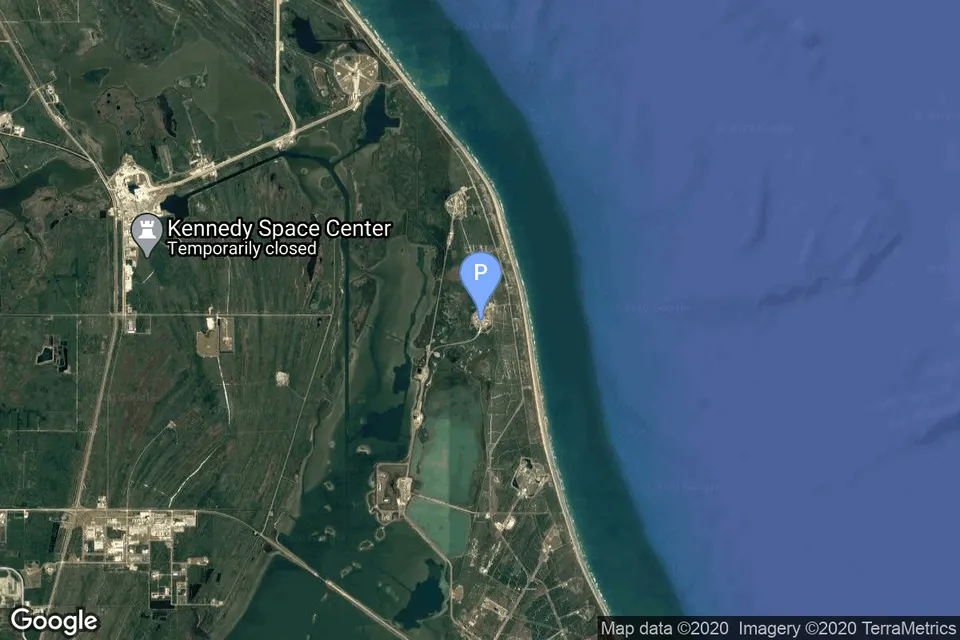
Space Launch Complex 40, Cape Canaveral SFS, FL, USA
223rd launch from Space Launch Complex 40, 5th this year · 933rd from Cape Canaveral SFS, FL, USA
Local pad time at liftoff: Feb 8, 1:33 AM EST, at night
403 launches from this pad · 1,131 from Cape Canaveral SFS, FL, USA
8 days 13 hours after the previous launch from this pad
Updates
Launch success, spacecraft power positive.
Show 9 earlier updates
Liftoff.
Cosmic_Penguin · 2/8/2024 · source
Livestream has started
LL2 · 2/8/2024 · source
Tweaked T-0.
Cosmic_Penguin · 2/8/2024 · source
Scrubbed for the day due to high winds.
Cosmic_Penguin · 2/6/2024 · source
Updated launch weather.
Cosmic_Penguin · 2/6/2024 · source
Scrubbed for the day due to high winds.
Cosmic_Penguin · 2/6/2024 · source
Tweaked T-0.
Cosmic_Penguin · 2/5/2024 · source
Weather 40% GO.
Cosmic_Penguin · 2/4/2024 · source
Refined T-0.
Cosmic_Penguin · 1/30/2024 · source
Questions
When did PACE (Plankton, Aerosol, Cloud, ocean Ecosystem) launch?
PACE (Plankton, Aerosol, Cloud, ocean Ecosystem) launched on February 8, 2024 at 06:33 UTC.
Where can I watch PACE (Plankton, Aerosol, Cloud, ocean Ecosystem)?
Coverage: SpaceX PACE (Plankton, Aerosol, Cloud, ocean Ecosystem); Launch of Mission to Study Earth's Atmosphere and Oceans (Official NASA Broadcast); SpaceX Falcon 9 Launches NASA's PACE-Payload. Watch the replay
What rocket launched PACE (Plankton, Aerosol, Cloud, ocean Ecosystem)?
Falcon 9 Block 5, flown by SpaceX. Falcon 9 Block 5 spec sheet
Where did PACE (Plankton, Aerosol, Cloud, ocean Ecosystem) launch from?
Space Launch Complex 40, Cape Canaveral SFS, FL, USA. Liftoff was Feb 8, 1:33 AM EST local time at the pad.
Did the booster land?
Booster B1081 flew for the 4th time and landed at Landing Zone 1.
What orbit did PACE (Plankton, Aerosol, Cloud, ocean Ecosystem) reach?
It reached a 680 × 684 km orbit inclined 98.1°.
How many satellites did PACE (Plankton, Aerosol, Cloud, ocean Ecosystem) launch?
1 payload from this launch is catalogued, still in orbit (Data from J. McDowell, planet4589.org).
Which program is PACE (Plankton, Aerosol, Cloud, ocean Ecosystem) part of?
NASA Large Strategic Science Missions. About NASA Large Strategic Science Missions