
SpaceXFalcon 9 Block 5Launch Complex 39A, Kennedy Space Center, FL, USA
Nova-C IM-2 & Others
Launched
February 27, 2025 · 00:16 UTC

Image: SpaceX
Summary
Nova-C IM-2 & Others launched on a SpaceX Falcon 9 Block 5 from Launch Complex 39A, Kennedy Space Center, FL, USA on February 27, 2025 at 00:16 UTC. It was SpaceX's 474th launch, 25th this year and humanity's 6,887th orbital launch attempt. It was the 385th Falcon 9 Block 5 flight and the 24th this year. Booster B1083 flew for the 9th time and landed at A Shortfall of Gravitas. The payload was bound for Lunar Orbit (LO). IM-2 Athena, one of 5 catalogued objects, reached a 219 × 367,508 km orbit inclined 28.5°. 5 objects from this launch are catalogued, 4 of them payloads.
- Watch
- Vehicle
- Falcon 9 Block 5 · SpaceX
- Booster
- B1083 · flight 9 · Autonomous Spaceport Drone Ship at A Shortfall of Gravitas · landed161/162 landed here · 36 days after its previous flight, Starlink Group 13-1 · 700 km downrange
- Mission
- Lunar Exploration · Lunar Orbit (LO)for IM
- Milestone
- 385th Falcon 9 Block 5 flight · 24th this yearSpaceX's 474th launch25th this yearhumanity's 6,887th orbital launch attempt38th orbital launch attempt this year
Webcast
Flight preview
Simulate in Flight ClubOrbit: as tracked
IM-2 Athena · NORAD 63099 · 2025-038 · Space-Track · tracking 1 of 5 objects
Show the numbers for orbit elements
- Object
- IM-2
- Object ID
- 2025-038A
- Epoch
- 2025-02-27 00:53:56 UTC
- Mean motion
- 0.10463308 rev/day
- Eccentricity
- 0.96536
- Inclination
- 28.52°
- Ascending node
- 357.2438°
- Arg. of perigee
- 216.41°
- Mean anomaly
- 0.0142°
- Element set
- 999
- Rev at epoch
- 0
- B*
- 0
Perigee, apogee and period are Kepler figures from the catalogued mean elements, not a propagated state. Published orbit: LO. Ascent drawn from padside's representative profile. Booster return drawn from padside's representative arc.
Flight timeline
- T−38MGO for Prop Load
- T−35MStage 1 LOX Load
- T−35MProp Load
- T−16MStage 2 LOX Load
- T−7MEngine Chill
- T−1MTank Press
- T−1MStartup
- T−45SGO for Launch
- T−3SIgnition
- T−0Liftoff
- T+1M18SMax-Q
- T+2M30SMECO
- T+2M34SStage 2 Separation
- T+2M42SSES-1
- T+3M27SFairing Separation
- T+6M15SEntry Burn Startup
- T+6M41SEntry Burn Shutdown
- T+7M55SSECO-1
- T+8M1SStage 1 Landing Burn
- T+8M31SStage 1 Landing
- T+36M25SSES-2
- T+37M26SSECO-2
- T+43M38SPayload Separation
- T+47M28SPayload Separation
- T+47M48SPayload Separation
- T+48M8SPayload Separation
Catalogued objects
5 catalogued: 4 payloads, 1 rocket stage
- IM-2 Athena · NORAD 63099 · left Earth orbit February 27, 2025
- Chimera GEO 1 · NORAD 63100 · left Earth orbit February 27, 2025
- Lunar Trailblazer · NORAD 63101 · left Earth orbit February 27, 2025
- Odin · NORAD 63102 · left Earth orbit February 27, 2025
Falcon 9-444 Stage 2 · left Earth orbit February 27, 2025
Data from J. McDowell, planet4589.org
About this launch
This is the second mission of Nova-C lunar lander developed and built by Intuitive Machines. This time it carries a NASA payload called PRIME-1 (Polar Resources Ice Mining Experiment-1), which is to be the first demonstration of in-situ resource utilization on the Moon. PRIME-1 consists of two instruments: TRIDENT drill and Msolo mass spectrometer. Also on board are: * Lunar Trailblazer, a small (class D) lunar orbiter, part of NASA's SIMPLEx program, that will detect and map water on the lunar surface to determine how its form, abundance, and location relate to geology. Its mission is to aid in the understanding of lunar water and the Moon's water cycle. * Odin, a spacecraft for AstroForge, a company that plans to mine asteroid resources. Odin intends to head into deep space to observe near-Earth asteroid 2022 OB5 in preparation for their first retrieval mission. Odin will fly by the asteroid at a distance of about 1 kilometer, arriving 11 months after launch. * CHIMERA GEO 1, a transfer spacecraft by Epic Aerospace to a geostationary orbit, with the aim of covering an orbital position. For this launch, CHIMERA-GEO is carrying an unidentified 16U cubesat manifested by Exolaunch.
Pad
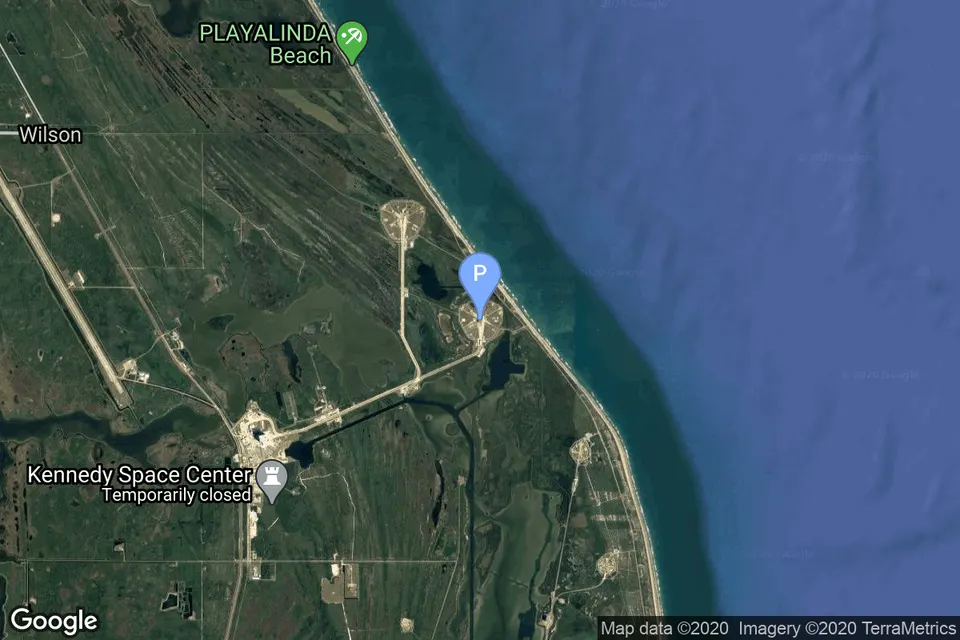
Launch Complex 39A, Kennedy Space Center, FL, USA
200th launch from Launch Complex 39A, 6th this year · 258th from Kennedy Space Center, FL, USA
Local pad time at liftoff: Feb 26, 7:16 PM EST, at night
224 launches from this pad · 283 from Kennedy Space Center, FL, USA
22 days after the previous launch from this pad
Updates
Nova-C IM-2 acquisition of signal confirmed.
Show 9 earlier updates
All spacecraft deployed.
Cosmic_Penguin · 2/27/2025 · source
Liftoff.
Cosmic_Penguin · 2/27/2025 · source
Official Webcast by NASA has started
LL2 · 2/26/2025 · source
Tweaked T-0.
Cosmic_Penguin · 2/26/2025 · source
Weather is >95% favorable for launch.
Nosu · 2/25/2025 · source
GO for launch.
Cosmic_Penguin · 2/22/2025 · source
Added launch time.
Cosmic_Penguin · 2/4/2025 · source
Added approximate launch time.
Cosmic_Penguin · 2/1/2025 · source
NET February 26th
hitura-nobad · 1/9/2025 · source
Questions
When did Nova-C IM-2 & Others launch?
Nova-C IM-2 & Others launched on February 27, 2025 at 00:16 UTC.
Where can I watch Nova-C IM-2 & Others?
Coverage: SpaceX Nova-C IM-2 & Others; Intuitive Machines-2 Launch to the Moon (Official NASA Broadcast); SpaceX - Falcon 9 - PRIME-1 (IM-2) - LC-39A - Kennedy Space Center - February 26, 2025. Watch the replay
What rocket launched Nova-C IM-2 & Others?
Falcon 9 Block 5, flown by SpaceX. Falcon 9 Block 5 spec sheet
Where did Nova-C IM-2 & Others launch from?
Launch Complex 39A, Kennedy Space Center, FL, USA. Liftoff was Feb 26, 7:16 PM EST local time at the pad.
Did the booster land?
Booster B1083 flew for the 9th time and landed at A Shortfall of Gravitas.
What orbit did Nova-C IM-2 & Others reach?
IM-2 Athena, one of 5 catalogued objects, reached a 219 × 367,508 km orbit inclined 28.5°.
How many satellites did Nova-C IM-2 & Others launch?
4 payloads from this launch are catalogued (Data from J. McDowell, planet4589.org).