
SpaceXFalcon 9 Block 5Space Launch Complex 4E, Vandenberg SFB, CA, USA
NAOS
Launched
August 26, 2025 · 18:53 UTC

Image: SpaceX
Summary
NAOS launched on a SpaceX Falcon 9 Block 5 from Space Launch Complex 4E, Vandenberg SFB, CA, USA on August 26, 2025 at 18:53 UTC. The launch window ran from 18:53 to 19:20 UTC. It was SpaceX's 556th launch, 107th this year and humanity's 7,043rd orbital launch attempt. It was the 465th Falcon 9 Block 5 flight and the 104th this year. Booster B1063 flew for the 27th time and landed at Landing Zone 4. The payload was bound for Sun-Synchronous Orbit (SSO). Pelican 3, one of 8 catalogued objects, reached a 465 × 470 km orbit inclined 97.3°. 8 objects from this launch are catalogued, all of them payloads.
- Watch
- Vehicle
- Falcon 9 Block 5 · SpaceX
- Booster
- B1063 · flight 27 · Return to Launch Site at Landing Zone 4 · landed35/35 landed here · 82 days after its previous flight, Starlink Group 11-22
- Mission
- Government/Top Secret · Sun-Synchronous Orbit (SSO)
- Milestone
- 465th Falcon 9 Block 5 flight · 104th this yearSpaceX's 556th launch107th this yearhumanity's 7,043rd orbital launch attempt194th orbital launch attempt this year
Flight preview
Simulate in Flight ClubOrbit: as tracked
Pelican 3 · NORAD 65315 · 2025-188 · Space-Track · tracking 1 of 8 objects
Show the numbers for orbit elements
- Object
- TBA - TO BE ASSIGNED
- Object ID
- 2025-188A
- Epoch
- 2025-08-26 22:01:06 UTC
- Mean motion
- 15.35165311 rev/day
- Eccentricity
- 0.0004103
- Inclination
- 97.2566°
- Ascending node
- 313.6042°
- Arg. of perigee
- 150.9765°
- Mean anomaly
- 329.1103°
- Element set
- 999
- Rev at epoch
- 0
- B*
- 0
Perigee, apogee and period are Kepler figures from the catalogued mean elements, not a propagated state. Published orbit: SSO. Ascent drawn from padside's representative profile. Booster return drawn from padside's representative arc.
Flight timeline
- T−38MGO for Prop Load
- T−35MStage 1 LOX Load
- T−35MProp Load
- T−16MStage 2 LOX Load
- T−7MEngine Chill
- T−1MTank Press
- T−1MStartup
- T−45SGO for Launch
- T−3SIgnition
- T−0Liftoff
- T+1M12SMax-Q
- T+2M14SMECO
- T+2M18SStage 2 Separation
- T+2M22SStage 1 Flip
- T+2M25SSES-1
- T+2M31SBooster Boostback Burn Startup
- T+2M41SFairing Separation
- T+3M18SBooster Boostback Burn Shutdown
- T+6M14SEntry Burn Startup
- T+6M35SEntry Burn Shutdown
- T+7M20SStage 1 Landing Burn
- T+7M57SStage 1 Landing
- T+9M29SSECO-1
- T+11M42SPayload Separation
- T+11M48SPayload Separation
- T+11M55SPayload Separation
- T+52M34SSES-2
- T+52M37SSECO-2
- T+1H5M55SSES-3
- T+1H5M59SSECO-3
- T+1H8M50SPayload Separation
- T+1H8M58SPayload Separation
- T+1H9M7SPayload Separation
- T+1H9M16SPayload Separation
- T+1H9M26SPayload Separation
Catalogued objects
8 catalogued: 8 payloads; 8 still in orbit
- Pelican 3 · NORAD 65315 · in orbit
- Pelican 4 · NORAD 65316 · in orbit
- NAOS · NORAD 65317 · in orbit
- Capella 16 · NORAD 65318 · in orbit
- Firefly 6 · NORAD 65319 · in orbit
- Firefly 4 · NORAD 65320 · in orbit
- LEAP-1 · NORAD 65321 · in orbit
- Firefly 5 · NORAD 65322 · in orbit
Data from J. McDowell, planet4589.org
About this launch
NAOS (National Advanced Optical System) is the space component of Luxembourg's governmental dual-use observation satellite system LUXEOSys (Luxembourg Earth Observation System). Its purpose is to provide high resolution images to national and international governmental and military organizations such as NATO. The 800 kg satellite is built by OHB Italia and is equipped with a very high-resolution optical camera with a ground reolution of 50 cm in an around 450 km high sun-synchronous orbit. It will have a operational life time of 7 years. Also on board the launch is Dhruva Space's LEAP-1; Planet's Pelican-3 and Pelican-4; and Exolaunch’s Acadia-6, FFLY-1, FFLY-2, and FFLY-3.
Pad
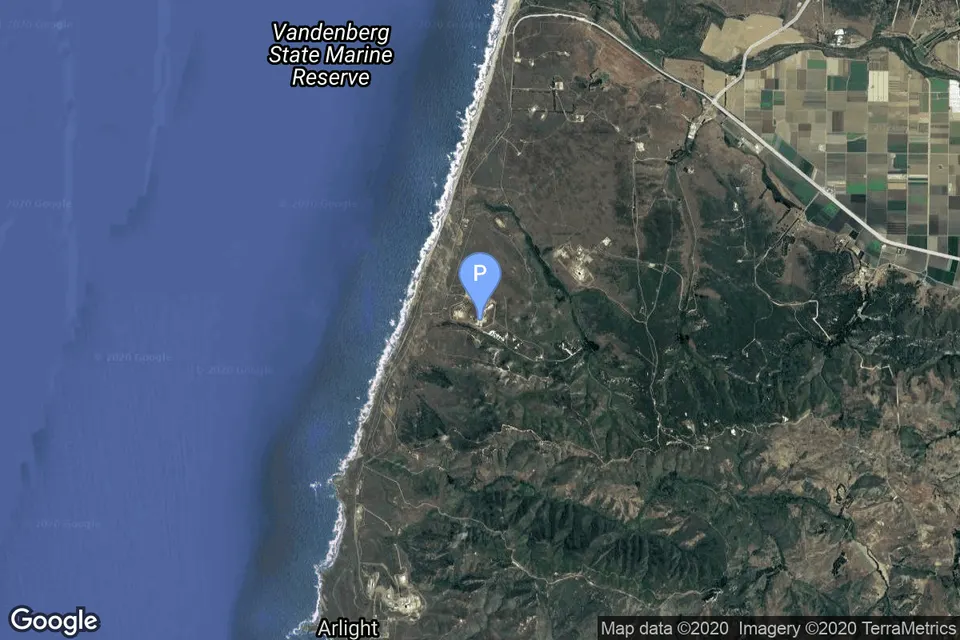
Space Launch Complex 4E, Vandenberg SFB, CA, USA
211th launch from Space Launch Complex 4E, 37th this year · 825th from Vandenberg SFB, CA, USA
Local pad time at liftoff: Aug 26, 11:53 AM PDT, in daylight
303 launches from this pad · 919 from Vandenberg SFB, CA, USA
4 days 1 hour after the previous launch from this pad
Updates
Successful deployment of all payloads
Show 8 earlier updates
Liftoff
Nosu · 8/26/2025 · source
Unofficial Re-stream by SPACE AFFAIRS has started
LL2 · 8/26/2025 · source
Adding seconds to T-0
Nosu · 8/26/2025 · source
GO for launch.
Cosmic_Penguin · 8/18/2025 · source
NET 1H 2025.
Cosmic_Penguin · 12/9/2024 · source
Launch vehicle switched from Vega-C to Falcon 9.
Cosmic_Penguin · 2/24/2024 · source
Vega-C RTF NET 2024.
Cosmic_Penguin · 4/18/2023 · source
Satellite testing is planned for November, launch is no earlier than that.
spacevogel · 2/17/2022 · source
Questions
When did NAOS launch?
NAOS launched on August 26, 2025 at 18:53 UTC. The launch window ran from 18:53 to 19:20 UTC.
Where can I watch NAOS?
Coverage: SpaceX NAOS; SpaceX - Falcon 9 - NAOS (LUXEOSys) - SLC-4E - Vandenberg SFB, CA - August 27, 2025; Watch live: SpaceX launches NAOS satellite, 7 rideshare sats on Falcon 9 rocket from California. Watch the replay
What rocket launched NAOS?
Falcon 9 Block 5, flown by SpaceX. Falcon 9 Block 5 spec sheet
Where did NAOS launch from?
Space Launch Complex 4E, Vandenberg SFB, CA, USA. Liftoff was Aug 26, 11:53 AM PDT local time at the pad.
Did the booster land?
Booster B1063 flew for the 27th time and landed at Landing Zone 4.
What orbit did NAOS reach?
Pelican 3, one of 8 catalogued objects, reached a 465 × 470 km orbit inclined 97.3°.
How many satellites did NAOS launch?
8 payloads from this launch are catalogued, 8 of them still in orbit (Data from J. McDowell, planet4589.org).