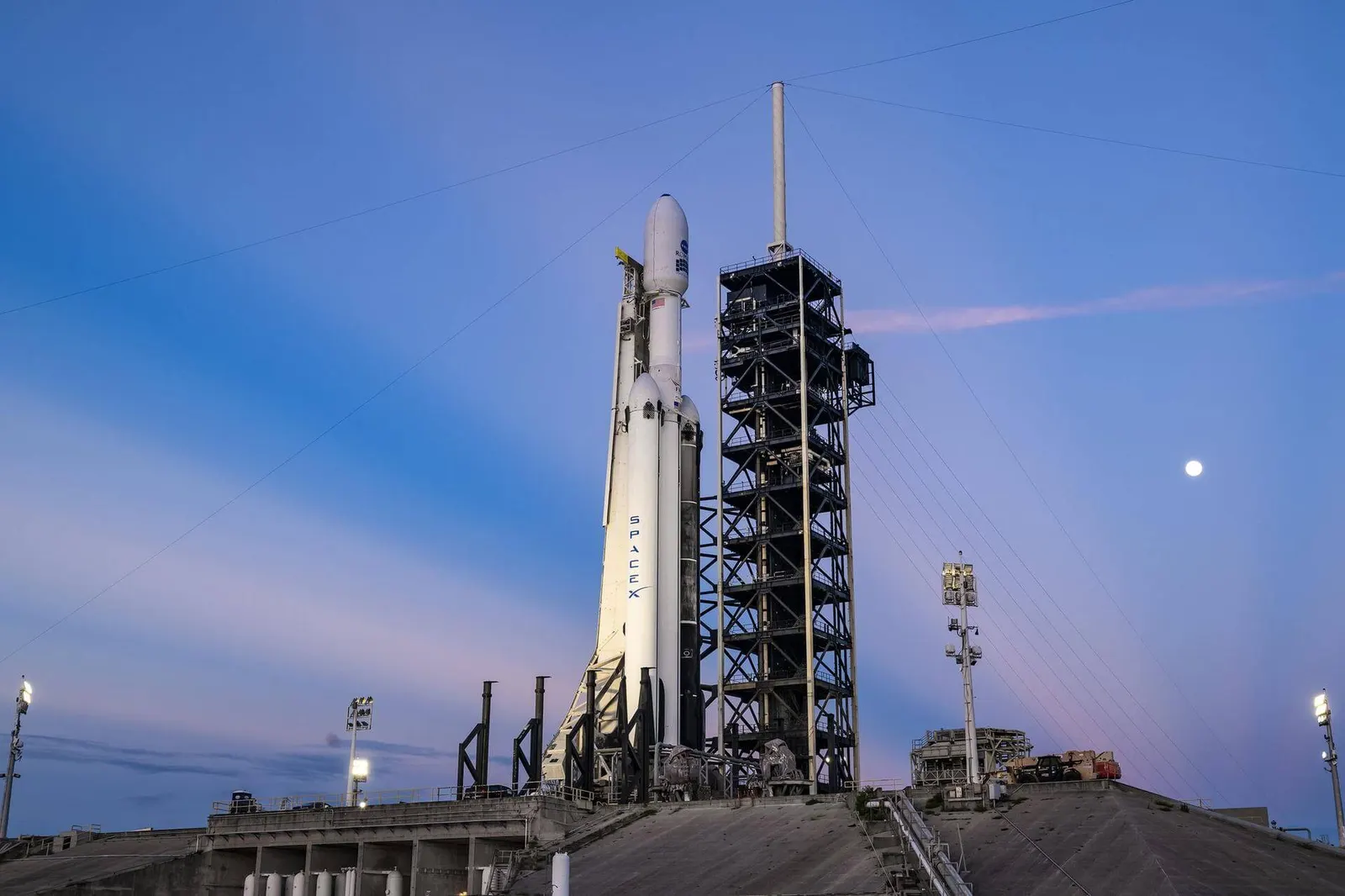
SpaceXFalcon HeavyLaunch Complex 39A, Kennedy Space Center, FL, USA
Nancy Grace Roman Space Telescope
Launched
August 30, 2026 · 11:26 UTC

Image: SpaceX
Summary
SpaceX’s Falcon Heavy successfully delivered NASA’s Nancy Grace Roman Space Telescope to orbit from Kennedy Space Center. The infrared observatory carries a wide-field camera and a coronagraphic instrument.
- Watch
- Vehicle
- Falcon Heavy · SpaceX
- Booster
- B1105 · flight 1 · expendable38/42 landed here
- B1104 · flight 1 · Return to Launch Site at Landing Zone 40 · landed8/8 landed here · 6 km downrange
- B1072 · flight 3 · Return to Launch Site at Landing Zone 2 · landed20/20 landed here · 122 days after its previous flight, ViaSat-3 F3 (ViaSat-3 Asia-Pacific) · 15 km downrange
- Mission
- Astrophysics · Sun-Earth L2 (L2)
- Milestone
- 13th Falcon Heavy flight · 2nd this yearSpaceX's 724th launch105th this yearhumanity's 7,379th orbital launch attempt206th orbital launch attempt this year
Webcast
Flight preview
Simulate in Flight ClubOrbit: as tracked
NGRST · NORAD 100532 · 2026-199A · Space-Track
Show the numbers for orbit elements
- Object
- NGRST
- Object ID
- 2026-199A
- Epoch
- 2026-08-30 12:31:50 UTC
- Mean motion
- 0.01136611 rev/day
- Eccentricity
- 0.992129
- Inclination
- 33.6394°
- Ascending node
- 13.3155°
- Arg. of perigee
- 147.266°
- Mean anomaly
- 0.1139°
- Element set
- 999
- Rev at epoch
- 0
- B*
- 0
Perigee, apogee and period are Kepler figures from the catalogued mean elements, not a propagated state. Published orbit: L2. Ascent simulated from a published stage table. Booster returns drawn from padside's representative arc.
Flight timeline
- T−53MGO for Prop Load
- T−50MStage 1 Propellant Load
- T−45MStage 1 LOX Load
- T−35MStage 2 Propellant Load
- T−18M30SStage 2 LOX Load
- T−7MEngine Chill
- T−59SStartup
- T−45SGO for Launch
- T−20STank Press
- T−6SIgnition
- T−0Liftoff
- T+1M8SMax-Q
- T+2M24SSBECO
- T+2M27SBoosters Separation
- T+2M32SBoosters Flip
- T+2M43SBoosters Boostback Burn Startup
- T+3M48SBoosters Boostback Burn Shutdown
- T+3M51SMECO
- T+3M54SStage 2 Separation
- T+4MSES-1
- T+4M15SFairing Separation
- T+6M19SBoosters Entry Burn Startup
- T+6M29SBoosters Entry Burn Shutdown
- T+7M23SBoosters Landing Burn
- T+7M40SBoosters Landing
- T+8M28SSECO-1
- T+24M33SSES-2
- T+26M32SSECO-2
- T+31M31SPayload Separation
About this launch
Nancy Grace Roman Space Telescope launched on a SpaceX Falcon Heavy from Launch Complex 39A, Kennedy Space Center, FL, USA on August 30, 2026 at 11:26 UTC. The launch window ran from 11:25 to 11:26 UTC. It was SpaceX's 724th launch, 105th this year and humanity's 7,379th orbital launch attempt. It was the 13th Falcon Heavy flight and the 2nd this year. Booster B1105 flew for the 1st time and was expended. Booster B1104 flew for the 1st time and landed at Landing Zone 40. Booster B1072 flew for the 3rd time and landed at Landing Zone 2. The payload was bound for Sun-Earth L2 (L2). It reached a 189 × 190 km orbit inclined 33.6°.
The Nancy Grace Roman Space Telescope is a NASA infrared space telescope with a 2.4 m (7.9 ft) wide field of view primary mirror and two scientific instruments. The Wide-Field Instrument (WFI) is a 300.8-megapixel multi-band visible and near-infrared camera, providing a sharpness of images comparable to that achieved by the Hubble Space Telescope over a 0.28 square degree field of view, 100 times larger than imaging cameras on the Hubble. The Coronagraphic Instrument (CGI) is a high-contrast, small field of view camera and spectrometer covering visible and near-infrared wavelengths using novel starlight-suppression technology. Roman objectives include a search for extra-solar planets using gravitational microlensing, and probing the expansion history of the Universe and the growth of cosmic structure, with the goal of measuring the effects of dark energy, the consistency of general relativity, and the curvature of spacetime.
News
 Rocket Report: ULA flies into uncertain future; Falcon 9 family hits 700 launches“I can tell you SpaceX has already gone captive."
 Roman telescope deploys solar array and communication systems, powers on Coronagraph InstrumentNASA’s Nancy Grace Roman Space Telescope successfully launched on Sunday, Aug. 30, atop a SpaceX…
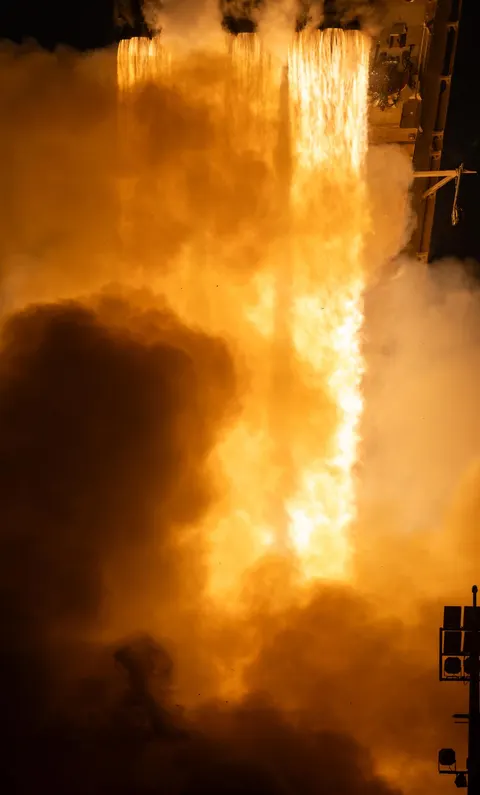 Igniting Roman’s JourneyNow on a three-month, million-mile journey to its final orbit, NASA’s Nancy Grace Roman Space Telescope will soon reveal the universe’s darkest secrets. The mission launched at 7:26 a.m. EDT on Aug. 30 aboard a SpaceX Falcon Heavy rocket from Launch Complex 39A at the agency’s Kennedy Space Center in Florida. Roman pairs a large […]
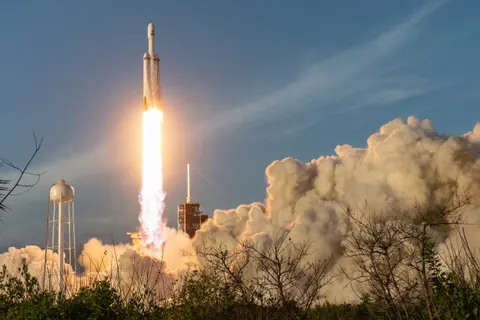 Roman Space Telescope Headed to Deep SpaceThe observatory will shed new light on the mystery of dark energy, observe distant exoplanets, and explore the structure of the universe.
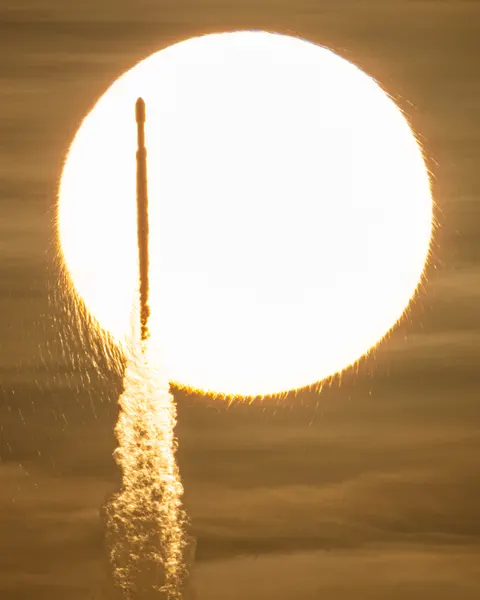 NASA’s Nancy Grace Roman Space Telescope LaunchesNASA’s Nancy Grace Roman Space Telescope, aboard a SpaceX Falcon Heavy rocket, transits the Sun during launch from the agency’s Kennedy Space Center in Florida on Aug. 30, 2026. Roman is named after the agency’s first chief astronomer. Roman will survey billions of stars and galaxies with a field of view far larger than Hubble’s, […]
 Roman CommissioningWhere is Roman? Roman is making its three-month journey from Earth to Sun-Earth Lagrange Point 2, or L2. Along the way, Roman is undergoing a process called commissioning, where systems are turned on, adjusted, calibrated, and prepared for science operations. Commissioning is the time for scientists and engineers to make sure that Roman is performing […]
 Roman lifts off on a mission to survey the infrared skyNASA’s Nancy Grace Roman Space Telescope lifted off on a SpaceX Falcon Heavy rocket from NASA’s Kennedy Space Center in Florida, USA, at 07:26 EDT / 12:26 BST/ 13:26 CEST on 30 August 2026. With the successful launch, Roman began its mission to survey the sky in visible to near-infrared light to help reveal the nature of dark energy and dark matter. The telescope will also investigate the true diversity of exoplanets in our galaxy.
 APOD: 2026 August 31 – Launch of the Roman Space TelescopeAPOD Science APOD APOD: 2026 August 31 –… Today’s APOD Archive Submissions Index Search Calendar RSS Education About Discuss APOD Astronomy Picture of the Day Discover the cosmos! Each day a different image or photograph of our fascinating universe is featured, along with a brief explanation written by a professional astronomer. To view this […]
Airspace and maritime notices
7 notices filed by the FAA and the US Coast Guard
FAA temporary flight restriction · 4 notices · Expired · up to 18,000 ftMatched by proximity to the pad
- Cape Canaveral, FL, Sunday, August 30, 2026 Local — 260830 SpaceX WFIRST X3726 FCS
- Cape Canaveral, FL, Sunday, August 30, 2026 Local — 260830 SpaceX WFIRST X3726 FCS ZJX
- Cape Canaveral, FL, Monday, August 31, 2026 Local — 260831 SpaceX WFIRST X3726 FCS ZJX
- Cape Canaveral, FL, Monday, August 31, 2026 Local — 260831 SpaceX WFIRST X3726 FCS
US Coast Guard marine safety information · 2 notices · ExpiredMatched by proximity to the pad
- Sector Jacksonville, Territorial Sea - Sector Jacksonville, Submerged Land Act (SLA)/Space Operations/Active RNA/Commercial (RNA) · Expired · standing regulated area
Matched by proximity to the pad · Source
Pad
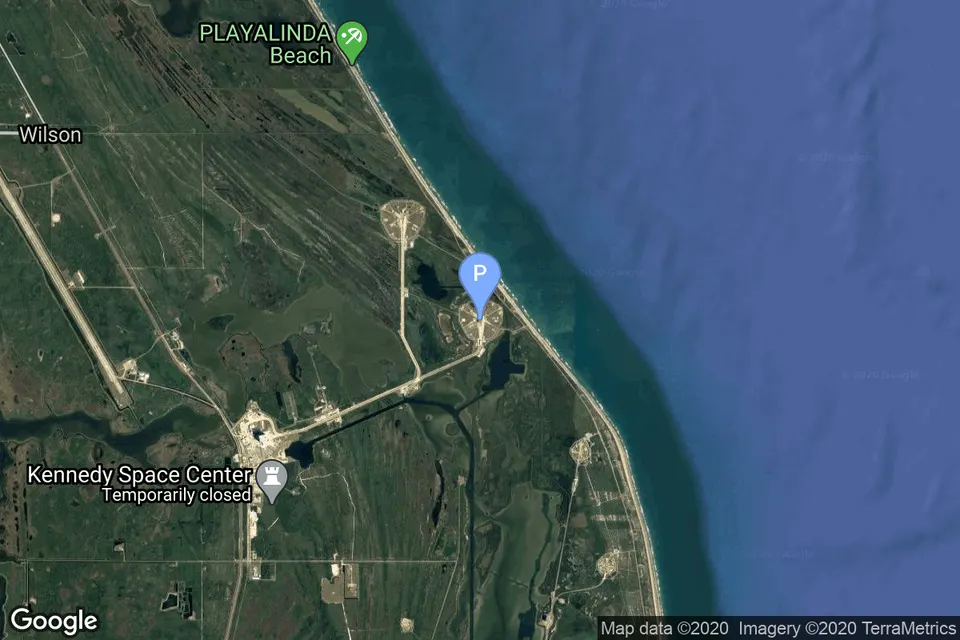
Launch Complex 39A, Kennedy Space Center, FL, USA
223rd launch from Launch Complex 39A, 2nd this year · 282nd from Kennedy Space Center, FL, USA
Local pad time at liftoff: Aug 30, 7:26 AM EDT, in daylight
224 launches from this pad · 283 from Kennedy Space Center, FL, USA
122 days after the previous launch from this pad
Updates
Launch success with telescope solar panels/sunshade deployed.
Show 9 earlier updates
Payload deployed.
hitura-nobad · 8/30/2026 · source
Liftoff!
hitura-nobad · 8/30/2026 · source
Updated launch weather, 70% GO.
Cosmic_Penguin · 8/30/2026 · source
Official Webcast by NASA has started
LL2 · 8/30/2026 · source
Now targeting Aug 30 at 11:26 UTC
hitura-nobad · 8/30/2026 · source
Updated launch weather, 50% GO (launch window per https://x.com/spaceflightnow/status/2093717878302216462).
Cosmic_Penguin · 8/29/2026 · source
Now targeting Aug 30 at 11:25 UTC
hitura-nobad · 8/29/2026 · source
Updated launch weather, 60% GO.
Cosmic_Penguin · 8/28/2026 · source
GO for launch.
Cosmic_Penguin · 8/20/2026 · source
Questions
When did Nancy Grace Roman Space Telescope launch?
Nancy Grace Roman Space Telescope launched on August 30, 2026 at 11:26 UTC. The launch window ran from 11:25 to 11:26 UTC.
Where can I watch Nancy Grace Roman Space Telescope?
Coverage: Nancy Grace Roman Space Telescope Launch; Roman Space Telescope Mission; Nancy Grace Roman Space Telescope Launch. Watch the replay
What rocket launched Nancy Grace Roman Space Telescope?
Falcon Heavy, flown by SpaceX. Falcon Heavy spec sheet
Where did Nancy Grace Roman Space Telescope launch from?
Launch Complex 39A, Kennedy Space Center, FL, USA. Liftoff was Aug 30, 7:26 AM EDT local time at the pad.
Did the booster land?
Booster B1105 flew for the 1st time and was expended. Booster B1104 flew for the 1st time and landed at Landing Zone 40. Booster B1072 flew for the 3rd time and landed at Landing Zone 2.
What orbit did Nancy Grace Roman Space Telescope reach?
It reached a 189 × 190 km orbit inclined 33.6°.