
SpaceXFalcon 9 Block 5Space Launch Complex 40, Cape Canaveral SFS, FL, USA
MRV-1
Launched
July 21, 2026 · 21:15 UTC

Image: SpaceX
Summary
SpaceX’s Falcon 9 Block 5 launched the Northrop Grumman/SpaceLogistics MRV-1, a robotic vehicle carrying extension pods to service satellites in geostationary orbit; two pods will support Intelsat spacecraft.
- Watch
- SpaceX MRV-1The Space Devs
- Live: SpaceX Falcon 9 rocket launches robotic space servicing mission from Cape CanaveralSpaceflight Now
- SpaceX Launches Falcon 9 with MRV-1NASASpaceflight
- Vehicle
- Falcon 9 Block 5 · SpaceX
- Booster
- B1069 · flight 32 · expendable38/42 landed here · 81 days after its previous flight, Starlink Group 10-38
- Mission
- Mission Extension · Geostationary Transfer Orbit (GTO)
- Milestone
- 612th Falcon 9 Block 5 flight · 86th this yearSpaceX's 707th launch88th this yearhumanity's 7,346th orbital launch attempt173rd orbital launch attempt this year
Flight preview
Simulate in Flight ClubOrbit: representative
Target from padside's flight model. Not a catalogued object; this panel switches to the tracked orbit once the object is catalogued. Ascent drawn from padside's representative profile.
Flight timeline
- T−38MGO for Prop Load
- T−35MProp Load
- T−35MStage 1 LOX Load
- T−16MStage 2 LOX Load
- T−7MEngine Chill
- T−1MTank Press
- T−1MStartup
- T−45SGO for Launch
- T−3SIgnition
- T−0Liftoff
- T+1M12SMax-Q
- T+2M37SMECO
- T+2M41SStage 2 Separation
- T+2M48SSES-1
- T+3M29SFairing Separation
- T+7M55SSECO-1
- T+29MSES-2
- T+30M5SSECO-2
- T+35M34SPayload Separation
- T+45M34SPayload Separation
- T+55M34SPayload Separation
- T+56M51SSECO-2
- T+1H5M34SPayload Separation
About this launch
MRV-1 launched on a SpaceX Falcon 9 Block 5 from Space Launch Complex 40, Cape Canaveral SFS, FL, USA on July 21, 2026 at 21:15 UTC. The launch window ran from 21:15 to 01:04 UTC. It was SpaceX's 707th launch, 88th this year and humanity's 7,346th orbital launch attempt. It was the 612th Falcon 9 Block 5 flight and the 86th this year. Booster B1069 flew for the 32nd time and was expended. The payload was bound for Geostationary Transfer Orbit (GTO).
The Northrop Grumman/SpaceLogistics MRV-1 is a mission extension payload including a mission robotic vehicle (MRV) and multiple mission extension pods (MEPs). The MRV is designed to attach up to 30 MEPs (Mission Extension Pods) to various satellites in GEO over the course of its life, and the MEPs (Mission Extension Pods) are 400 kg spacecraft designed to be captured by the MRV and then attached to a customer's satellite. A single MEP can extend a 2000 kg satellite's service life by up to 6 years. For this mission, 2 of the MEP's will service satellites for Intelsat, while the third will service a satellite for Optus.
News
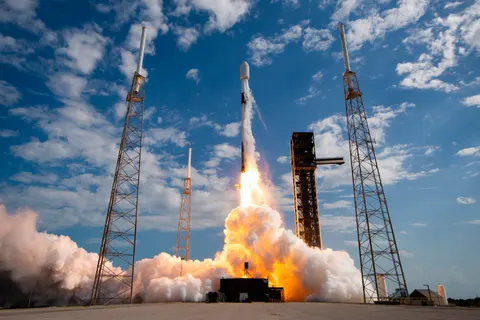 Robotic Servicing Mission Launches with NASA SupportFollowing its liftoff from Cape Canaveral on July 21 aboard a SpaceX Falcon 9 rocket, the Mission Robotic Vehicle (MRV) hosting the NASA-supported Robotic Servicing of Geosynchronous Satellites (RSGS) payload is now en route to geosynchronous Earth orbit, where it will use its advanced robotics to service spacecraft. RSGS leverages in-space robotics expertise from NASA, […]
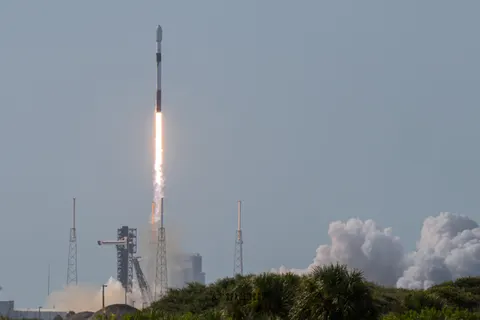 Northrop Launches Evolved Satellite Servicing SpacecraftSpaceLogistics, a Northrop subsidiary, aims to expand the company’s private capabilities and commercial offerings with their newly launched Mission Robotic Vehicle (MRV) and Mission Extension Pods (MEPs).
 SpaceX launches Northrop mission to extend the life of aging satellitesDARPA-backed vehicle will install propulsion pods on three commercial satellites in geostationary orbit
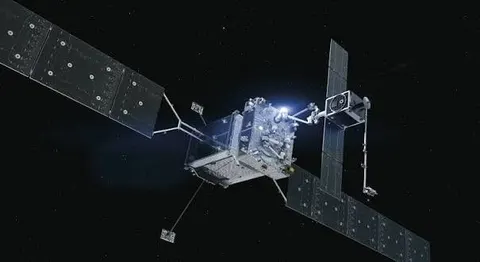 Falcon 9 to launch MRV-1 robotic servicing spacecraft for Northrop GrummanSpaceX’s Falcon 9 is set to launch the Mission Robotic Vehicle (MRV-1) mission from Florida…
 Live coverage: SpaceX to launch novel geosynchronous robotic servicing satellite on decade-long missionNorthrop Grumman’s Mission Robotic Vehicle features the Robotic Servicing of Geosynchronous Satellites (RSGS) payload from the U.S. Naval Research Laboratory and DARPA. Liftoff from pad 40 at Cape Canaveral Space Force Station is scheduled during a four-hour window that opens at 5:15 p.m. EDT (2115 UTC).
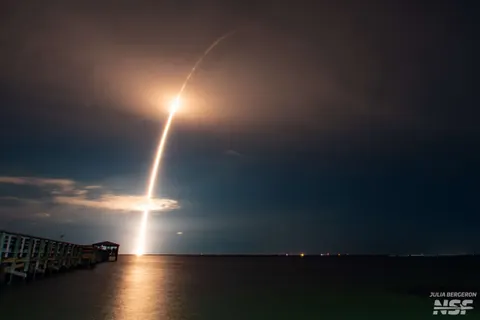 Launch Preview: Falcon 9, Starship, and Chinese rockets scheduled to launchAfter last week’s aborted Starship Flight 13 launch, SpaceX is scheduling a new attempt as…
Pad
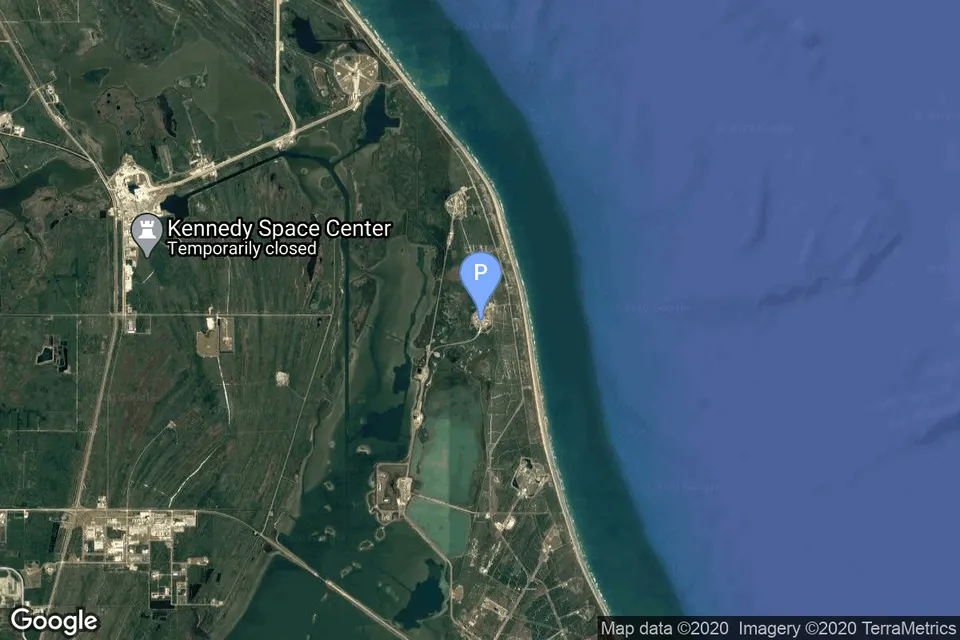
Space Launch Complex 40, Cape Canaveral SFS, FL, USA
394th launch from Space Launch Complex 40, 40th this year · 1,122nd from Cape Canaveral SFS, FL, USA
Local pad time at liftoff: Jul 21, 5:15 PM EDT, in daylight
403 launches from this pad · 1,131 from Cape Canaveral SFS, FL, USA
7 days 12 hours after the previous launch from this pad
Updates
Launch success.
Show 9 earlier updates
All spacecraft have separated.
Cosmic_Penguin · 7/21/2026 · source
Unofficial Re-stream by SPACE AFFAIRS has started
LL2 · 7/21/2026 · source
Liftoff.
Cosmic_Penguin · 7/21/2026 · source
Unofficial Re-stream by SPACE AFFAIRS has started
LL2 · 7/21/2026 · source
Updated launch weather, 75% GO.
Cosmic_Penguin · 7/20/2026 · source
Tweaked launch window.
Cosmic_Penguin · 7/14/2026 · source
Launch date and time confirmed.
Cosmic_Penguin · 7/13/2026 · source
Refined launch window.
Cosmic_Penguin · 7/13/2026 · source
NET July 21, TBC.
Cosmic_Penguin · 7/13/2026 · source
Questions
When did MRV-1 launch?
MRV-1 launched on July 21, 2026 at 21:15 UTC. The launch window ran from 21:15 to 01:04 UTC.
Where can I watch MRV-1?
Coverage: SpaceX MRV-1; Live: SpaceX Falcon 9 rocket launches robotic space servicing mission from Cape Canaveral; SpaceX Launches Falcon 9 with MRV-1. Watch the replay
What rocket launched MRV-1?
Falcon 9 Block 5, flown by SpaceX. Falcon 9 Block 5 spec sheet
Where did MRV-1 launch from?
Space Launch Complex 40, Cape Canaveral SFS, FL, USA. Liftoff was Jul 21, 5:15 PM EDT local time at the pad.
Did the booster land?
Booster B1069 flew for the 32nd time and was expended.
What orbit was MRV-1 going to?
Geostationary Transfer Orbit (GTO), a mission extension mission.