
ArianespaceAriane 62Ariane Launch Area 4, Guiana Space Centre, French Guiana
Metop-SG A1
Launched
August 13, 2025 · 00:37 UTC

Image: ESA/CNES/Arianespace/ArianeGroup/Optique vidéo du CSG–S. Martin
Summary
Metop-SG A1 launched on an Arianespace Ariane 62 from Ariane Launch Area 4, Guiana Space Centre, French Guiana on August 13, 2025 at 00:37 UTC. It was Arianespace's 321st launch, 4th this year and humanity's 7,026th orbital launch attempt. It was the 3rd Ariane 62 flight and the 2nd this year. The payload was bound for Sun-Synchronous Orbit (SSO). It reached a 810 × 813 km orbit inclined 98.7°. One object from this launch is catalogued.
- Watch
- Vehicle
- Ariane 62 · ArianespaceCopernicus
- Booster
- No booster details on record.
- Mission
- Earth Science · Sun-Synchronous Orbit (SSO)for EUMETSAT
- Milestone
- 3rd Ariane 62 flight · 2nd this yearArianespace's 321st launch4th this yearhumanity's 7,026th orbital launch attempt177th orbital launch attempt this year
Webcast
Flight preview
Orbit: as tracked
METOP-SG A1 · NORAD 65159 · 2025-172 · Space-Track
Show the numbers for orbit elements
- Object
- METOP SG-A
- Object ID
- 2025-172A
- Epoch
- 2025-08-13 02:49:15 UTC
- Mean motion
- 14.26223683 rev/day
- Eccentricity
- 0.0002749
- Inclination
- 98.7116°
- Ascending node
- 284.501°
- Arg. of perigee
- 150.1605°
- Mean anomaly
- 310.5996°
- Element set
- 999
- Rev at epoch
- 0
- B*
- 0
Perigee, apogee and period are Kepler figures from the catalogued mean elements, not a propagated state. Published orbit: SSO. Ascent drawn from padside's representative profile.
Flight timeline
- T−7SIgnition
- T−0Liftoff
- T+2M15SSRB Separation
- T+3M32SFairing Separation
- T+7M42SStage 2 Separation
- T+7M50SSES-1
- T+54M27SSES-2
- T+1H4MPayload Separation
- T+1H58MSES-3
Catalogued objects
1 catalogued: 1 payload; 1 still in orbit
- METOP-SG A1 · NORAD 65159 · in orbit
Data from J. McDowell, planet4589.org
About this launch
First of EUMETSAT's second generation of Metop weather satellites.
Pad
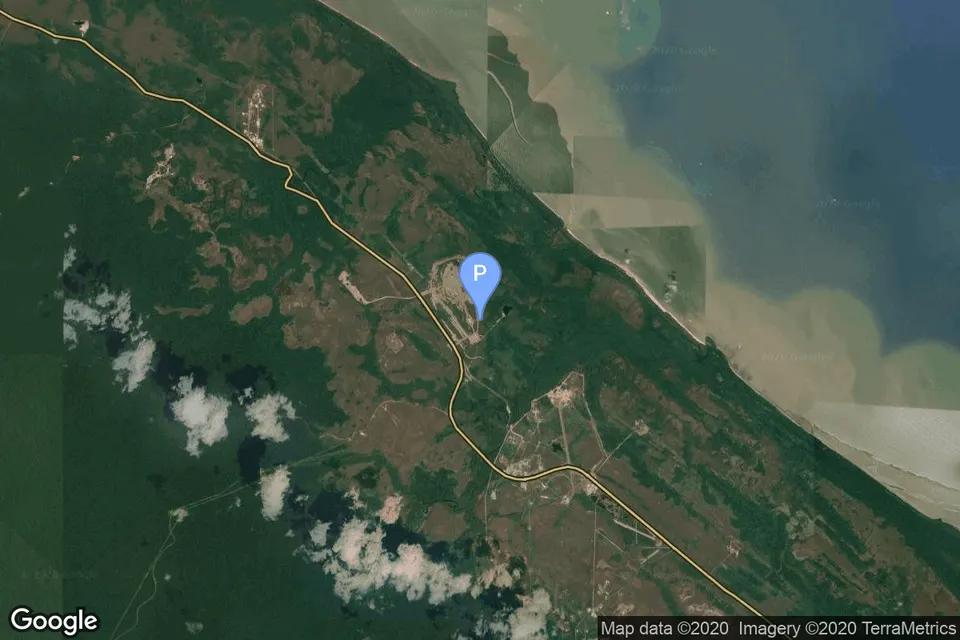
Ariane Launch Area 4, Guiana Space Centre, French Guiana
3rd launch from Ariane Launch Area 4, 2nd this year · 327th from Guiana Space Centre, French Guiana
Local pad time at liftoff: Aug 12, 9:37 PM GMT-3, at night
9 launches from this pad · 336 from Guiana Space Centre, French Guiana
159 days after the previous launch from this pad
All launches from Guiana Space Centre, French GuianaOpen in maps
Updates
Satellite solar array deployed.
Show 9 earlier updates
Spacecraft separation and signal acquisition.
Cosmic_Penguin · 8/13/2025 · source
Liftoff.
Cosmic_Penguin · 8/13/2025 · source
Official Webcast by arianespace has started
LL2 · 8/13/2025 · source
Tweaked T-0.
Cosmic_Penguin · 8/12/2025 · source
Adding launch day and time and setting GO
Nosu · 7/28/2025 · source
Targeting August 2025
Nosu · 1/28/2025 · source
NET September 2025.
Cosmic_Penguin · 10/10/2024 · source
NET Q2 2025.
Cosmic_Penguin · 12/15/2023 · source
NET Q1 2025
Nosu · 11/21/2022 · source
Questions
When did Metop-SG A1 launch?
Metop-SG A1 launched on August 13, 2025 at 00:37 UTC.
Where can I watch Metop-SG A1?
Coverage: Flight VA264 | Metop-SGA1 | Ariane 6 I Arianespace; Vol VA264 | Metop-SGA1 | Ariane 6 | Arianespace; Watch live: Back-to back launches of Vulcan and Ariane 6 rockets. Watch the replay
What rocket launched Metop-SG A1?
Ariane 62, flown by Arianespace. Ariane 62 spec sheet
Where did Metop-SG A1 launch from?
Ariane Launch Area 4, Guiana Space Centre, French Guiana. Liftoff was Aug 12, 9:37 PM GMT-3 local time at the pad.
What orbit did Metop-SG A1 reach?
It reached a 810 × 813 km orbit inclined 98.7°.
How many satellites did Metop-SG A1 launch?
1 payload from this launch is catalogued, still in orbit (Data from J. McDowell, planet4589.org).
Which program is Metop-SG A1 part of?
Copernicus. About Copernicus