![[AUTO] Atlas LV-3B - image](/media?u=https%3A%2F%2Fthespacedevs-prod.nyc3.digitaloceanspaces.com%2Fmedia%2Fimages%2Fatlas_image_20190222030015.jpeg&w=1600)
National Aeronautics and Space AdministrationAtlas LV-3BSpace Launch Complex 14, Cape Canaveral SFS, FL, USA
Mercury-Atlas 9
Launched
May 15, 1963

Summary
Mercury-Atlas 9 launched on a National Aeronautics and Space Administration Atlas LV-3B from Space Launch Complex 14, Cape Canaveral SFS, FL, USA on May 15, 1963. It was National Aeronautics and Space Administration's 47th launch, 2nd this year and humanity's 246th orbital launch attempt. It was the 10th Atlas LV-3B flight and the 1st this year. The payload was bound for low Earth orbit (LEO). Faith Seven, one of 2 catalogued objects, reached a 170 × 273 km orbit inclined 32.5°. One crew member flew: Gordon Cooper. The spacecraft was Mercury No.20 (20). 2 objects from this launch are catalogued, one of them a payload.
- Watch
- No webcast on record.
- Booster
- No booster details on record.
- Mission
- Human Exploration · Low Earth Orbit (LEO)
- Milestone
- 10th Atlas LV-3B flight · 1st this yearNational Aeronautics and Space Administration's 47th launch2nd this yearhumanity's 246th orbital launch attempt22nd orbital launch attempt this year
Crew
 Gordon CooperPilot · NASA · age 36 · first flight
Spacecraft
Mercury No.20 (20)
Mercury No.20 is the Mercury capsule used for the Mercury-Atlas 9 - callsign "Faith 7" - mission launched on May 15, 1963 and piloted by astronaut Gordon Cooper.
- Destination: Low Earth Orbit
- Mission length: 1 day 10 hours
The Mercury spacecraft safely splashed down in the Pacific Ocean.
Flight preview
Orbit: as tracked
Faith Seven · NORAD 576 · 1963-015 · Space-Track · tracking 1 of 2 objects
Show the numbers for orbit elements
- Object
- MERCURY ATLAS 9
- Object ID
- 1963-015A
- Epoch
- 1963-05-15 17:17:57 UTC
- Mean motion
- 16.21829859 rev/day
- Eccentricity
- 0.0077884
- Inclination
- 32.543°
- Ascending node
- 289.47°
- Arg. of perigee
- 72.4399°
- Mean anomaly
- 288.271°
- Element set
- 999
- Rev at epoch
- 3
- B*
- 0
Perigee, apogee and period are Kepler figures from the catalogued mean elements, not a propagated state. Published orbit: LEO. Ascent drawn from padside's representative profile.
Catalogued objects
2 catalogued: 1 payload, 1 rocket stage; none still in orbit
- Faith Seven · NORAD 576 · landed May 16, 1963
Atlas D 130D · re-entered May 16, 1963
Data from J. McDowell, planet4589.org
About this launch
Mercury-Atlas 9 was the final manned spaceflight of the United States' Mercury program. It carried the Faith 7 spacecraft with astronaut Gordon Cooper to orbit where it completed 22 orbits seconds before reentry. The mission lasted for, 34 hours, 19 minutes & 49 seconds. This was the last time an American was launched to space on a solo orbital mission. The mission had several technical problems, the biggest which was a short-circuit in the bus bar serving the 250 volt main inverter causing the automatic stabilization and control system to stop working during the 21st orbit. In the end Cooper had to use lines he had drawn on the window and his wristwatch to correctly execute burns to safely re-enter the atmosphere.
Pad
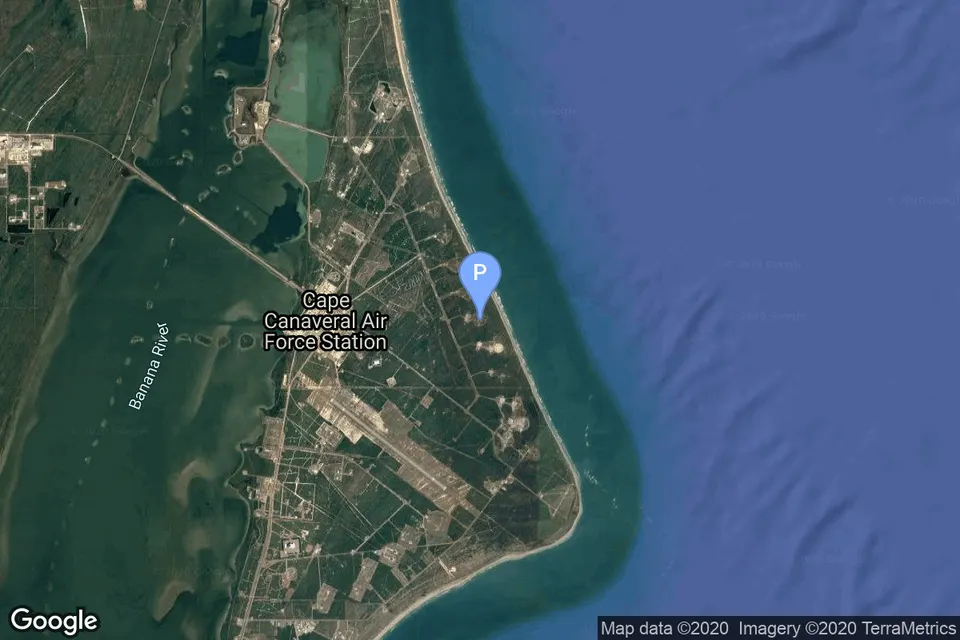
Space Launch Complex 14, Cape Canaveral SFS, FL, USA
13th launch from Space Launch Complex 14, 1st this year · 99th from Cape Canaveral SFS, FL, USA
20 launches from this pad · 1,131 from Cape Canaveral SFS, FL, USA
224 days after the previous launch from this pad
Questions
When did Mercury-Atlas 9 launch?
Mercury-Atlas 9 launched on May 15, 1963. The time is known to the hour, not the minute.
Where can I watch Mercury-Atlas 9?
No webcast is on record for this launch.
What rocket launched Mercury-Atlas 9?
Atlas LV-3B, flown by National Aeronautics and Space Administration. Atlas LV-3B spec sheet
Where did Mercury-Atlas 9 launch from?
Space Launch Complex 14, Cape Canaveral SFS, FL, USA.
What orbit did Mercury-Atlas 9 reach?
Faith Seven, one of 2 catalogued objects, reached a 170 × 273 km orbit inclined 32.5°.
Which program is Mercury-Atlas 9 part of?
Mercury. About Mercury