![[AUTO] Atlas V - image](/media?u=https%3A%2F%2Fthespacedevs-prod.nyc3.digitaloceanspaces.com%2Fmedia%2Fimages%2Fatlas_v_image_20201212013334.jpeg&w=1600)
United Launch AllianceAtlas V 401Space Launch Complex 41, Cape Canaveral SFS, FL, USA
Lucy
Launched
October 16, 2021

Summary
Lucy launched on an United Launch Alliance Atlas V 401 from Space Launch Complex 41, Cape Canaveral SFS, FL, USA on October 16, 2021. It was United Launch Alliance's 147th launch, 4th this year and humanity's 6,137th orbital launch attempt. It was the 40th Atlas V 401 flight and the 2nd this year. The payload was bound for Heliocentric N/A (Helio-N/A). Lucy, one of 2 catalogued objects, reached a 168 × 307 km orbit inclined 28.5°. 2 objects from this launch are catalogued, one of them a payload.
- Watch
- Booster
- No booster details on record.
- Mission
- Robotic Exploration · Heliocentric N/A (Helio-N/A)
- Milestone
- 40th Atlas V 401 flight · 2nd this yearUnited Launch Alliance's 147th launch4th this yearhumanity's 6,137th orbital launch attempt100th orbital launch attempt this year
Webcast
Flight preview
Orbit: as tracked
Lucy · NORAD 49328 · 2021-093 · Space-Track · tracking 1 of 2 objects
Show the numbers for orbit elements
- Object
- LUCY
- Object ID
- 2021-093A
- Epoch
- 2021-10-16 09:47:10 UTC
- Mean motion
- 16.1596064 rev/day
- Eccentricity
- 0.0105
- Inclination
- 28.47°
- Ascending node
- 357.4008°
- Arg. of perigee
- 216.7°
- Mean anomaly
- 268.5023°
- Element set
- 999
- Rev at epoch
- 0
- B*
- 0
Perigee, apogee and period are Kepler figures from the catalogued mean elements, not a propagated state. Published orbit: Helio-N/A. Ascent drawn from padside's representative profile.
Catalogued objects
2 catalogued: 1 payload, 1 rocket stage
- Lucy · NORAD 49328 · left Earth orbit October 16, 2021
Centaur AV-096 · left Earth orbit October 16, 2021
Data from J. McDowell, planet4589.org
About this launch
Lucy is the first mission to explore and study Trojan asteroids. The Trojans are a type of asteroids that orbit the Sun in two groups, in front of and behind Jupiter in its orbit around our star. Since these asteroids have been in such stable orbits for billions of years, they are of great interest as remnants of early Solar System. Lucy is a NASA mission led by NASA Goddard and Southwest Research Institute in Boulder, Colorado. Over the course of 12 years, Lucy will fly by seven different Trojan asteroids and also one main belt asteroid. The complex trajectory to visit all targets will include several Earth gravity assists.
Related page: Lucy: The First Mission to the Trojan Asteroids
News
 NASA’s Lucy Reveals Wobbling, Peanut-Shaped AsteroidEven small asteroids lead complex lives. During its flyby of the asteroid Donaldjohanson last year, NASA’s Lucy spacecraft revealed the asteroid to be a wobbly, peanut-shaped body that has undergone a lot of activity in its relatively short history. Formed as fragments coalesced after a violent collision 155 million years ago, the asteroid was transformed by the […]
- NASA’s Lucy Reveals Wobbling, Peanut-Shaped AsteroidEven small asteroids lead complex lives. During its flyby of the asteroid Donaldjohanson last year, NASA’s Lucy spacecraft revealed the asteroid to be a wobbly, peanut-shaped body that has undergone a lot of activity in its relatively short history. Formed as fragments coalesced after a violent collision 155 million years ago, the asteroid was transformed by the […]
Pad
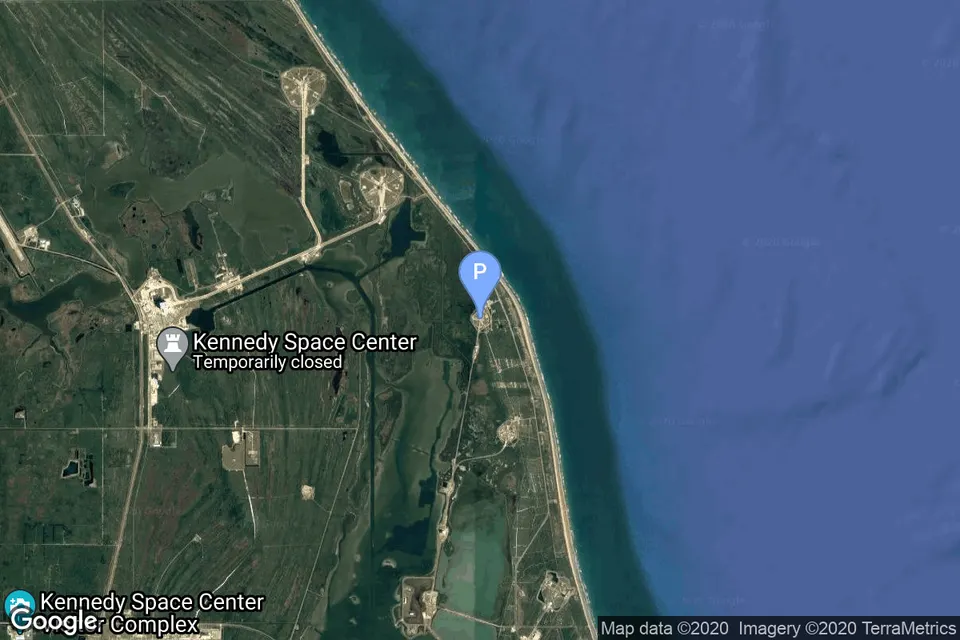
Space Launch Complex 41, Cape Canaveral SFS, FL, USA
101st launch from Space Launch Complex 41, 2nd this year · 826th from Cape Canaveral SFS, FL, USA
125 launches from this pad · 1,131 from Cape Canaveral SFS, FL, USA
150 days after the previous launch from this pad
Updates
Questions
When did Lucy launch?
Lucy launched on October 16, 2021. The time is known to the hour, not the minute.
Where can I watch Lucy?
Coverage: Atlas V Lucy; Launch of NASA's Lucy Mission to Jupiter's Trojan Asteroids (Official NASA Broadcast). Watch the replay
What rocket launched Lucy?
Atlas V 401, flown by United Launch Alliance. Atlas V 401 spec sheet
Where did Lucy launch from?
Space Launch Complex 41, Cape Canaveral SFS, FL, USA.
What orbit did Lucy reach?
Lucy, one of 2 catalogued objects, reached a 168 × 307 km orbit inclined 28.5°.
How many satellites did Lucy launch?
1 payload from this launch is catalogued (Data from J. McDowell, planet4589.org).
Which program is Lucy part of?
Discovery Program. About Discovery Program