![[AUTO] Falcon 9 Block 5 | Inmarsat-6 F2 - image](/media?u=https%3A%2F%2Fthespacedevs-prod.nyc3.digitaloceanspaces.com%2Fmedia%2Fimages%2Ffalcon2520925_image_20240101101051.jpeg&w=1600)
SpaceXFalcon 9 Block 5Space Launch Complex 40, Cape Canaveral SFS, FL, USA
Inmarsat-6 F2
Launched
February 18, 2023

Summary
Inmarsat-6 F2 launched on a SpaceX Falcon 9 Block 5 from Space Launch Complex 40, Cape Canaveral SFS, FL, USA on February 18, 2023. It was SpaceX's 225th launch, 12th this year and humanity's 6,392nd orbital launch attempt. It was the 149th Falcon 9 Block 5 flight and the 11th this year. Booster B1077 flew for the 3rd time and landed at Just Read the Instructions. The payload was bound for Geostationary Transfer Orbit (GTO). The tracked orbit of Inmarsat 6 F2, one of 2 catalogued objects, from February 21, 2023, was 394 × 41,600 km inclined 27.0°. 2 objects from this launch are catalogued, one of them a payload.
- Watch
- Inmarsat I-6 F2 MissionSpaceX
- Vehicle
- Falcon 9 Block 5 · SpaceX
- Booster
- B1077 · flight 3 · Autonomous Spaceport Drone Ship at Just Read the Instructions · landed156/157 landed here · 30 days after its previous flight, GPS III SV06 · 665 km downrange
- Mission
- Communications · Geostationary Transfer Orbit (GTO)
- Milestone
- 149th Falcon 9 Block 5 flight · 11th this yearSpaceX's 225th launch12th this yearhumanity's 6,392nd orbital launch attempt24th orbital launch attempt this year
Webcast
Flight preview
Simulate in Flight ClubOrbit: as tracked
Inmarsat 6 F2 · NORAD 55683 · 2023-022 · Space-Track · tracking 1 of 2 objects
Show the numbers for orbit elements
- Object
- TBA - TO BE ASSIGNED
- Object ID
- 2023-022A
- Epoch
- 2023-02-21 20:22:35 UTC
- Mean motion
- 1.91749342 rev/day
- Eccentricity
- 0.7527998
- Inclination
- 26.9804°
- Ascending node
- 51.3275°
- Arg. of perigee
- 167.191°
- Mean anomaly
- 12.1015°
- Element set
- 999
- Rev at epoch
- 2
- B*
- 0
Perigee, apogee and period are Kepler figures from the catalogued mean elements, not a propagated state. Published orbit: GTO.
Catalogued objects
2 catalogued: 1 payload, 1 rocket stage; 2 still in orbit
- Inmarsat 6 F2 · NORAD 55683 · in orbit
Falcon 9-207 Stage 2 · in orbit
Data from J. McDowell, planet4589.org
About this launch
Inmarsat-6 is the sixth generation of satellites for the London-based global mobile satellite communications operator Inmarsat. It consists of a dual mission to augment both L-band and Ka-band Global Xpress services. Airbus Defence and Space has been awarded a contract by Inmarsat to design and develop the first two Inmarsat-6 (I-6) mobile communications satellites, creating the most versatile mobile services satellites in its fleet. The two I-6 satellites are based on Airbus Defence and Space's Eurostar platform in its E3000e variant, which exclusively uses electric propulsion for orbit raising. The satellites take advantage of the reduction in mass that this electric propulsion technology enables for a dual payload mission, with an exceptionally large next generation digitally processed payload. I-6 F1 and F2 both carry a large 9 m aperture L-band antenna and nine multibeam Ka-band antennas, and feature a high level of flexibility and connectivity. A new generation modular digital processor provides full routing flexibility over up to 8000 channels and dynamic power allocation to over 200 spot beams in L-band. Ka-band spot beams are steerable over the full Earth disk, with flexible channel to beam allocation.
Pad
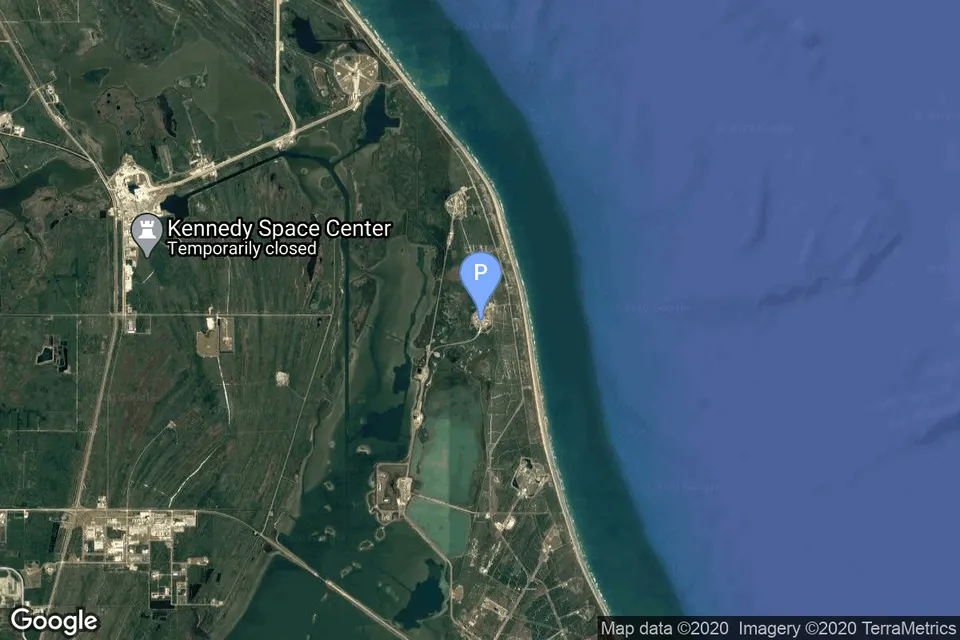
Space Launch Complex 40, Cape Canaveral SFS, FL, USA
170th launch from Space Launch Complex 40, 7th this year · 875th from Cape Canaveral SFS, FL, USA
403 launches from this pad · 1,131 from Cape Canaveral SFS, FL, USA
5 days 22 hours after the previous launch from this pad
Updates
Success confirmed
Show 9 earlier updates
Liftoff
Cosmic_Penguin · 2/18/2023 · source
Webcast started
Cosmic_Penguin · 2/18/2023 · source
Weather 75%
Nosu · 2/16/2023 · source
Weather 65%
Nosu · 2/15/2023 · source
Weather 60%
Nosu · 2/14/2023 · source
Launch window confirmed.
Cosmic_Penguin · 2/14/2023 · source
Delayed to February 18
Nosu · 2/10/2023 · source
Added launch window
Cosmic_Penguin · 2/8/2023 · source
NET February 18
Cosmic_Penguin · 2/2/2023 · source
Questions
When did Inmarsat-6 F2 launch?
Inmarsat-6 F2 launched on February 18, 2023. The time is known to the hour, not the minute.
Where can I watch Inmarsat-6 F2?
Coverage: Inmarsat I-6 F2 Mission. Watch the replay
What rocket launched Inmarsat-6 F2?
Falcon 9 Block 5, flown by SpaceX. Falcon 9 Block 5 spec sheet
Where did Inmarsat-6 F2 launch from?
Space Launch Complex 40, Cape Canaveral SFS, FL, USA.
Did the booster land?
Booster B1077 flew for the 3rd time and landed at Just Read the Instructions.
What orbit did Inmarsat-6 F2 reach?
The tracked orbit of Inmarsat 6 F2, one of 2 catalogued objects, from February 21, 2023, was 394 × 41,600 km inclined 27.0°.
How many satellites did Inmarsat-6 F2 launch?
1 payload from this launch is catalogued, still in orbit (Data from J. McDowell, planet4589.org).