
China Aerospace Science and Technology CorporationLong March 4BLaunch Area 94 (SLS-2 / 603), Jiuquan Satellite Launch Center, People's Republic of China
Huiyan (HXMT (Hard X-ray Modulation Telescope))
Launched
June 15, 2017
Image: CASC
Summary
Huiyan (HXMT (Hard X-ray Modulation Telescope)) launched on a China Aerospace Science and Technology Corporation Long March 4B from Launch Area 94 (SLS-2 / 603), Jiuquan Satellite Launch Center, People's Republic of China on June 15, 2017. It was China Aerospace Science and Technology Corporation's 195th launch, 5th this year and humanity's 5,651st orbital launch attempt. It was the 29th Long March 4B flight and the 1st this year. The payload was bound for low Earth orbit (LEO). Huiyan, one of 7 catalogued objects, reached a 543 × 553 km orbit inclined 43.0°. 7 objects from this launch are catalogued, 4 of them payloads.
- Watch
- Booster
- No booster details on record.
- Mission
- Astrophysics · Low Earth Orbit (LEO)
- Milestone
- 29th Long March 4B flight · 1st this yearChina Aerospace Science and Technology Corporation's 195th launch5th this yearhumanity's 5,651st orbital launch attempt36th orbital launch attempt this year
Flight preview
Orbit: as tracked
Huiyan · NORAD 42758 · 2017-034 · Space-Track · tracking 1 of 7 objects
Show the numbers for orbit elements
- Object
- TBA - TO BE ASSIGNED
- Object ID
- 2017-034A
- Epoch
- 2017-06-15 10:33:54 UTC
- Mean motion
- 15.08374244 rev/day
- Eccentricity
- 0.0006996
- Inclination
- 43.0132°
- Ascending node
- 296.0634°
- Arg. of perigee
- 337.6257°
- Mean anomaly
- 22.4799°
- Element set
- 999
- Rev at epoch
- 5
- B*
- 0
Perigee, apogee and period are Kepler figures from the catalogued mean elements, not a propagated state. Published orbit: LEO. Ascent drawn from padside's representative profile.
Catalogued objects
7 catalogued: 4 payloads, 1 rocket stage, 2 components; 3 still in orbit
- Huiyan · NORAD 42758 · in orbit
- OVS-1B · NORAD 42759 · re-entered October 15, 2025
- Milanesat · NORAD 42760 · re-entered June 28, 2025
- OVS-1A · NORAD 42761 · re-entered October 9, 2025
CZ-4B Y31 Stage 3 · re-entered August 25, 2018
Data from J. McDowell, planet4589.org
About this launch
Hard X-ray Modulation Telescope (HXMT) is a Chinese X-ray space observatory. This will be China's first astronomy satellite, and it is tasked with observation of black holes, neutron stars and other phenomena based on their X-ray and gamma ray emissions.
Pad
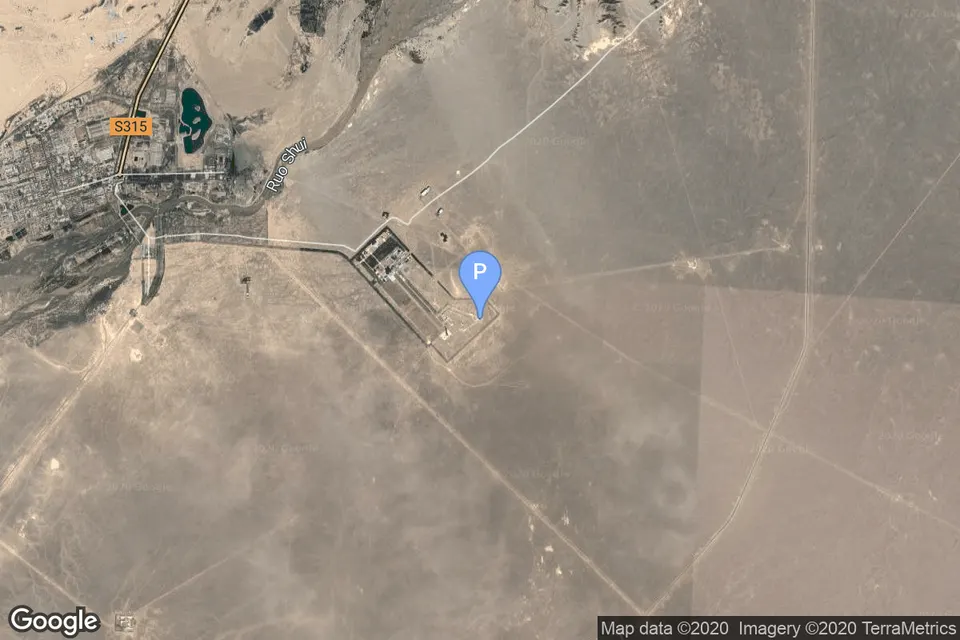
Launch Area 94 (SLS-2 / 603), Jiuquan Satellite Launch Center, People's Republic of China
48th launch from Launch Area 94 (SLS-2 / 603), 2nd this year · 94th from Jiuquan Satellite Launch Center, People's Republic of China
138 launches from this pad · 299 from Jiuquan Satellite Launch Center, People's Republic of China
104 days after the previous launch from this pad
All launches from Jiuquan Satellite Launch Center, People's Republic of ChinaOpen in maps
Questions
When did Huiyan (HXMT (Hard X-ray Modulation Telescope)) launch?
Huiyan (HXMT (Hard X-ray Modulation Telescope)) launched on June 15, 2017. The time is known to the hour, not the minute.
Where can I watch Huiyan (HXMT (Hard X-ray Modulation Telescope))?
Coverage: China Launches Its First X-ray Space Telescope to Study Black Holes, Pulsars; China launches first space telescope to study Milky Way mysteries. Watch the replay
What rocket launched Huiyan (HXMT (Hard X-ray Modulation Telescope))?
Long March 4B, flown by China Aerospace Science and Technology Corporation. Long March 4B spec sheet
Where did Huiyan (HXMT (Hard X-ray Modulation Telescope)) launch from?
Launch Area 94 (SLS-2 / 603), Jiuquan Satellite Launch Center, People's Republic of China.
What orbit did Huiyan (HXMT (Hard X-ray Modulation Telescope)) reach?
Huiyan, one of 7 catalogued objects, reached a 543 × 553 km orbit inclined 43.0°.
How many satellites did Huiyan (HXMT (Hard X-ray Modulation Telescope)) launch?
4 payloads from this launch are catalogued, 1 of them still in orbit (Data from J. McDowell, planet4589.org).