
SpaceXFalcon 9 Block 5Space Launch Complex 40, Cape Canaveral SFS, FL, USA
GSAT-20 (GSAT-N2)
Launched
November 18, 2024 · 18:31 UTC

Image: SpaceX
Summary
GSAT-20 (GSAT-N2) launched on a SpaceX Falcon 9 Block 5 from Space Launch Complex 40, Cape Canaveral SFS, FL, USA on November 18, 2024 at 18:31 UTC. The launch window ran from 18:31 to 20:20 UTC. It was SpaceX's 429th launch, 118th this year and humanity's 6,807th orbital launch attempt. It was the 342nd Falcon 9 Block 5 flight and the 113th this year. Booster B1073 flew for the 19th time and landed at Just Read the Instructions. The payload was bound for Geostationary Transfer Orbit (GTO). GSAT-20, one of 2 catalogued objects, reached a 215 × 59,516 km orbit inclined 27.6°. 2 objects from this launch are catalogued, one of them a payload.
- Watch
- Vehicle
- Falcon 9 Block 5 · SpaceX
- Booster
- B1073 · flight 19 · Autonomous Spaceport Drone Ship at Just Read the Instructions · landed156/157 landed here · 25 days after its previous flight, Starlink Group 6-61 · 644 km downrange
- Mission
- Communications · Geostationary Transfer Orbit (GTO)for ISRO
- Milestone
- 342nd Falcon 9 Block 5 flight · 113th this yearSpaceX's 429th launch118th this yearhumanity's 6,807th orbital launch attempt218th orbital launch attempt this year
Flight preview
Simulate in Flight ClubOrbit: as tracked
GSAT-20 · NORAD 62028 · 2024-214 · Space-Track · tracking 1 of 2 objects
Show the numbers for orbit elements
- Object
- TBA - TO BE ASSIGNED
- Object ID
- 2024-214A
- Epoch
- 2024-11-19 05:13:36 UTC
- Mean motion
- 1.25857174 rev/day
- Eccentricity
- 0.818242
- Inclination
- 27.6327°
- Ascending node
- 169.3433°
- Arg. of perigee
- 177.6055°
- Mean anomaly
- 193.8068°
- Element set
- 999
- Rev at epoch
- 12
- B*
- 0.0016112
Perigee, apogee and period are Kepler figures from the catalogued mean elements, not a propagated state. Published orbit: GTO. Ascent drawn from padside's representative profile. Booster return drawn from padside's representative arc.
Flight timeline
- T−38MGO for Prop Load
- T−35MProp Load
- T−35MStage 1 LOX Load
- T−16MStage 2 LOX Load
- T−7MEngine Chill
- T−1MStartup
- T−1MTank Press
- T−45SGO for Launch
- T−3SIgnition
- T−0Liftoff
- T+1M11SMax-Q
- T+2M26SMECO
- T+2M30SStage 2 Separation
- T+2M36SSES-1
- T+3M17SFairing Separation
- T+6M13SEntry Burn Startup
- T+6M39SEntry Burn Shutdown
- T+7M55SStage 1 Landing Burn
- T+7M56SSECO-1
- T+8M20SStage 1 Landing
- T+26M41SSES-2
- T+27M47SSECO-2
- T+33M58SPayload Separation
Catalogued objects
2 catalogued: 1 payload, 1 rocket stage; 1 still in orbit
- GSAT-20 · NORAD 62028 · in orbit
Falcon 9-402 Stage 2 · re-entered April 14, 2025
Data from J. McDowell, planet4589.org
About this launch
GSAT-20 is an Indian geostationary Ka-band high-throughput communications satellite. GSAT 20 is reportedly built on the I-6K unified modular bus and features a Ka-band high-throughput communications payload with 70 Gbps throughput utilizing multiple spot beams providing broadband services across the Indian region. It will be the first fully Electric Propulsion/EP enabled satellite which can be five to six times more efficient than chemical-based propulsion. It will be the first ISRO made satellite to move from Geostationary transfer orbit to Geosynchronous orbit using Electric Propulsion.
Pad
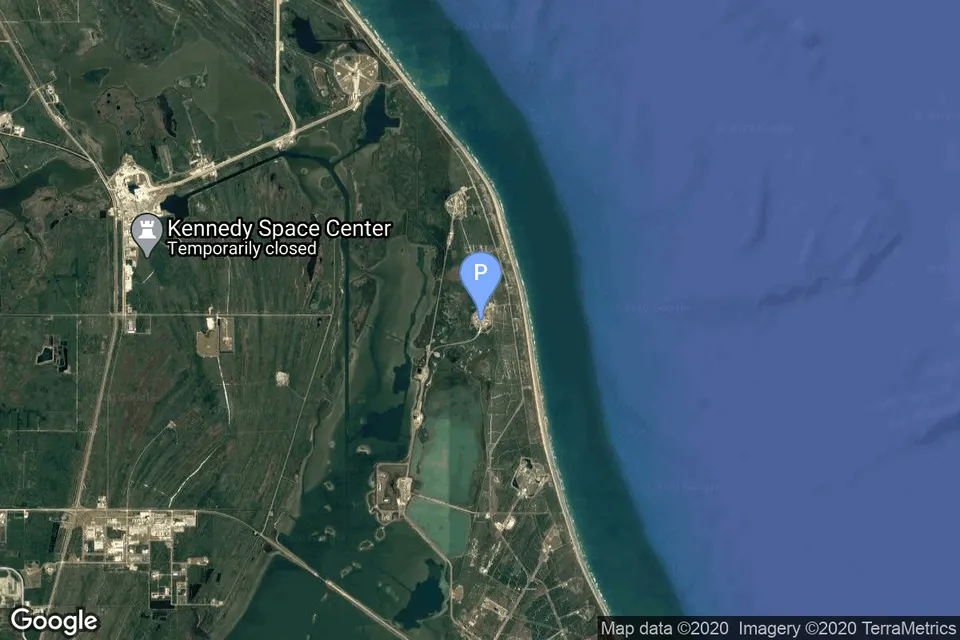
Space Launch Complex 40, Cape Canaveral SFS, FL, USA
273rd launch from Space Launch Complex 40, 55th this year · 987th from Cape Canaveral SFS, FL, USA
Local pad time at liftoff: Nov 18, 1:31 PM EST, in daylight
403 launches from this pad · 1,131 from Cape Canaveral SFS, FL, USA
4 days 5 hours after the previous launch from this pad
Updates
Launch success with satellite in contact.
Show 9 earlier updates
Spacecraft separation.
Cosmic_Penguin · 11/18/2024 · source
Liftoff.
Cosmic_Penguin · 11/18/2024 · source
Unofficial Webcast by SPACE AFFAIRS has started
LL2 · 11/18/2024 · source
Weather is >95% favorable for launch.
Nosu · 11/17/2024 · source
Setting GO
Nosu · 11/16/2024 · source
Updated launch window.
Cosmic_Penguin · 11/13/2024 · source
Tweaked launch window.
Cosmic_Penguin · 11/13/2024 · source
Moved up to November 18.
Cosmic_Penguin · 11/12/2024 · source
Targeting November 19.
Cosmic_Penguin · 11/11/2024 · source
Questions
When did GSAT-20 (GSAT-N2) launch?
GSAT-20 (GSAT-N2) launched on November 18, 2024 at 18:31 UTC. The launch window ran from 18:31 to 20:20 UTC.
Where can I watch GSAT-20 (GSAT-N2)?
Coverage: SpaceX GSAT-20 (GSAT-N2); SpaceX - Falcon 9 - GSAT-20 - SLC-40 - Cape Canaveral SFS - November 18, 2024; Watch live: SpaceX Falcon 9 rocket launches from Cape Canaveral with satellite for India. Watch the replay
What rocket launched GSAT-20 (GSAT-N2)?
Falcon 9 Block 5, flown by SpaceX. Falcon 9 Block 5 spec sheet
Where did GSAT-20 (GSAT-N2) launch from?
Space Launch Complex 40, Cape Canaveral SFS, FL, USA. Liftoff was Nov 18, 1:31 PM EST local time at the pad.
Did the booster land?
Booster B1073 flew for the 19th time and landed at Just Read the Instructions.
What orbit did GSAT-20 (GSAT-N2) reach?
GSAT-20, one of 2 catalogued objects, reached a 215 × 59,516 km orbit inclined 27.6°.
How many satellites did GSAT-20 (GSAT-N2) launch?
1 payload from this launch is catalogued, still in orbit (Data from J. McDowell, planet4589.org).