![[AUTO] Atlas V 541 | GOES-T - image](/media?u=https%3A%2F%2Fthespacedevs-prod.nyc3.digitaloceanspaces.com%2Fmedia%2Fimages%2Fatlas2520v252_image_20220228154837.jpeg&w=1600)
United Launch AllianceAtlas V 541Space Launch Complex 41, Cape Canaveral SFS, FL, USA
GOES-T
Launched
March 1, 2022

Summary
GOES-T launched on an United Launch Alliance Atlas V 541 from Space Launch Complex 41, Cape Canaveral SFS, FL, USA on March 1, 2022. It was United Launch Alliance's 150th launch, 2nd this year and humanity's 6,204th orbital launch attempt. It was the 8th Atlas V 541 flight and the 1st this year. The payload was bound for Geostationary Transfer Orbit (GTO). GOES 18, one of 2 catalogued objects, reached a 8,900 × 35,282 km orbit inclined 9.5°. 2 objects from this launch are catalogued, one of them a payload.
- Watch
- Booster
- No booster details on record.
- Mission
- Earth Science · Geostationary Transfer Orbit (GTO)
- Milestone
- 8th Atlas V 541 flight · 1st this yearUnited Launch Alliance's 150th launch2nd this yearhumanity's 6,204th orbital launch attempt22nd orbital launch attempt this year
Webcast
Flight preview
Simulate in Flight ClubOrbit: as tracked
GOES 18 · NORAD 51850 · 2022-021 · Space-Track · tracking 1 of 2 objects
Show the numbers for orbit elements
- Object
- TBA - TO BE ASSIGNED
- Object ID
- 2022-022A
- Epoch
- 2022-03-02 02:48:20 UTC
- Mean motion
- 1.80802358 rev/day
- Eccentricity
- 0.4634543
- Inclination
- 9.4521°
- Ascending node
- 334.4541°
- Arg. of perigee
- 179.655°
- Mean anomaly
- 144.435°
- Element set
- 999
- Rev at epoch
- 0
- B*
- 0
Perigee, apogee and period are Kepler figures from the catalogued mean elements, not a propagated state. Published orbit: GTO. Ascent drawn from padside's representative profile.
Catalogued objects
2 catalogued: 1 payload, 1 rocket stage; 2 still in orbit
- GOES 18 · NORAD 51850 · in orbit
Centaur AV-095 · in orbit
Data from J. McDowell, planet4589.org
About this launch
The Geostationary Operational Environmental Satellite T (GOES-T) is the third satellite in NOAA’s advanced GOES-R series. It is meant to operate as GOES West and work in tandem with GOES-16, which operates in the GOES East position
Pad
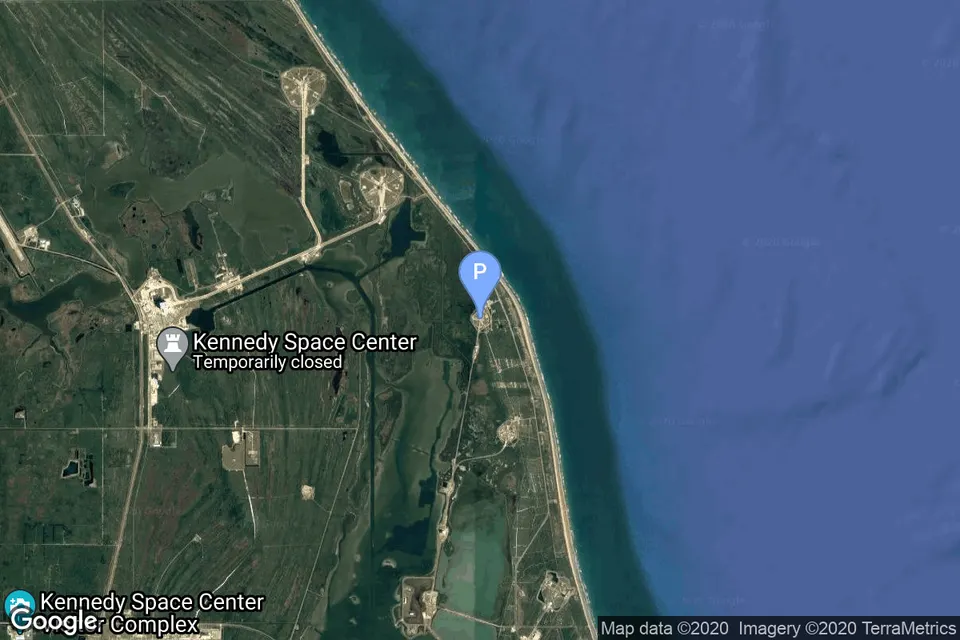
Space Launch Complex 41, Cape Canaveral SFS, FL, USA
104th launch from Space Launch Complex 41, 2nd this year · 836th from Cape Canaveral SFS, FL, USA
125 launches from this pad · 1,131 from Cape Canaveral SFS, FL, USA
39 days after the previous launch from this pad
Updates
Success confirmed
Show 9 earlier updates
Liftoff of Atlas V carrying another GOES satellite into orbit for NOAA, providing vital weather data for years to come.
Jay · 3/1/2022
Weather 80%
Nosu · 3/1/2022 · source
Weather 70%
Nosu · 2/28/2022 · source
Weather 60%
Nosu · 2/25/2022 · source
T-0 confirmed by ULA
Nosu · 1/31/2022 · source
New launch date.
Cosmic_Penguin · 11/18/2021 · source
Adding launch time and window.
Nosu · 9/30/2021 · source
Now targeting NET February 16 2022.
Nosu · 9/27/2021 · source
New launch date & time
Nosu · 8/7/2021 · source
Questions
When did GOES-T launch?
GOES-T launched on March 1, 2022. The time is known to the hour, not the minute.
Where can I watch GOES-T?
Coverage: Atlas V GOES-T; Watch NOAA's GOES-T Weather Satellite Launch to Geostationary Orbit (Official NASA Broadcast). Watch the replay
What rocket launched GOES-T?
Atlas V 541, flown by United Launch Alliance. Atlas V 541 spec sheet
Where did GOES-T launch from?
Space Launch Complex 41, Cape Canaveral SFS, FL, USA.
What orbit did GOES-T reach?
GOES 18, one of 2 catalogued objects, reached a 8,900 × 35,282 km orbit inclined 9.5°.
How many satellites did GOES-T launch?
1 payload from this launch is catalogued, still in orbit (Data from J. McDowell, planet4589.org).
Which program is GOES-T part of?
Geostationary Operational Environmental Satellite. About Geostationary Operational Environmental Satellite