![[AUTO] Atlas V 541 - image](/media?u=https%3A%2F%2Fthespacedevs-prod.nyc3.digitaloceanspaces.com%2Fmedia%2Fimages%2Fatlas2520v2520541_image_20190224012314.jpeg&w=1600)
United Launch AllianceAtlas V 541Space Launch Complex 41, Cape Canaveral SFS, FL, USA
GOES-S
Launched
March 1, 2018
Summary
GOES-S launched on an United Launch Alliance Atlas V 541 from Space Launch Complex 41, Cape Canaveral SFS, FL, USA on March 1, 2018. It was United Launch Alliance's 127th launch, 3rd this year and humanity's 5,728th orbital launch attempt. It was the 6th Atlas V 541 flight and the 1st this year. The payload was bound for Geostationary Transfer Orbit (GTO). GOES 17, one of 2 catalogued objects, reached a 7,629 × 34,954 km orbit inclined 9.6°. 2 objects from this launch are catalogued, one of them a payload.
- Watch
- Liftoff of GOES-SNASA's Kennedy Space Center
- Atlas V GOES-S Launch HighlightsUnited Launch Alliance
- Booster
- No booster details on record.
- Mission
- Earth Science · Geostationary Transfer Orbit (GTO)
- Milestone
- 6th Atlas V 541 flight · 1st this yearUnited Launch Alliance's 127th launch3rd this yearhumanity's 5,728th orbital launch attempt22nd orbital launch attempt this year
Flight preview
Orbit: as tracked
GOES 17 · NORAD 43226 · 2018-022 · Space-Track · tracking 1 of 2 objects
Show the numbers for orbit elements
- Object
- TBA - TO BE ASSIGNED
- Object ID
- 2018-022A
- Epoch
- 2018-03-02 03:04:21 UTC
- Mean motion
- 1.88695946 rev/day
- Eccentricity
- 0.4939025
- Inclination
- 9.6232°
- Ascending node
- 336.6849°
- Arg. of perigee
- 177.9405°
- Mean anomaly
- 145.7845°
- Element set
- 999
- Rev at epoch
- 0
- B*
- 0
Perigee, apogee and period are Kepler figures from the catalogued mean elements, not a propagated state. Published orbit: GTO. Ascent drawn from padside's representative profile.
Catalogued objects
2 catalogued: 1 payload, 1 rocket stage; 2 still in orbit
- GOES 17 · NORAD 43226 · in orbit
Centaur AV-077 · in orbit
Data from J. McDowell, planet4589.org
About this launch
The Geostationary Operational Environmental Satellite-S Series (GOES-S) is the second of the next generation of geostationary weather satellites. The four satellites of the series will provide advanced imaging with increased spatial resolution and faster coverage for more accurate forecasts, real-time mapping of lightning activity, and improved monitoring of solar activity. GOES-S will provide continuous imagery and atmospheric measurements of the Western Hemisphere. GOES-S will be the primary tool for the detection and tracking of hurricanes and severe weather. Once operational as GOES-17, the satellite wil replace GOES-15 satellite.
Pad
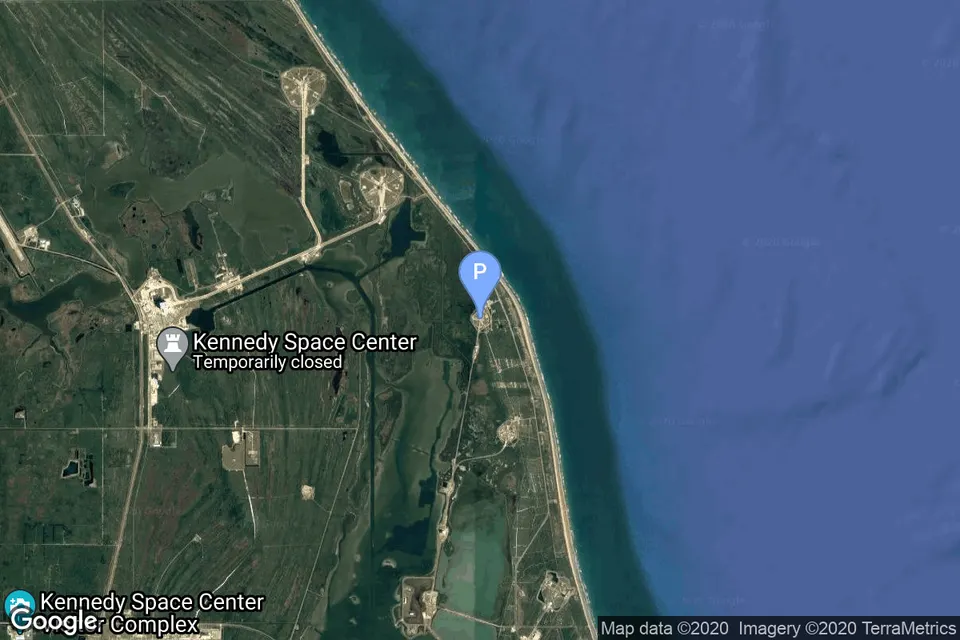
Space Launch Complex 41, Cape Canaveral SFS, FL, USA
90th launch from Space Launch Complex 41, 2nd this year · 765th from Cape Canaveral SFS, FL, USA
125 launches from this pad · 1,131 from Cape Canaveral SFS, FL, USA
40 days after the previous launch from this pad
Questions
When did GOES-S launch?
GOES-S launched on March 1, 2018. The time is known to the hour, not the minute.
Where can I watch GOES-S?
Coverage: Liftoff of GOES-S; Atlas V GOES-S Launch Highlights. Watch the replay
What rocket launched GOES-S?
Atlas V 541, flown by United Launch Alliance. Atlas V 541 spec sheet
Where did GOES-S launch from?
Space Launch Complex 41, Cape Canaveral SFS, FL, USA.
What orbit did GOES-S reach?
GOES 17, one of 2 catalogued objects, reached a 7,629 × 34,954 km orbit inclined 9.6°.
How many satellites did GOES-S launch?
1 payload from this launch is catalogued, still in orbit (Data from J. McDowell, planet4589.org).
Which program is GOES-S part of?
Geostationary Operational Environmental Satellite. About Geostationary Operational Environmental Satellite