![[AUTO] Soyuz STB - image](/media?u=https%3A%2F%2Fthespacedevs-prod.nyc3.digitaloceanspaces.com%2Fmedia%2Fimages%2Fsoyuz_stb_image_20211130181029.jpeg&w=1600)
ArianespaceSoyuz STB FregatSoyuz Launch Complex, Guiana Space Centre, French Guiana
Galileo L5 (FOC FM05-FM06)
Launched
September 11, 2015
Summary
Galileo L5 (FOC FM05-FM06) launched on an Arianespace Soyuz STB Fregat from Soyuz Launch Complex, Guiana Space Centre, French Guiana on September 11, 2015. It was Arianespace's 236th launch, 8th this year and humanity's 5,490th orbital launch attempt. It was the 6th Soyuz STB Fregat flight and the 2nd this year. The payload was bound for Medium Earth Orbit (MEO). GalileoSat-9, one of 3 catalogued objects, reached a 23,563 × 23,618 km orbit inclined 57.4°. 3 objects from this launch are catalogued, 2 of them payloads.
- Watch
- Galileo launch (sat 9 & 10) - liftoffEuropean Space Agency, ESA
- Vehicle
- Soyuz STB Fregat · ArianespaceGalileo
- Booster
- No booster details on record.
- Mission
- Navigation · Medium Earth Orbit (MEO)
- Milestone
- 6th Soyuz STB Fregat flight · 2nd this yearArianespace's 236th launch8th this yearhumanity's 5,490th orbital launch attempt48th orbital launch attempt this year
Flight preview
Orbit: as tracked
GalileoSat-9 · NORAD 40889 · 2015-045 · Space-Track · tracking 1 of 3 objects
Show the numbers for orbit elements
- Object
- OBJECT A
- Object ID
- 2015-045A
- Epoch
- 2015-09-11 14:15:18 UTC
- Mean motion
- 1.67401396 rev/day
- Eccentricity
- 0.0009289
- Inclination
- 57.3824°
- Ascending node
- 329.5157°
- Arg. of perigee
- 248.6846°
- Mean anomaly
- 199.8136°
- Element set
- 999
- Rev at epoch
- 0
- B*
- 0
Perigee, apogee and period are Kepler figures from the catalogued mean elements, not a propagated state. Published orbit: MEO. Ascent drawn from padside's representative profile.
Catalogued objects
3 catalogued: 2 payloads, 1 rocket stage; 3 still in orbit
- GalileoSat-9 · NORAD 40889 · in orbit
- GalileoSat-10 · NORAD 40890 · in orbit
Fregat-MT No. 133-03 · in orbit
Data from J. McDowell, planet4589.org
About this launch
The 5th and 6th Full Operational Capability satellites will be the 9th and 10th Galileo satellites launched, alongside the 4 FOC and 4 IOV spacecraft already in orbit. The Galileo constellation is ESA's satellite navigation system and is expected to be completed by 2020. Galileo will provide Europe with an alternative to the American GPS and Russian GLONASS constellations, but will be interoperable with both systems.
Pad
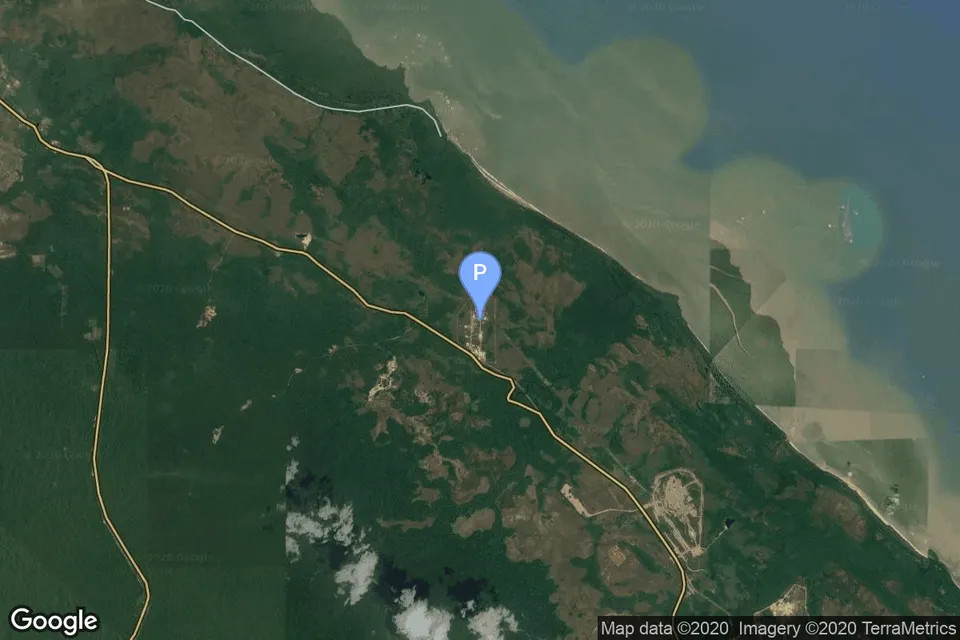
Soyuz Launch Complex, Guiana Space Centre, French Guiana
12th launch from Soyuz Launch Complex, 2nd this year · 251st from Guiana Space Centre, French Guiana
26 launches from this pad · 336 from Guiana Space Centre, French Guiana
167 days after the previous launch from this pad
All launches from Guiana Space Centre, French GuianaOpen in maps
Questions
When did Galileo L5 (FOC FM05-FM06) launch?
Galileo L5 (FOC FM05-FM06) launched on September 11, 2015. The time is known to the hour, not the minute.
Where can I watch Galileo L5 (FOC FM05-FM06)?
Coverage: Galileo launch (sat 9 & 10) - liftoff. Watch the replay
What rocket launched Galileo L5 (FOC FM05-FM06)?
Soyuz STB Fregat, flown by Arianespace. Soyuz STB Fregat spec sheet
Where did Galileo L5 (FOC FM05-FM06) launch from?
Soyuz Launch Complex, Guiana Space Centre, French Guiana.
What orbit did Galileo L5 (FOC FM05-FM06) reach?
GalileoSat-9, one of 3 catalogued objects, reached a 23,563 × 23,618 km orbit inclined 57.4°.
How many satellites did Galileo L5 (FOC FM05-FM06) launch?
2 payloads from this launch are catalogued, 2 of them still in orbit (Data from J. McDowell, planet4589.org).
Which program is Galileo L5 (FOC FM05-FM06) part of?
Galileo. About Galileo