
SpaceXFalcon 9 Block 5Space Launch Complex 40, Cape Canaveral SFS, FL, USA
Galileo L13 (FOC FM26 & FM32)
Launched
September 17, 2024 · 22:50 UTC

Image: SpaceX
Summary
Galileo L13 (FOC FM26 & FM32) launched on a SpaceX Falcon 9 Block 5 from Space Launch Complex 40, Cape Canaveral SFS, FL, USA on September 17, 2024 at 22:50 UTC. It was SpaceX's 404th launch, 93rd this year and humanity's 6,760th orbital launch attempt. It was the 319th Falcon 9 Block 5 flight and the 90th this year. Booster B1067 flew for the 22nd time and landed at Just Read the Instructions. The payload was bound for Medium Earth Orbit (MEO). GalileoSat-31, one of 3 catalogued objects, reached a 22,949 × 23,016 km orbit inclined 55.4°. 3 objects from this launch are catalogued, 2 of them payloads.
- Watch
- Vehicle
- Falcon 9 Block 5 · SpaceXGalileo
- Booster
- B1067 · flight 22 · Autonomous Spaceport Drone Ship at Just Read the Instructions · landed156/157 landed here · 38 days after its previous flight, Starlink Group 8-3 · 670 km downrange
- Mission
- Navigation · Medium Earth Orbit (MEO)for ESA
- Milestone
- 319th Falcon 9 Block 5 flight · 90th this yearSpaceX's 404th launch93rd this yearhumanity's 6,760th orbital launch attempt171st orbital launch attempt this year
Flight preview
Simulate in Flight ClubOrbit: as tracked
GalileoSat-31 · NORAD 61182 · 2024-167 · Space-Track · tracking 1 of 3 objects
Show the numbers for orbit elements
- Object
- OBJECT A
- Object ID
- 2024-167A
- Epoch
- 2024-09-18 15:06:58 UTC
- Mean motion
- 1.72628866 rev/day
- Eccentricity
- 0.00115
- Inclination
- 55.4112°
- Ascending node
- 238.7904°
- Arg. of perigee
- 358.5907°
- Mean anomaly
- 203.7095°
- Element set
- 999
- Rev at epoch
- 0
- B*
- 0
Perigee, apogee and period are Kepler figures from the catalogued mean elements, not a propagated state. Published orbit: MEO.
Flight timeline
- T−38MGO for Prop Load
- T−35MProp Load
- T−35MStage 1 LOX Load
- T−16MStage 2 LOX Load
- T−7MEngine Chill
- T−1MTank Press
- T−1MStartup
- T−45SGO for Launch
- T−3SIgnition
- T−0Liftoff
- T+1M11SMax-Q
- T+2M31SMECO
- T+2M34SStage 2 Separation
- T+2M41SSES-1
- T+3M24SFairing Separation
- T+6M20SEntry Burn Startup
- T+6M38SEntry Burn Shutdown
- T+8M13SStage 1 Landing Burn
- T+8M27SSECO-1
- T+8M34SStage 1 Landing
- T+3H26M52SSES-2
- T+3H27M21SSECO-2
- T+3H34M22SPayload Separation
Catalogued objects
3 catalogued: 2 payloads, 1 rocket stage; 3 still in orbit
- GalileoSat-31 · NORAD 61182 · in orbit
- GalileoSat-32 · NORAD 61183 · in orbit
Falcon 9-376 Stage 2 · in orbit
Data from J. McDowell, planet4589.org
About this launch
Two satellites for Europe's Galileo navigation system. Originally planned for launch on Soyuz-ST and then Ariane 6 but both were unavailable. Galileo provides Europe with an alternative to the American GPS and Russian GLONASS constellations, but will be interoperable with both systems.
Pad
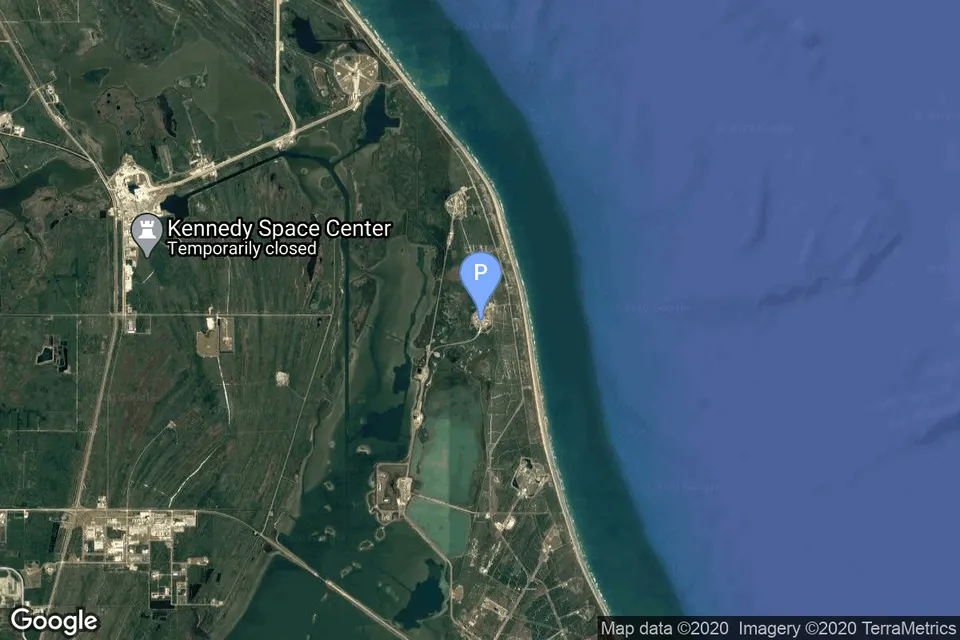
Space Launch Complex 40, Cape Canaveral SFS, FL, USA
262nd launch from Space Launch Complex 40, 44th this year · 975th from Cape Canaveral SFS, FL, USA
Local pad time at liftoff: Sep 17, 6:50 PM EDT, in daylight
403 launches from this pad · 1,131 from Cape Canaveral SFS, FL, USA
5 days 13 hours after the previous launch from this pad
Updates
Launch success.
Show 9 earlier updates
Payload deployment confirmed.
Cosmic_Penguin · 9/18/2024 · source
Updated T-0.
Cosmic_Penguin · 9/17/2024 · source
Liftoff.
Cosmic_Penguin · 9/17/2024 · source
Unofficial Re-stream by SPACE AFFAIRS has started
LL2 · 9/17/2024 · source
GO for launch.
Cosmic_Penguin · 9/17/2024 · source
Weather is 40% favorable for launch.
Nosu · 9/16/2024 · source
NET September 17.
Cosmic_Penguin · 9/16/2024 · source
Weather is 50% favorable for launch.
Nosu · 9/15/2024 · source
NET September 16 per new NOTAMs.
Cosmic_Penguin · 9/14/2024 · source
Questions
When did Galileo L13 (FOC FM26 & FM32) launch?
Galileo L13 (FOC FM26 & FM32) launched on September 17, 2024 at 22:50 UTC.
Where can I watch Galileo L13 (FOC FM26 & FM32)?
Coverage: SpaceX Galileo L13 (FOC FM26 & FM32); SpaceX - Falcon 9 - Galileo FOC FM26 & FM 32 - SLC-40 - Cape Canaveral SFS - September 17, 2024; Watch live: SpaceX Falcon 9 rocket launches from Florida with European navigation satellites. Watch the replay
What rocket launched Galileo L13 (FOC FM26 & FM32)?
Falcon 9 Block 5, flown by SpaceX. Falcon 9 Block 5 spec sheet
Where did Galileo L13 (FOC FM26 & FM32) launch from?
Space Launch Complex 40, Cape Canaveral SFS, FL, USA. Liftoff was Sep 17, 6:50 PM EDT local time at the pad.
Did the booster land?
Booster B1067 flew for the 22nd time and landed at Just Read the Instructions.
What orbit did Galileo L13 (FOC FM26 & FM32) reach?
GalileoSat-31, one of 3 catalogued objects, reached a 22,949 × 23,016 km orbit inclined 55.4°.
How many satellites did Galileo L13 (FOC FM26 & FM32) launch?
2 payloads from this launch are catalogued, 2 of them still in orbit (Data from J. McDowell, planet4589.org).
Which program is Galileo L13 (FOC FM26 & FM32) part of?
Galileo. About Galileo