![[AUTO] Falcon 9 Block 5 | Euclid - image](/media?u=https%3A%2F%2Fthespacedevs-prod.nyc3.digitaloceanspaces.com%2Fmedia%2Fimages%2Ffalcon2520925_image_20230802052918.jpeg&w=1600)
SpaceXFalcon 9 Block 5Space Launch Complex 40, Cape Canaveral SFS, FL, USA
Euclid
Launched
July 1, 2023 · 15:12 UTC

Summary
Euclid launched on a SpaceX Falcon 9 Block 5 from Space Launch Complex 40, Cape Canaveral SFS, FL, USA on July 1, 2023 at 15:12 UTC. It was SpaceX's 258th launch, 45th this year and humanity's 6,466th orbital launch attempt. It was the 180th Falcon 9 Block 5 flight and the 42nd this year. Booster B1080 flew for the 2nd time and landed at A Shortfall of Gravitas. The payload was bound for Sun-Earth L2 (L2). Euclid, one of 2 catalogued objects, reached a 164 × 376 km orbit inclined 37.0°. 2 objects from this launch are catalogued, one of them a payload.
- Watch
- ESA Euclid MissionSpaceX
- Euclid: Journey to darknessEuropean Space Agency, ESA
- Vehicle
- Falcon 9 Block 5 · SpaceX
- Booster
- B1080 · flight 2 · Autonomous Spaceport Drone Ship at A Shortfall of Gravitas · landed161/162 landed here · 40 days after its previous flight, Axiom Space Mission 2 · 692 km downrange
- Mission
- Astrophysics · Sun-Earth L2 (L2)
- Milestone
- 180th Falcon 9 Block 5 flight · 42nd this yearSpaceX's 258th launch45th this yearhumanity's 6,466th orbital launch attempt98th orbital launch attempt this year
Webcast
Flight preview
Simulate in Flight ClubOrbit: as tracked
Euclid · NORAD 57209 · 2023-092 · Space-Track · tracking 1 of 2 objects
Show the numbers for orbit elements
- Object
- EUCLID
- Object ID
- 2023-092A
- Epoch
- 2023-07-01 15:20:03 UTC
- Mean motion
- 16.04191078 rev/day
- Eccentricity
- 0.01595
- Inclination
- 36.98°
- Ascending node
- 294.6018°
- Arg. of perigee
- 140.4°
- Mean anomaly
- 359.82°
- Element set
- 999
- Rev at epoch
- 0
- B*
- 0
Perigee, apogee and period are Kepler figures from the catalogued mean elements, not a propagated state. Published orbit: L2. Ascent drawn from padside's representative profile. Booster return drawn from padside's representative arc.
Catalogued objects
2 catalogued: 1 payload, 1 rocket stage
- Euclid · NORAD 57209 · left Earth orbit July 2, 2023
Falcon 9-238 Stage 2 · left Earth orbit July 2, 2023
Data from J. McDowell, planet4589.org
About this launch
European Space Agency telescope designed to explore the evolution of the dark Universe. It will make a 3D-map of the Universe (with time as the third dimension) by observing billions of galaxies out to 10 billion light-years, across more than a third of the sky.
News
 Euclid discovers the most ancient quasar in the UniverseFrom the ESA Blogs.
 Thousands of planets are hidden in this photoMillions of stars. Thousands of hidden worlds. One unprecedented view of our galaxy.
 Euclid studies Milky Way center, supports future Roman observationsThe European Space Agency (ESA) recently released a new picture of the center of the…
 Euclid Sees Heart of Milky WayEuclid, an ESA (European Space Agency) mission with NASA contributions, took a new look at the heart of our Milky Way galaxy, seen in this image released on June 24, 2026. This observation overlaps with a region scientists will observe with NASA’s Nancy Grace Roman Space Telescope, launching later this summer. This sneak peek gives […]
 Euclid View of Milky Way Heart Previews Core Survey by NASA’s RomanA new look at the heart of our Milky Way galaxy by Euclid, an ESA (European Space Agency) mission with NASA contributions, overlaps with a region scientists will observe with NASA’s Nancy Grace Roman Space Telescope, launching later this summer. This sneak peek gives astronomers a major jumpstart on a core Roman survey, helping scientists […]
 ESA’s Euclid captures the Milky Way’s crowded heartFrom the ESA Blogs.
 ESA’s Euclid captures the Milky Way’s crowded heartThis is the largest high-resolution photo ever made of our Milky Way galaxy’s centre in visible light. It was taken on 23 March 2025 by the European Space Agency’s Euclid space telescope. Packed with more than 60 million stars, this image opens the door for scientists to confirm the existence of any exoplanet found in this region and measure its mass using tiny changes in starlight over time.
Pad
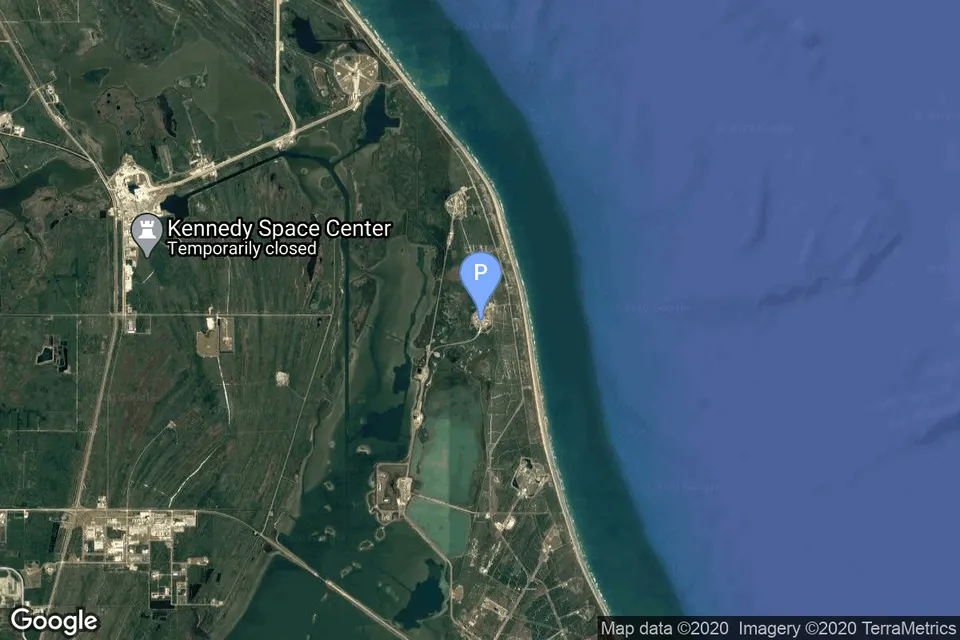
Space Launch Complex 40, Cape Canaveral SFS, FL, USA
187th launch from Space Launch Complex 40, 24th this year · 894th from Cape Canaveral SFS, FL, USA
Local pad time at liftoff: Jul 1, 11:12 AM EDT, in daylight
403 launches from this pad · 1,131 from Cape Canaveral SFS, FL, USA
7 days 23 hours after the previous launch from this pad
Updates
Successful launch of the European Space Agency's Euclid telescope towards the Sun-Earth Lagrange point L2.
Show 9 earlier updates
Liftoff
Nosu · 7/1/2023 · source
Livestream has started
LL2 · 7/1/2023 · source
Tweaked T-0.
Cosmic_Penguin · 7/1/2023 · source
Weather 90%
Nosu · 6/29/2023 · source
GO for launch.
Cosmic_Penguin · 6/24/2023 · source
Updating T-0
Nosu · 6/14/2023 · source
Adding T-0
Nosu · 6/6/2023 · source
NET July
Nosu · 2/20/2023 · source
Q3 2023
Nosu · 1/9/2023 · source
Questions
When did Euclid launch?
Euclid launched on July 1, 2023 at 15:12 UTC.
Where can I watch Euclid?
Coverage: ESA Euclid Mission; Euclid: Journey to darkness. Watch the replay
What rocket launched Euclid?
Falcon 9 Block 5, flown by SpaceX. Falcon 9 Block 5 spec sheet
Where did Euclid launch from?
Space Launch Complex 40, Cape Canaveral SFS, FL, USA. Liftoff was Jul 1, 11:12 AM EDT local time at the pad.
Did the booster land?
Booster B1080 flew for the 2nd time and landed at A Shortfall of Gravitas.
What orbit did Euclid reach?
Euclid, one of 2 catalogued objects, reached a 164 × 376 km orbit inclined 37.0°.
How many satellites did Euclid launch?
1 payload from this launch is catalogued (Data from J. McDowell, planet4589.org).