![[AUTO] Soyuz STB - image](/media?u=https%3A%2F%2Fthespacedevs-prod.nyc3.digitaloceanspaces.com%2Fmedia%2Fimages%2Fsoyuz_stb_image_20211130181029.jpeg&w=1600)
ArianespaceSoyuz STB FregatSoyuz Launch Complex, Guiana Space Centre, French Guiana
CSG-1, CHEOPS, & others
Launched
December 18, 2019
Summary
CSG-1, CHEOPS, & others launched on an Arianespace Soyuz STB Fregat from Soyuz Launch Complex, Guiana Space Centre, French Guiana on December 18, 2019. It was Arianespace's 282nd launch, 9th this year and humanity's 5,917th orbital launch attempt. It was the 12th Soyuz STB Fregat flight and the 3rd this year. The payload was bound for Sun-Synchronous Orbit (SSO). CSG 1, one of 6 catalogued objects, reached a 628 × 630 km orbit inclined 97.8°. 6 objects from this launch are catalogued, 5 of them payloads.
- Watch
- Vehicle
- Soyuz STB Fregat · Arianespace
- Booster
- No booster details on record.
- Mission
- Dedicated Rideshare · Sun-Synchronous Orbit (SSO)
- Milestone
- 12th Soyuz STB Fregat flight · 3rd this yearArianespace's 282nd launch9th this yearhumanity's 5,917th orbital launch attempt97th orbital launch attempt this year
Webcast
Flight preview
Orbit: as tracked
CSG 1 · NORAD 44873 · 2019-092 · Space-Track · tracking 1 of 6 objects
Show the numbers for orbit elements
- Object
- TBA - TO BE ASSIGNED
- Object ID
- 2019-092A
- Epoch
- 2019-12-18 12:13:41 UTC
- Mean motion
- 14.82253685 rev/day
- Eccentricity
- 0.000143
- Inclination
- 97.8233°
- Ascending node
- 174.334°
- Arg. of perigee
- 353.7194°
- Mean anomaly
- 6.3915°
- Element set
- 999
- Rev at epoch
- 2
- B*
- 0
Perigee, apogee and period are Kepler figures from the catalogued mean elements, not a propagated state. Published orbit: SSO. Ascent drawn from padside's representative profile.
Catalogued objects
6 catalogued: 5 payloads, 1 component; 2 still in orbit
- CSG 1 · NORAD 44873 · in orbit
- CHEOPS · NORAD 44874 · in orbit
- ANGELS · NORAD 44876 · re-entered April 28, 2026
- EyeSat · NORAD 44877 · re-entered November 19, 2023
- OPS-SAT · NORAD 44878 · re-entered May 22, 2024
Data from J. McDowell, planet4589.org
About this launch
The COSMO-SkyMed Second Generation satellite (CSG-1) is an Earth observation spacecraft featuring state-of-the-art technologies and engineering solutions, further bolstering Italian leadership in this sector. It's one out of two satellites to replace the first generation COSMO-SkyMed system. This second-generation system, including its ground segment, will set a new performance standard for space-based radar observation systems in terms of precision, image quality and the flexibility of user services. It is a dual (civil/military) system, designed to address the requirements of both commercial and government customers, as well as the scientific community. The COSMO-SkyMed Second Generation satellites are equipped with synthetic aperture radar (SAR), capable of observations under any weather or light conditions, day or night. The Characterising Exoplanet Satellite (CHEOPS) is an ESA mission implemented in partnership – in particular with Switzerland. CHEOPS is the first mission dedicated to studying bright, nearby stars that already are known to host exoplanets in order to make high-precision observations of the planet's size as it passes in front of its host star. The spacecraft will focus on planets in the super-Earth to Neptune size range, with its data enabling the bulk density of the planets to be derived – a first characterization step towards understanding these alien worlds. Flight also includes 3 auxiliary payloads: OPS-SAT, EyeSat, ANGELS. OPS-SAT is the world’s first free-for-use, in-orbit test bed for new software, applications and techniques in satellite control. It enables new software to be tested in orbit. In the first year of operation, OPS-SAT will host over 100 in-flight experiments submitted from many ESA Member States. EyeSat is a 3U CubeSat designed to study the zodiacal light and image the Milky Way. It's fitted with an instrument called IRIS, which is a small space telescope. ANGELS is a 12U CubeSat, and is the French industry’s first nanosatellite. The satellite will be fitted with a miniaturized ARGOS Néo instrument, which is 10-times smaller than the equivalent previous-generation device. The instrument collects and determines the position of low-power signals and messages sent by the 20,000 ARGOS beacons now in service worldwide.
Pad
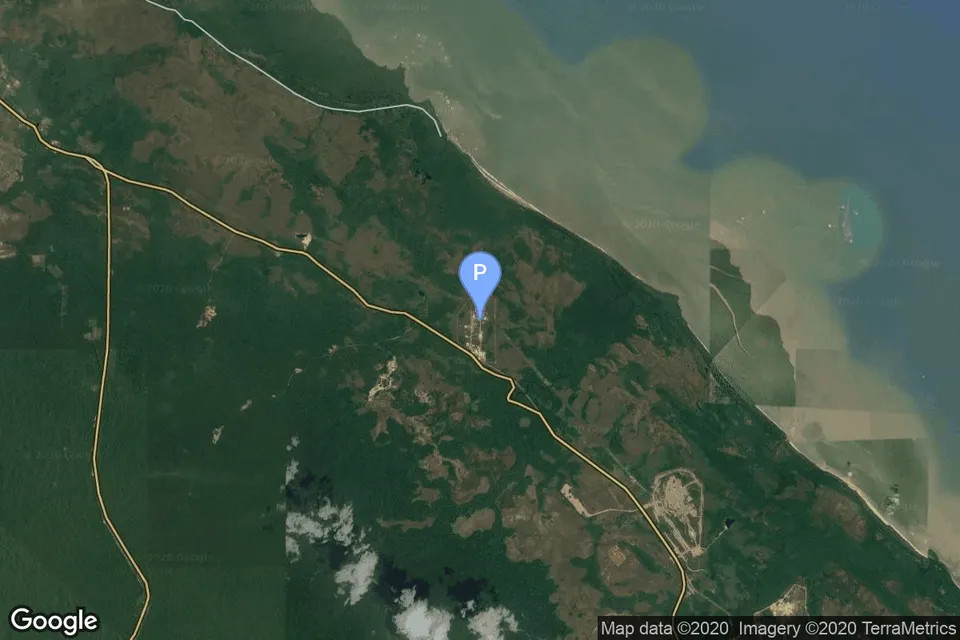
Soyuz Launch Complex, Guiana Space Centre, French Guiana
22nd launch from Soyuz Launch Complex, 3rd this year · 297th from Guiana Space Centre, French Guiana
26 launches from this pad · 336 from Guiana Space Centre, French Guiana
257 days after the previous launch from this pad
All launches from Guiana Space Centre, French GuianaOpen in maps
Questions
When did CSG-1, CHEOPS, & others launch?
CSG-1, CHEOPS, & others launched on December 18, 2019. The time is known to the hour, not the minute.
Where can I watch CSG-1, CHEOPS, & others?
Coverage: [Live] VS23 ANGELS & EyeSat Launch. Watch the replay
What rocket launched CSG-1, CHEOPS, & others?
Soyuz STB Fregat, flown by Arianespace. Soyuz STB Fregat spec sheet
Where did CSG-1, CHEOPS, & others launch from?
Soyuz Launch Complex, Guiana Space Centre, French Guiana.
What orbit did CSG-1, CHEOPS, & others reach?
CSG 1, one of 6 catalogued objects, reached a 628 × 630 km orbit inclined 97.8°.
How many satellites did CSG-1, CHEOPS, & others launch?
5 payloads from this launch are catalogued, 2 of them still in orbit (Data from J. McDowell, planet4589.org).