
Rocket LabElectronRocket Lab Launch Complex 1A, Rocket Lab Launch Complex 1, Mahia Peninsula, New Zealand
Bridging The Swarm (NeonSat-1A)
Launched
January 30, 2026 · 01:21 UTC

Image: Rocket Lab
Summary
Bridging The Swarm (NeonSat-1A) launched on a Rocket Lab Electron from Rocket Lab Launch Complex 1A, Rocket Lab Launch Complex 1, Mahia Peninsula, New Zealand on January 30, 2026 at 01:21 UTC. The launch window ran from 22:45 to 02:00 UTC. It was Rocket Lab's 81st launch, 2nd this year and humanity's 7,195th orbital launch attempt. It was the 81st Electron flight and the 2nd this year. The payload was bound for Sun-Synchronous Orbit (SSO). Neonsat-1A, one of 3 catalogued objects, reached a 543 × 559 km orbit inclined 97.4°. 3 objects from this launch are catalogued, one of them a payload.
- Watch
- Rocket Lab - 'Bridging The Swarm' LaunchRocket Lab
- 국내 최초 양산형 초소형 군집위성 검증기 발사 생중계우주항공청 KASA
- Vehicle
- Electron · Rocket Lab
- Booster
- No booster details on record.
- Mission
- Earth Science · Sun-Synchronous Orbit (SSO)
- Milestone
- 81st Electron flight · 2nd this yearRocket Lab's 81st launch2nd this yearhumanity's 7,195th orbital launch attempt22nd orbital launch attempt this year
Webcast
Flight preview
Orbit: as tracked
Neonsat-1A · NORAD 67614 · 2026-019 · Space-Track · tracking 1 of 3 objects
Show the numbers for orbit elements
- Object
- NEONSAT-1A
- Object ID
- 2026-019A
- Epoch
- 2026-01-30 08:24:59 UTC
- Mean motion
- 15.07485137 rev/day
- Eccentricity
- 0.0012051
- Inclination
- 97.4079°
- Ascending node
- 155.3125°
- Arg. of perigee
- 309.4342°
- Mean anomaly
- 50.5819°
- Element set
- 999
- Rev at epoch
- 4
- B*
- 0.00012373
Perigee, apogee and period are Kepler figures from the catalogued mean elements, not a propagated state. Published orbit: SSO.
Flight timeline
- T−2MStartup
- T−2SIgnition
- T−0Liftoff
- T+56SSupersonic
- T+1M7SMax-Q
- T+2M37SMECO
- T+2M40SStage 2 Separation
- T+2M43SSES
- T+3M41SFairing Separation
- T+6M35SBattery Hotswap
- T+9M7SSECO
- T+9M11SKick Stage Separation
- T+51M13SKick Stage Ignition
- T+53M8SKick Stage Cut-off
- T+53M58SPayload Separation
Catalogued objects
3 catalogued: 1 payload, 2 rocket stages; 1 still in orbit
- Neonsat-1A · NORAD 67614 · in orbit
Electron 81 Stage 2 · re-entered February 11, 2026
Electron 81 Kick Stage · re-entered March 18, 2026
Data from J. McDowell, planet4589.org
About this launch
The NeonSat-1A, carrying a high-resolution optical camera, is designed to test the constellation capabilities of the South Korean government's Earth observation micro-satellite constellation NeonSat (New-space Earth Observation Satellite), in particular technology improvements identified from operations of NeonSat-1 after its launch in April 2024. These technologies will in turn be incorporated into the next 10 NeonSat under construction, as well as providing more site re-visiting capabilities along with NeonSat-1. The NeonSat constellation is the first satellite system developed by the government using a mass-production approach for precise monitoring of the Korean Peninsula, lead by the Satellite Technology Research Center (SaTReC) at the Korea Advanced Institute of Science and Technology (KAIST), Korea’s leading university dedicated to science and technology. Designed to capture near-real time natural disaster monitoring for the Korean peninsula, KAIST’s NEONSAT constellation is a collaboration across multiple Korean academic, industry, and research institutions, including SaTReC, which is leading the program’s system design and engineering. The NEONSAT program is funded by the Korean government’s Ministry of Science and ICT (MSIT).
Pad
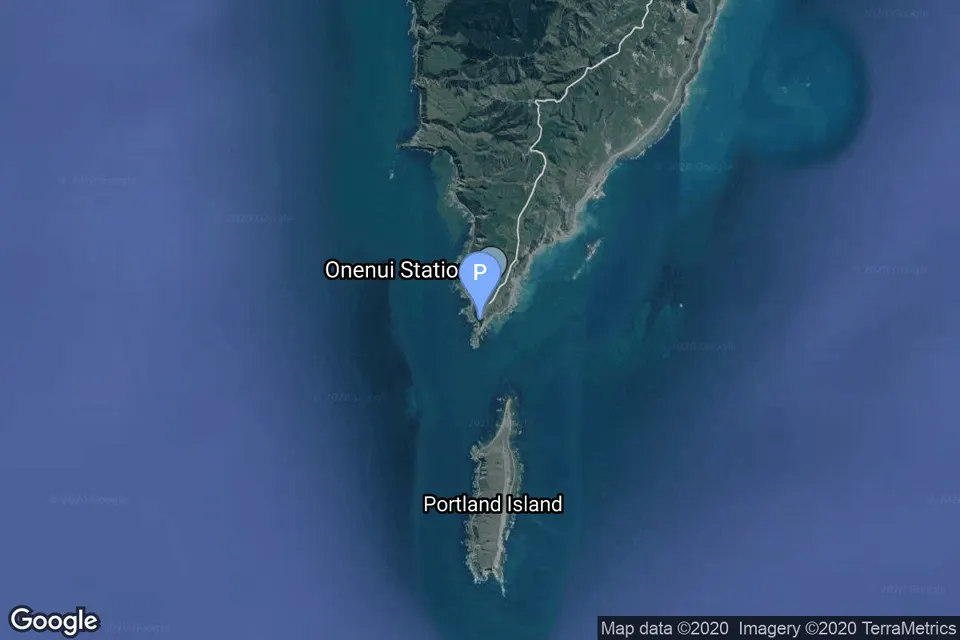
Rocket Lab Launch Complex 1A, Rocket Lab Launch Complex 1, Mahia Peninsula, New Zealand
37th launch from Rocket Lab Launch Complex 1A, 2nd this year · 71st from Rocket Lab Launch Complex 1, Mahia Peninsula, New Zealand
Local pad time at liftoff: Jan 30, 2:21 PM GMT+13, in daylight
43 launches from this pad · 84 from Rocket Lab Launch Complex 1, Mahia Peninsula, New Zealand
7 days 14 hours after the previous launch from this pad
All launches from Rocket Lab Launch Complex 1, Mahia Peninsula, New ZealandOpen in maps
Updates
Launch success.
Show 9 earlier updates
Spacecraft separation.
Cosmic_Penguin · 1/30/2026 · source
Official Webcast by Rocket Lab has started
LL2 · 1/30/2026 · source
Liftoff.
Cosmic_Penguin · 1/30/2026 · source
New T-0.
Cosmic_Penguin · 1/30/2026 · source
Hold at T-08:59.
Cosmic_Penguin · 1/30/2026 · source
Updated launch weather, 70% GO.
Cosmic_Penguin · 1/30/2026 · source
GO for launch.
Cosmic_Penguin · 1/29/2026 · source
Delayed to NET January 30.
Cosmic_Penguin · 1/27/2026 · source
NET January 28 UTC, to be confirmed as for this launch.
Cosmic_Penguin · 1/24/2026 · source
Questions
When did Bridging The Swarm (NeonSat-1A) launch?
Bridging The Swarm (NeonSat-1A) launched on January 30, 2026 at 01:21 UTC. The launch window ran from 22:45 to 02:00 UTC.
Where can I watch Bridging The Swarm (NeonSat-1A)?
Coverage: Rocket Lab - 'Bridging The Swarm' Launch; 국내 최초 양산형 초소형 군집위성 검증기 발사 생중계. Watch the replay
What rocket launched Bridging The Swarm (NeonSat-1A)?
Electron, flown by Rocket Lab. Electron spec sheet
Where did Bridging The Swarm (NeonSat-1A) launch from?
Rocket Lab Launch Complex 1A, Rocket Lab Launch Complex 1, Mahia Peninsula, New Zealand. Liftoff was Jan 30, 2:21 PM GMT+13 local time at the pad.
What orbit did Bridging The Swarm (NeonSat-1A) reach?
Neonsat-1A, one of 3 catalogued objects, reached a 543 × 559 km orbit inclined 97.4°.
How many satellites did Bridging The Swarm (NeonSat-1A) launch?
1 payload from this launch is catalogued, still in orbit (Data from J. McDowell, planet4589.org).