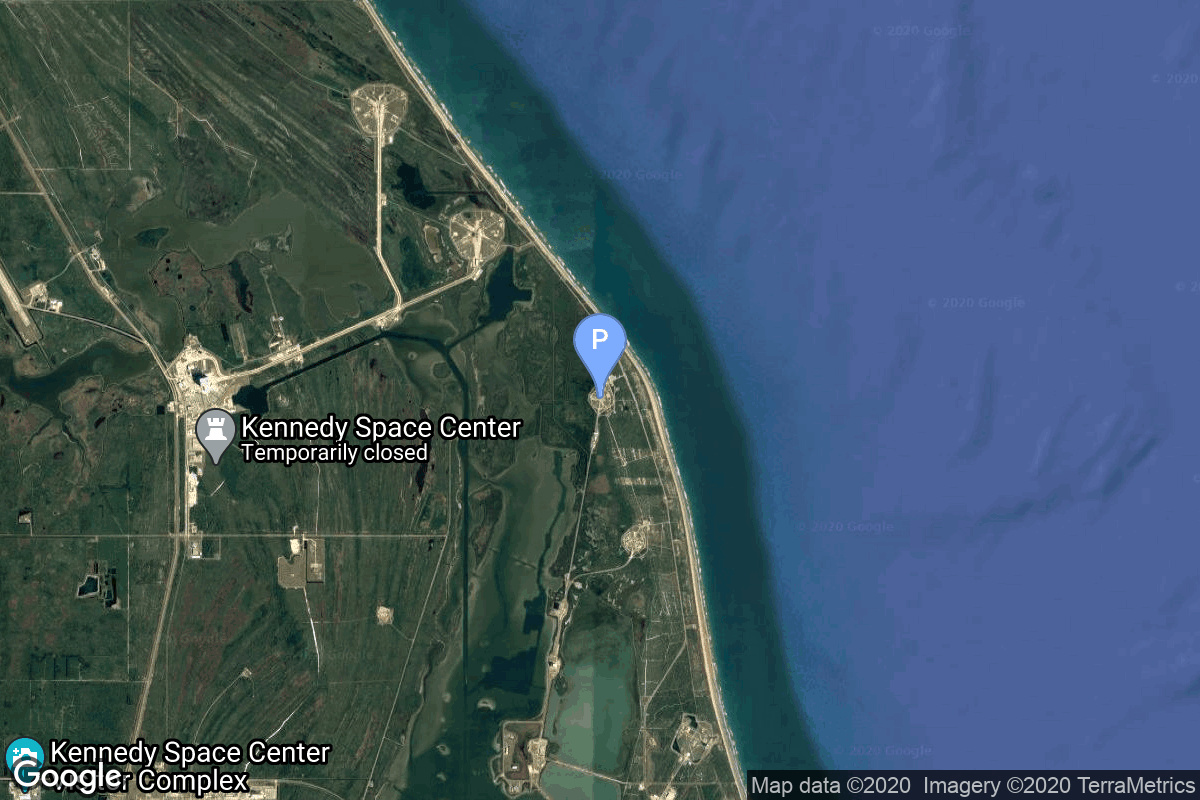
United Launch AllianceAtlas V 411Space Launch Complex 41, Cape Canaveral SFS, FL, USA
Atlas V 411 | Solar Orbiter
Launch window
No countdown — this launch time is not yet known to the minute.February 10, 2020Add to calendar
United Launch Alliance's 138th launch · 1st this year · humanity's 5,933rd orbital launch attempt
The launch vehicle successfully inserted its payload(s) into the target orbit(s).
Window: Feb 10, 04:03 – Feb 10, 06:03 UTC
Flight preview
Solar Orbiter
Solar Orbiter is a joint ESA/NASA mission dedicated to solar and heliospheric physics. It will be used to examine how the Sun creates and controls the heliosphere, the vast bubble of charged particles blown by the solar wind into the interstellar medium. The spacecraft will combine in situ and remote sensing observations to gain new information about the solar wind, the heliospheric magnetic field, solar energetic particles, transient interplanetary disturbances and the Sun's magnetic field. Instruments include: * Solar Wind Analyser (SWA) * Energetic Particle Detector (EPD) * Magnetometer (MAG) * Radio and Plasma Wave analyser (RPW) * Polarimetric and Helioseismic Imager (PHI) * Extreme Ultraviolet Imager (EUI) * Spectral Imaging of the Coronal Environment (SPICE) * Spectrometer Telescope for Imaging X-rays (STIX) * Coronagraph (Metis) While mission is not intended to get as close to the Sun as Parker Solar Probe, it's designed to coordinate observations and has different set of instruments. Main mission starts after one and only Earth flyby in November 2021, and lasts until Dec 2026 when it enters extended phase. During the mission, Solar Orbiter will get through numerous Venus gravity assists, and its trajectory will be highly inclined allowing direct observations of Sun's poles.
Heliophysics · Heliocentric N/A (Helio-N/A)
Booster
No booster details available.