
ArianespaceAriane 5 ECA+Ariane Launch Area 3, Guiana Space Centre, French Guiana
Ariane 5 ECA+ | James Webb Space Telescope (JWST)
Countdown
No countdown — this launch time is not yet known to the minute.December 25, 2021 · 12:20 UTCAdd to calendar

Image: ESA/S. Corvaja
Arianespace's 306th launch · 14th this year · humanity's 6,176th orbital launch attempt
The launch vehicle successfully inserted its payload(s) into the target orbit(s).
Window: Dec 25, 12:20 – Dec 25, 12:52 UTC
Flight preview
James Webb Space Telescope (JWST)
The James Webb Space Telescope is a space telescope developed by NASA, ESA and CSA to succeed the Hubble Space Telescope as NASA's flagship astrophysics mission. Its primary mirror, the Optical Telescope Element, is composed of 18 hexagonal mirror segments which combine to create a 6.5 m diameter mirror, considerably larger than Hubble's 2.4 m mirror. This will allow JWST to provide improved infrared resolution and sensitivity over Hubble, and will enable a broad range of investigations across the fields of astronomy and cosmology, including observing some of the most distant events and objects in the universe, such as the formation of the first galaxies.
Astrophysics · Sun-Earth L2 (L2)
Booster
No booster details available.
Watch
- Ariane 5 JWST — The Space Devs
- James Webb Space Telescope Launch — Official NASA Broadcast — NASA
- Flight VA256 – James Webb Space Telescope | Ariane 5 Launch | Arianespace — arianespace
Updates
Successful launch confirmed
SwGustav · 12/25/2021 · source
Delaying by 24 hours due to adverse weather forecast
SwGustav · 12/21/2021 · source
Go for launch.
Jay · 12/17/2021 · source
New NET date.
Cosmic_Penguin · 12/15/2021 · source
New launch date confirmed after additional spacecraft testing.
Cosmic_Penguin · 11/25/2021 · source
Delayed by four days due to a processing incident.
Nosu · 11/22/2021 · source
Adding launch window
Nosu · 10/13/2021 · source
Targeted launch date announced
spacevogel · 9/8/2021 · source
JWST launch now TBD November.
Nosu · 6/2/2021 · source
News

APOD: 2026 August 26 – JWST Images The Lion’s Head Nebula
APOD Science APOD APOD: 2026 August 26 – JWST… Today’s APOD Archive Submissions Index Search Calendar RSS Education About Discuss APOD Astronomy Picture of the Day Discover the cosmos! Each day a different image or photograph of our fascinating universe is featured, along with a brief explanation written by a professional astronomer. JWST Images […]

Webb Opens Treasure Chest
NASA’s James Webb Space Telescope captured this Aug. 6, 2026, infrared image of part of the Carina Nebula, a star-forming region also home to the Cosmic Cliffs. This feature, called the “Treasure Chest,” is an object known as a cometary globule. A cometary globule is an isolated cloud of gas and dust with a dense, […]
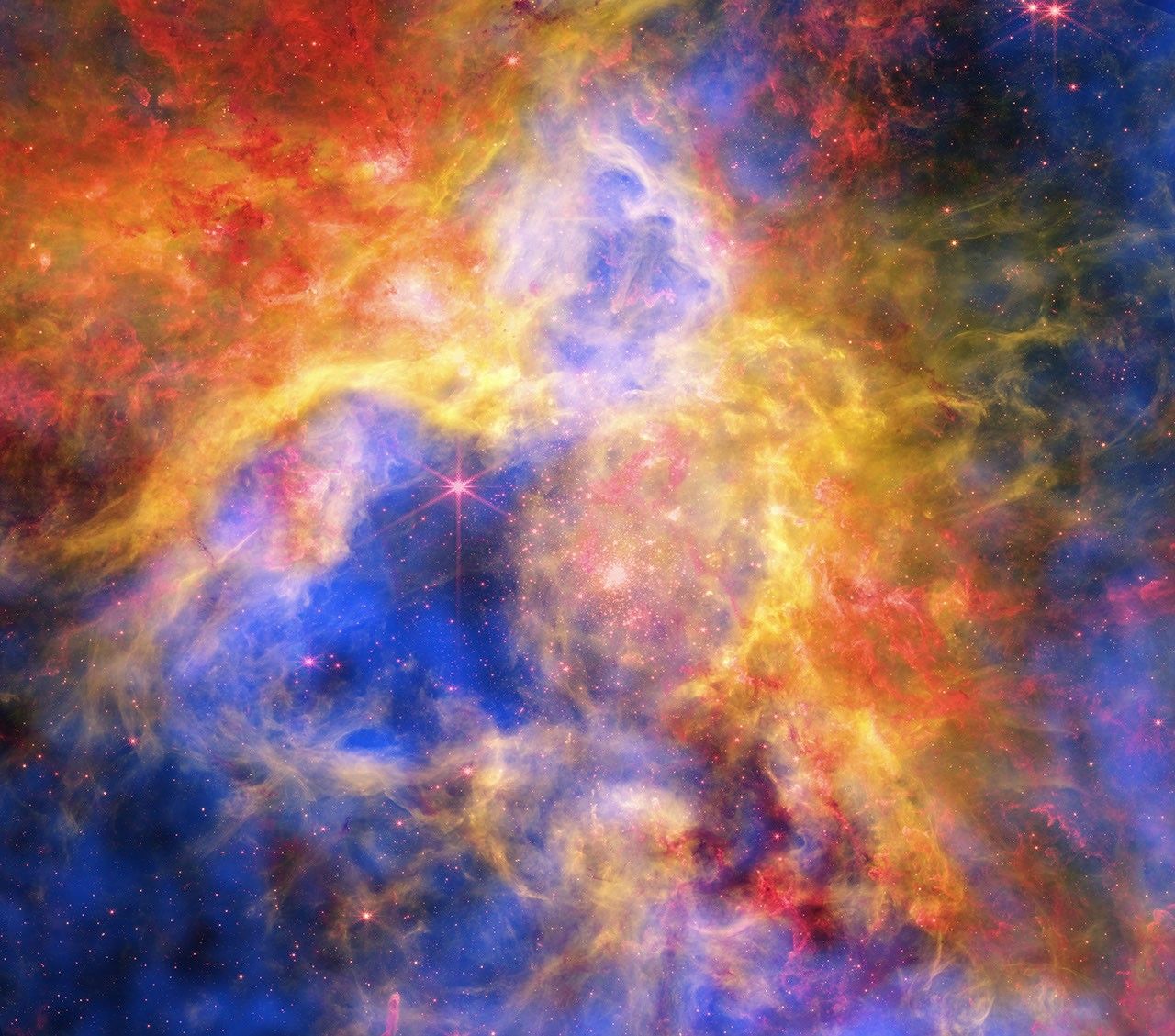
Colorful Collage of Tarantula Nebula
Data from NASA’s Chandra X-ray Observatory, NASA’s James Webb Space Telescope, and NASA’s Hubble Space Telescope combine to reveal a vibrant view of 30 Doradus, or the Tarantula Nebula, in this Aug. 11, 2026, image. Located in the Large Magellanic Cloud, a small neighbor galaxy to the Milky Way about 160,000 light-years from Earth, the […]

Lion Nebula Roars in Webb’s Sights
Observing across the starry “plains” of space, NASA’s James Webb Space Telescope has taken new images of NGC 2392, nicknamed the Lion Nebula. The nebula’s “mane” is clear and detailed in this image released on Aug. 10, 2026, due to Webb’s high-resolution imaging. See more images of the Lion Nebula from Webb. Image: NASA, ESA, […]
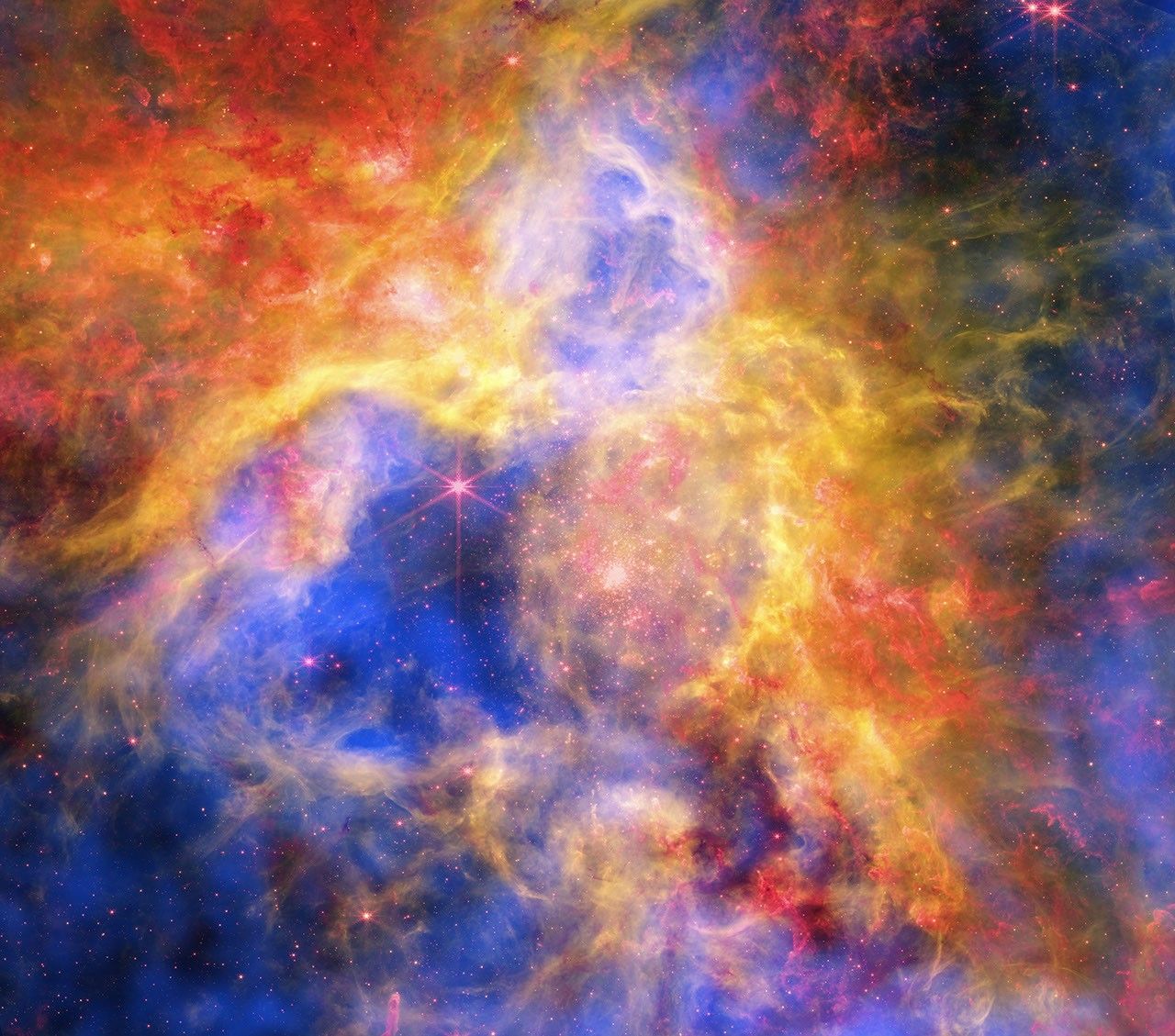
NASA Telescopes Create Colorful ‘Craft’ From Nearby Nebula
Like a collage made of layered sheets of colored cellophane, a vibrant new image layers observations of a famous star-forming nebula from NASA space telescopes. The resulting cosmic “craft” reveals new details about the star formation region known as 30 Doradus, or the Tarantula Nebula. Located in the Large Magellanic Cloud, a small neighbor galaxy […]
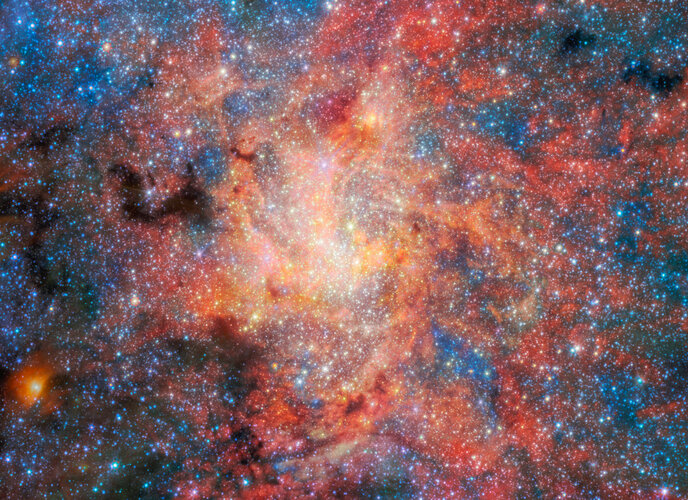
Dust and water spotted close to giant black hole
Using the NASA/ESA/CSA James Webb Space Telescope, an international team of astronomers have discovered that dust and water can form and survive surprisingly close to the supermassive black hole at the centre of our Milky Way galaxy. The observations reveal that the evolved star IRS 3 continues to enrich its surroundings with newly formed material despite the intense radiation environment around Sagittarius A*.
Pad — Ariane Launch Area 3
Local pad time: Dec 25, 9:20 AM GMT-3
118 launches from this pad · 335 from Guiana Space Centre, French Guiana
 Open in maps