![[AUTO] Saturn V - image](/media?u=https%3A%2F%2Fthespacedevs-prod.nyc3.digitaloceanspaces.com%2Fmedia%2Fimages%2Fsaturn2520v_image_20190222030036.jpeg&w=1600)
National Aeronautics and Space AdministrationSaturn VLaunch Complex 39A, Kennedy Space Center, FL, USA
Apollo 6
Launched
April 4, 1968
Summary
Apollo 6 launched on a National Aeronautics and Space Administration Saturn V from Launch Complex 39A, Kennedy Space Center, FL, USA on April 4, 1968. The mission was a partial failure. It was National Aeronautics and Space Administration's 93rd launch, 3rd this year and humanity's 815th orbital launch attempt. It was the 2nd Saturn V flight and the 1st this year. The payload was bound for Elliptical Orbit (Elliptical). The spacecraft was Apollo CSM-020 (CSM-020). 17 objects from this launch are catalogued, 2 of them payloads.
- Watch
- Booster
- No booster details on record.
- Mission
- Human Exploration · Elliptical Orbit (Elliptical)
- Milestone
- 2nd Saturn V flight · 1st this yearNational Aeronautics and Space Administration's 93rd launch3rd this yearhumanity's 815th orbital launch attempt27th orbital launch attempt this year
Spacecraft
Apollo CSM-020 (CSM-020)
CSM-020 was an Apollo Command & Service Module used in the Apollo 6 mission.
- Destination: Highly Elliptical Earth Orbit
- Mission length: 10 hours
The Apollo spacecraft successfully splashed down in the Pacific Ocean.
Flight preview
Catalogued objects
17 catalogued: 2 payloads, 1 rocket stage, 13 debris, 1 component; none still in orbit
- Apollo 6 · NORAD 3170 · landed April 4, 1968
- LTA-2R · NORAD 3187 · re-entered September 3, 1968
Saturn S-IVB-502 · re-entered April 26, 1968
Data from J. McDowell, planet4589.org
About this launch
Apollo 6 was intended to send a Command and Service Module (CSM) plus a Lunar Module Test Article (LTA), a simulated Lunar Module (LM) with mounted structural vibration sensors, into a translunar trajectory. However, the Moon would not be in position for a translunar flight, and the Service Module engine would be fired about five minutes later to slow the craft, dropping its apogee to 11,989 nautical miles (22,204 km) and causing the CSM to return to Earth, simulating a "direct-return" abort. On the return leg, the engine would fire once more to accelerate the craft to simulate the nominal lunar return trajectory with a re-entry angle of -6.5 degrees and velocity of 36,500 feet per second (11,100 m/s). The entire mission would last about 10 hours.
Pad
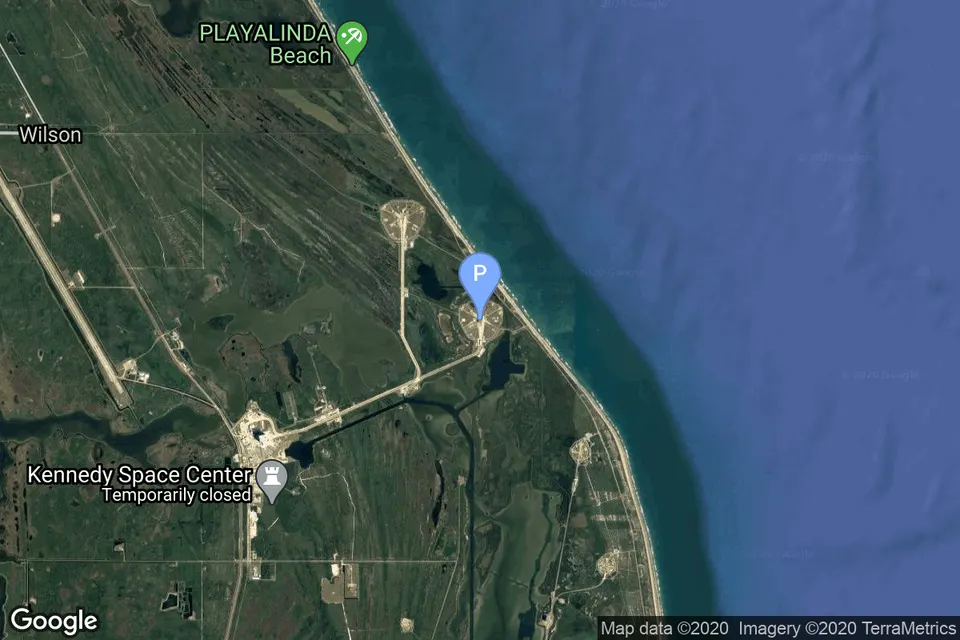
Launch Complex 39A, Kennedy Space Center, FL, USA
2nd launch from Launch Complex 39A, 1st this year · 2nd from Kennedy Space Center, FL, USA
224 launches from this pad · 283 from Kennedy Space Center, FL, USA
147 days after the previous launch from this pad
Questions
When did Apollo 6 launch?
Apollo 6 launched on April 4, 1968. The time is known to the hour, not the minute.
Where can I watch Apollo 6?
Coverage: Apollo 6 launch TV footage. Watch the replay
What rocket launched Apollo 6?
Saturn V, flown by National Aeronautics and Space Administration. Saturn V spec sheet
Where did Apollo 6 launch from?
Launch Complex 39A, Kennedy Space Center, FL, USA.
What orbit was Apollo 6 going to?
Elliptical Orbit (Elliptical), a human exploration mission.
How many satellites did Apollo 6 launch?
2 payloads from this launch are catalogued, none of them still in orbit (Data from J. McDowell, planet4589.org).
Which program is Apollo 6 part of?
Apollo. About Apollo