![[AUTO] Saturn V - image](/media?u=https%3A%2F%2Fthespacedevs-prod.nyc3.digitaloceanspaces.com%2Fmedia%2Fimages%2Fsaturn2520v_image_20190222030036.jpeg&w=1600)
National Aeronautics and Space AdministrationSaturn VLaunch Complex 39A, Kennedy Space Center, FL, USA
Apollo 13
Launched
April 11, 1970 · 19:13 UTC

Summary
Apollo 13 launched on a National Aeronautics and Space Administration Saturn V from Launch Complex 39A, Kennedy Space Center, FL, USA on April 11, 1970 at 19:13 UTC. It was National Aeronautics and Space Administration's 104th launch, 1st this year and humanity's 1,077th orbital launch attempt. It was the 8th Saturn V flight and the 1st this year. The payload was bound for Lunar Orbit (LO). Apollo 13 CSM, one of 2 catalogued objects, reached a 192 × 205 km orbit inclined 32.6°. 3 crew members flew: Jim Lovell, Fred Haise and Jack Swigert. The spacecraft was Apollo Odyssey CSM-109 (CSM-109). 2 objects from this launch are catalogued, one of them a payload.
- Watch
- Launch of Apollo 13 (CBS)lunarmodule5
- Launch of Apollo 13 (NASA Footage)lunarmodule5
- Booster
- No booster details on record.
- Mission
- Human Exploration · Lunar Orbit (LO)
- Milestone
- 8th Saturn V flight · 1st this yearNational Aeronautics and Space Administration's 104th launch1st this yearhumanity's 1,077th orbital launch attempt31st orbital launch attempt this year
Crew
 Jim LovellCommander · NASA · age 42 · 4th flight
 Fred HaiseLunar Module Pilot · NASA · age 36 · first flight
 Jack SwigertCommand Module Pilot · NASA · age 38 · first flight
Spacecraft
Apollo Odyssey CSM-109 (CSM-109)
CSM-109 "Odyssey" was an Apollo Command & Service Module used in the Apollo 13 mission.
- Destination: Cislunar Orbit
- Mission length: 5 days 22 hours
- Docked April 11, 1970 at Apollo Command/Service Module
The Apollo spacecraft successfully splashed down in the Pacific Ocean.
LM Aquarius (LM-7)
Flown on Apollo 13 Re-entered Earth's atmosphere.
- Destination: Cislunar Orbit
- Mission length: 5 days 21 hours
Flight preview
Orbit: as tracked
Apollo 13 CSM · NORAD 4371 · 1970-029 · Space-Track · tracking 1 of 2 objects
Show the numbers for orbit elements
- Object
- APOLLO 13 CM
- Object ID
- 1970-029A
- Epoch
- 1970-04-11 19:39:00 UTC
- Mean motion
- 16.30346403 rev/day
- Eccentricity
- 0.001014
- Inclination
- 32.5642°
- Ascending node
- 350.1479°
- Arg. of perigee
- 148.2777°
- Mean anomaly
- 356.5409°
- Element set
- 999
- Rev at epoch
- 0
- B*
- 0
Perigee, apogee and period are Kepler figures from the catalogued mean elements, not a propagated state. Published orbit: LO. Ascent drawn from padside's representative profile.
Catalogued objects
2 catalogued: 1 payload, 1 rocket stage
- Apollo 13 CSM · NORAD 4371 · docked April 11, 1970
Saturn S-IVB-508 · left Earth orbit April 12, 1970
Data from J. McDowell, planet4589.org
About this launch
Apollo 13 was the famous mission that never made it to the moon's surface because of a catastrophic malfunction on board, but the astronauts did return safely to the Earth. The mission was commanded by Jim Lovell, the Command Module Pilot was Jack Swigert, and the Lunar Module Pilot was Fred Haise. The mission launched on April 11th, 1970 and the Capsule safely landed in the ocean on April 17th, 1970.
Pad
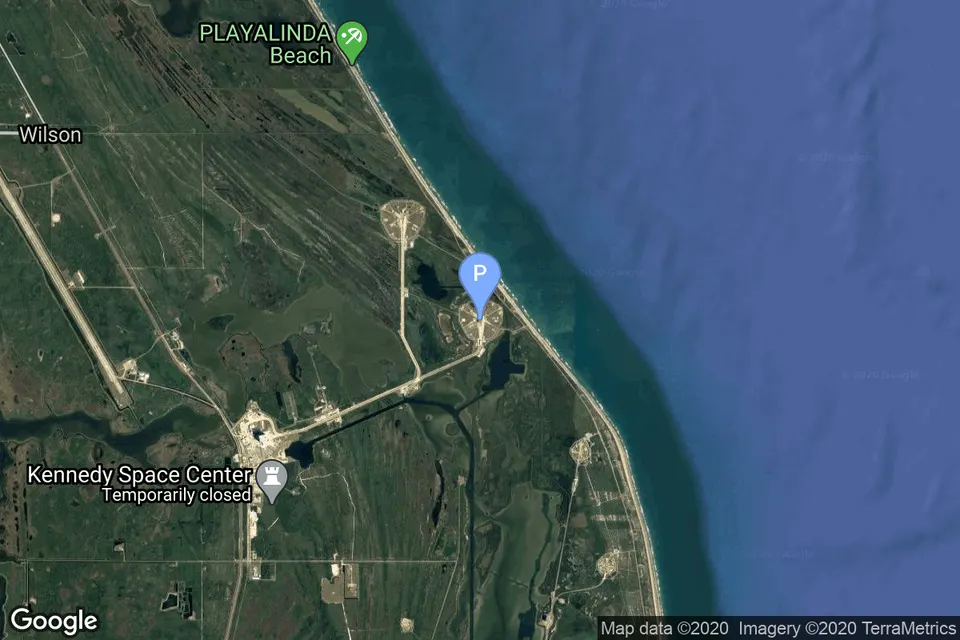
Launch Complex 39A, Kennedy Space Center, FL, USA
7th launch from Launch Complex 39A, 1st this year · 8th from Kennedy Space Center, FL, USA
Local pad time at liftoff: Apr 11, 2:13 PM EST, in daylight
224 launches from this pad · 283 from Kennedy Space Center, FL, USA
148 days after the previous launch from this pad
Questions
When did Apollo 13 launch?
Apollo 13 launched on April 11, 1970 at 19:13 UTC.
Where can I watch Apollo 13?
Coverage: Launch of Apollo 13 (CBS); Launch of Apollo 13 (NASA Footage). Watch the replay
What rocket launched Apollo 13?
Saturn V, flown by National Aeronautics and Space Administration. Saturn V spec sheet
Where did Apollo 13 launch from?
Launch Complex 39A, Kennedy Space Center, FL, USA. Liftoff was Apr 11, 2:13 PM EST local time at the pad.
What orbit did Apollo 13 reach?
Apollo 13 CSM, one of 2 catalogued objects, reached a 192 × 205 km orbit inclined 32.6°.
Which program is Apollo 13 part of?
Apollo. About Apollo