![[AUTO] Falcon 9 Block 5 | Amazonas Nexus - image](/media?u=https%3A%2F%2Fthespacedevs-prod.nyc3.digitaloceanspaces.com%2Fmedia%2Fimages%2Ffalcon2520925_image_20230205183117.jpeg&w=1600)
SpaceXFalcon 9 Block 5Space Launch Complex 40, Cape Canaveral SFS, FL, USA
Amazonas Nexus
Launched
February 7, 2023

Summary
Amazonas Nexus launched on a SpaceX Falcon 9 Block 5 from Space Launch Complex 40, Cape Canaveral SFS, FL, USA on February 7, 2023. It was SpaceX's 222nd launch, 9th this year and humanity's 6,387th orbital launch attempt. It was the 146th Falcon 9 Block 5 flight and the 8th this year. Booster B1073 flew for the 6th time and landed at Just Read the Instructions. The payload was bound for Geostationary Transfer Orbit (GTO). Amazonas Nexus, one of 2 catalogued objects, reached a 366 × 59,789 km orbit inclined 25.1°. 2 objects from this launch are catalogued, one of them a payload.
- Watch
- Vehicle
- Falcon 9 Block 5 · SpaceX
- Booster
- B1073 · flight 6 · Autonomous Spaceport Drone Ship at Just Read the Instructions · landed156/157 landed here · 57 days after its previous flight, Hakuto-R M1 & Lunar Flashlight · 621 km downrange
- Mission
- Communications · Geostationary Transfer Orbit (GTO)
- Milestone
- 146th Falcon 9 Block 5 flight · 8th this yearSpaceX's 222nd launch9th this yearhumanity's 6,387th orbital launch attempt19th orbital launch attempt this year
Webcast
Flight preview
Simulate in Flight ClubOrbit: as tracked
Amazonas Nexus · NORAD 55508 · 2023-017 · Space-Track · tracking 1 of 2 objects
Show the numbers for orbit elements
- Object
- TBA - TO BE ASSIGNED
- Object ID
- 2023-017A
- Epoch
- 2023-02-07 04:59:23 UTC
- Mean motion
- 1.24761806 rev/day
- Eccentricity
- 0.8151701
- Inclination
- 25.0842°
- Ascending node
- 351.3227°
- Arg. of perigee
- 178.5524°
- Mean anomaly
- 55.9274°
- Element set
- 999
- Rev at epoch
- 0
- B*
- 0
Perigee, apogee and period are Kepler figures from the catalogued mean elements, not a propagated state. Published orbit: GTO. Ascent drawn from padside's representative profile. Booster return drawn from padside's representative arc.
Catalogued objects
2 catalogued: 1 payload, 1 rocket stage; 1 still in orbit
- Amazonas Nexus · NORAD 55508 · in orbit
Falcon 9-203 Stage 2 · re-entered December 10, 2024
Data from J. McDowell, planet4589.org
About this launch
High-throughput geostationary communications satellite built by Thales Alenia Space for Hispasat.
Pad
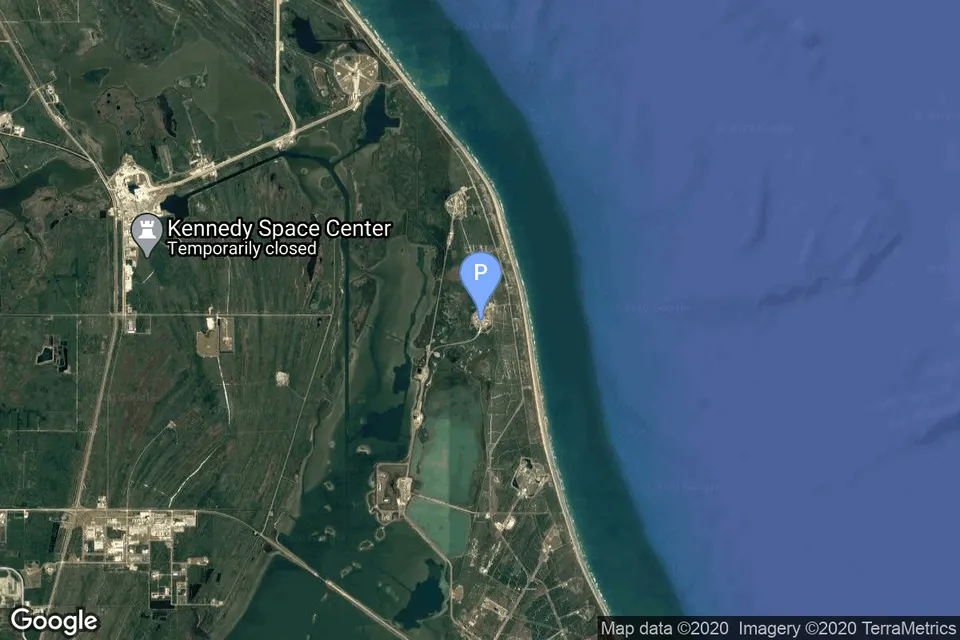
Space Launch Complex 40, Cape Canaveral SFS, FL, USA
168th launch from Space Launch Complex 40, 5th this year · 873rd from Cape Canaveral SFS, FL, USA
403 launches from this pad · 1,131 from Cape Canaveral SFS, FL, USA
11 days after the previous launch from this pad
Updates
Launch success.
Show 9 earlier updates
Liftoff
JRascagneres · 2/7/2023 · source
Updating T-0
Nosu · 2/6/2023 · source
Weather 95%
Jay · 2/6/2023 · source
Standing down due to unfavourable weather conditions
Jay · 2/5/2023 · source
Updating T-0 and weather to end of window.
Nosu · 2/5/2023 · source
Updating T-0 and weather
SwGustav · 2/5/2023 · source
Weather trending from 30% at the beginning of the window to 65% at the end.
Nosu · 2/4/2023 · source
Setting GO
SwGustav · 2/3/2023 · source
Weather 55%
Nosu · 2/3/2023 · source
Questions
When did Amazonas Nexus launch?
Amazonas Nexus launched on February 7, 2023. The time is known to the hour, not the minute.
Where can I watch Amazonas Nexus?
Coverage: Hispasat Amazonas Nexus Mission. Watch the replay
What rocket launched Amazonas Nexus?
Falcon 9 Block 5, flown by SpaceX. Falcon 9 Block 5 spec sheet
Where did Amazonas Nexus launch from?
Space Launch Complex 40, Cape Canaveral SFS, FL, USA.
Did the booster land?
Booster B1073 flew for the 6th time and landed at Just Read the Instructions.
What orbit did Amazonas Nexus reach?
Amazonas Nexus, one of 2 catalogued objects, reached a 366 × 59,789 km orbit inclined 25.1°.
How many satellites did Amazonas Nexus launch?
1 payload from this launch is catalogued, still in orbit (Data from J. McDowell, planet4589.org).